TikTok Influencer Media Kit: What to Include and How to Structure It
A TikTok influencer media kit is a concise document or webpage explaining who a creator is, what content they make, and what they can offer. Include a short bio, TikTok account details, dated performance metrics, relevant content examples, services, and a business contact. The supplied guide supports these core elements, but it is general influencer guidance—not an official TikTok specification. [c1]
What to Include in a TikTok Media Kit
The LivingLesh guide recommends a creator introduction, audience demographics and analytics, services, selected partnerships, work examples, and contact information. It specifically recommends average views for creators whose work centers on video, including TikTok. [c1]
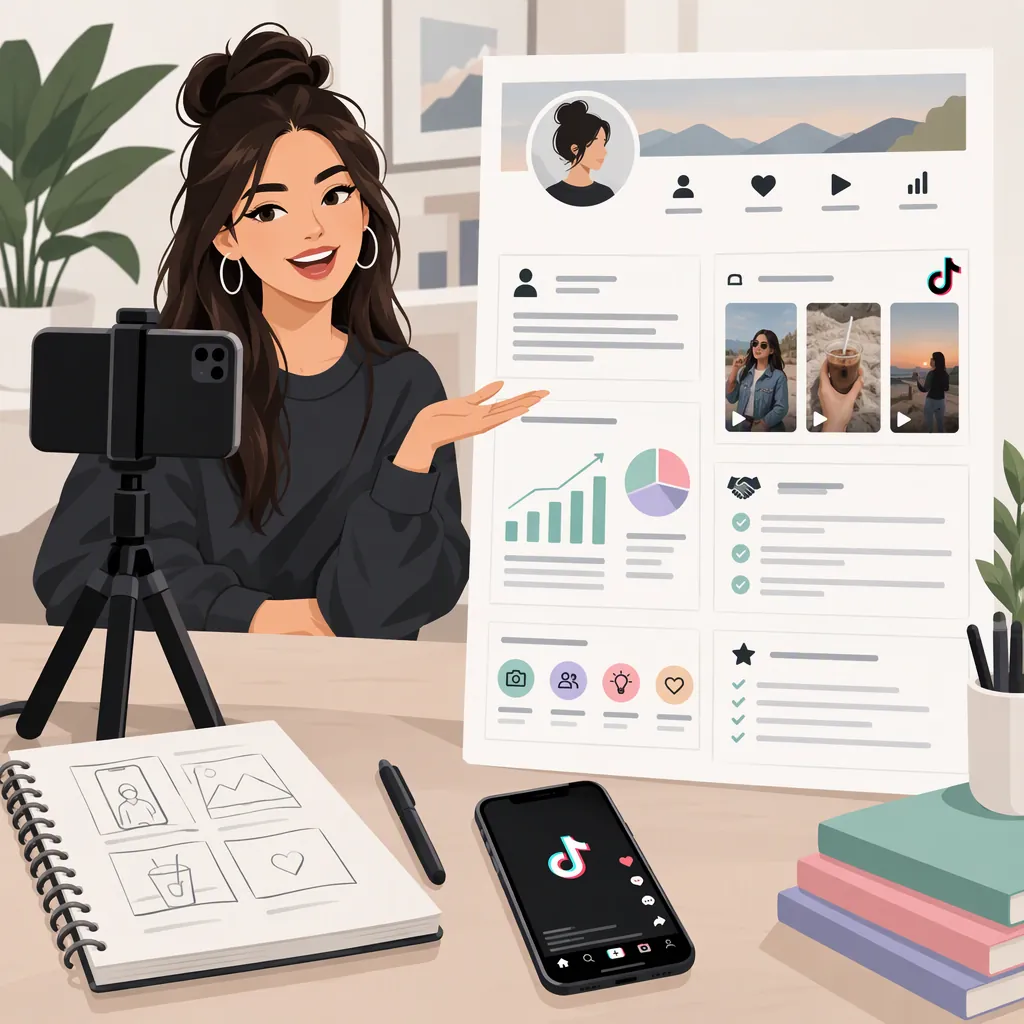
For a TikTok-focused kit, adapt that structure into six blocks:
- Creator identity: Name, TikTok handle, content niche, and a short description of your approach. Include a general location only if relevant and appropriate to publish.
- Account snapshot: Follower count and the date recorded, plus clearly labeled video-performance measures.
- Audience information: Aggregate demographics only when you have a reliable source and can appropriately share them. Otherwise, mark them as unavailable or omit the block.
- Content examples: A small selection showing your actual style, subject matter, and production capabilities.
- Services: Formats you can genuinely provide, such as a tutorial, demonstration, or sponsored video.
- Business contact: A current email address or contact-page path.
This is a suggested editorial structure, not a mandatory platform format. A public-only kit can remain useful without publishing private analytics or audience details.
Make Metrics Understandable and Verifiable
The guide discusses followers, reach, impressions, views, engagement, and audience demographics as possible media-kit metrics. It also describes a follower-based engagement calculation. [c1] That guidance should not be treated as a universal TikTok measurement standard.
For a public-only version, use this reporting approach:
- Identify the source. State whether a number comes from a public profile or publicly visible post counts.
- Date the snapshot. Counts may change after publication; make the observation date visible.
- Define the sample. For average views, specify the posts included and divide their combined views by the number of posts in that sample.
- Explain exclusions. Note whether pinned posts, sponsored posts, or unusually successful posts were excluded.
- Name any formula. If reporting engagement, specify the interactions counted, the denominator, and whether the result is calculated per post or across a sample.
Do not relabel video views as unique people reached. Do not infer audience age, location, or purchase intent from follower count or comments. When a metric cannot be verified from the evidence available, leave it out rather than estimate it.
Treat every number as a description of the stated sample—not a promise of future campaign performance.
Choose Content Examples Without Overstating Results
The guide recommends showing examples of work and linking to the original posts so readers can assess the content and its engagement. It also favors selected partnership highlights over an exhaustive list. [c1]
A practical approach is to choose a few examples that demonstrate different strengths: a clear explanation, a product demonstration, or a recurring series. For each example, identify the topic, format, publication date, and your role.
Use only partnership details that are already public and that you can substantiate. Featuring a product in an independent video does not establish a paid relationship with its brand. Label self-directed samples as independent work rather than client campaigns.
If you have no verified partnerships, omit the partnership block. Original content can still demonstrate your style. Avoid presenting public view counts as evidence of sales, conversions, or return on investment without separate supporting evidence.
A Suggested One-Page Layout
The supplied guide discusses both one-page and multi-page kits, as well as PDF and webpage formats. [c1] Start with a one-page summary if that comfortably accommodates your information; use more space when necessary for legibility.
Place identity and account details first, metrics second, content examples next, and services and contact information last. Keep explanatory labels close to the numbers they qualify.
The outline below contains placeholders, not sample creator facts. Replace each bracketed field with verified information, or remove it. In the finished kit, use actual public post links; no example post URLs are supplied here.
Fill-In TikTok Media Kit Outline
# [Creator Name] — TikTok Media Kit

Updated: [Date]

## Creator Profile
TikTok handle: [Handle]
Content focus: [Niche and recurring formats]
Bio: [One or two factual sentences]

## Account Snapshot
Follower count: [Count and observation date]
Average video views: [Value]
Sample: [Number of posts, selection period, and exclusions]
Metric source: [Public profile or public post counts]
Audience information: [Verified, shareable aggregate information, or omit]

## Selected Work
Example 1: [Title, public post link, format, date, and role]
Example 2: [Title, public post link, format, date, and role]
Partnership status: [Verified public relationship or independent sample]

## Services
Available formats: [Only services you can provide]
Scope notes: [Relevant production or delivery limitations]

## Business Contact
Contact: [Verified business email in plain text or contact-page path]
Check the Kit Before Publishing
The LivingLesh guide recommends proofreading and updating a kit periodically; its suggested cadence is every 30 days. It also advises keeping rates separate from the core media kit. These are the author's recommendations, not universal requirements. [c1]
For a public-only kit, use a final review checklist:
- Verify every metric against its stated source and date.
- Test content and contact links in the published format.
- Remove unsupported partnership names, testimonials, and outcome claims.
- Exclude private messages, confidential campaign results, and identifying audience information.
- Check that any screenshots contain only information appropriate to publish.
- Ensure the PDF and webpage use consistent figures and update dates.
- Keep essential text readable without requiring viewers to inspect a tiny analytics screenshot.
Refresh the kit when its claims or examples become materially outdated. The supplied reference is a general creator guide; it does not establish official TikTok requirements or guarantee partnership outcomes.
FAQ
How Long Should a TikTok Influencer Media Kit Be?
There is no required length established by the supplied reference. It discusses both one-page and multi-page formats. A concise summary is a useful starting point, with additional pages only when they make relevant examples or explanations easier to read. [c1]
Should I Include Rates in My Media Kit?
The supplied guide recommends keeping rates separate so pricing can be discussed in relation to the proposed work. That is an editorial recommendation, not a TikTok rule. A public overview can list services without publishing a rate card. [c1]
Should the Kit Be a PDF or a Webpage?
The guide discusses both formats, describing a webpage as easier to update and a PDF as useful when a file upload is needed. Either can hold the same core information. If maintaining both, use matching dates and metrics so readers do not encounter conflicting versions. [c1]