Free Electronic Press Kit for Musicians: Content and Structure
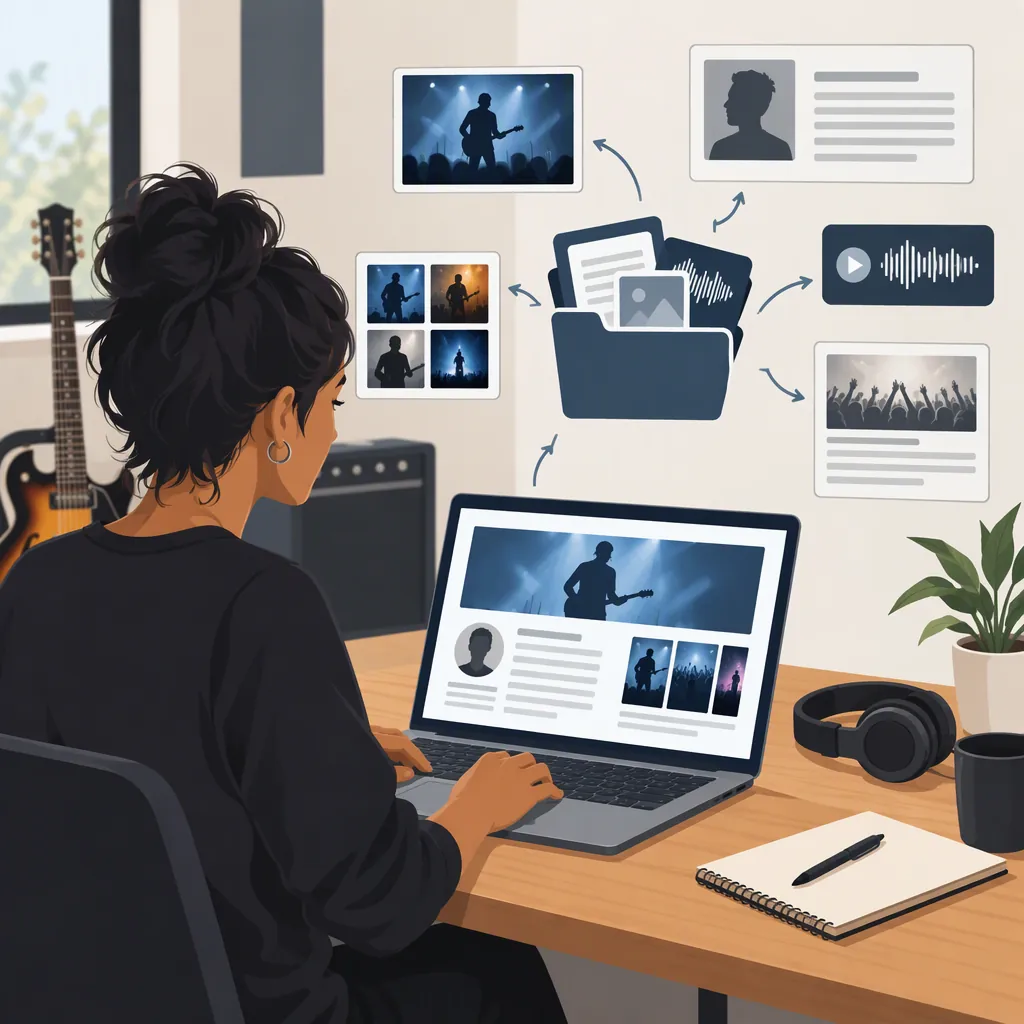
To assemble a free electronic press kit for musicians, start with existing artist materials and arrange them in a shareable page or one-sheet: a short bio, music links, photos, public contact information, and relevant performance or press links. These are core elements identified in Amuse’s EPK guide. The outline below is free to copy; hosting, design tools, photography, and other services may have separate costs, and no provider’s free plan is verified here. [c1]
What a Music Epk Is
An electronic press kit, or EPK, brings an artist’s story, music, and supporting materials together in a format that can be shared electronically. Amuse describes both a website and a one-sheet as possible formats, with labels, promoters, agents, venues, and media among the intended readers. [c1]
Think of the kit as a reference page rather than a complete archive. A useful editorial goal is to help a reader answer four questions: Who is this artist? What does the music sound like? What material is available to use? Who handles inquiries?
An EPK is not evidence of a booking, endorsement, or press relationship. Keep descriptions factual and distinguish confirmed activity from plans.
Essential Content for a Musician Epk
Amuse’s guide recommends a bio, professional photos, contact information, music links, distinguishing details, performance links, press coverage, and recent or upcoming performances. [c1] Use that list as a starting point, not a requirement to manufacture material you do not have.
- Artist overview: Give the artist name, musical style, and current project in a few clear sentences.
- Short bio: Explain the creative background and relevant work. Include only accomplishments you can substantiate.
- Music: Select a small set of representative tracks or a current release. Label each link so readers know what they will hear.
- Photos and artwork: Organize approved promotional images and relevant cover art. As a practical precaution, include credits and clarify permitted use.
- Video: Add a relevant live performance or music video if available. Clearly identify which kind it is.
- Press and milestones: Link to actual coverage or documented achievements. If there is no coverage yet, omit the section rather than inventing quotes.
- Performances: Include confirmed dates when relevant, and remove outdated listings.
- Public contact: Identify an authorized contact and the type of inquiry they handle. Do not publish personal details without permission.
Choose a Shareable Page or One-Sheet
A webpage can serve as the broader artist EPK, while a one-sheet can summarize a particular album, EP, or single. Amuse draws this distinction and notes that a website link avoids sending a large PDF attachment. [c1]
For a no-added-cost starting point, consider tools or storage you already have access to. Before choosing a format, check its actual sharing settings, export options, storage limits, and charges. This article does not establish that any named service is currently free.
For a page, keep the overview, music, and contact easy to find, with supporting assets below. For a one-sheet, prioritize the current project and use clearly labeled links for additional material. These are suggested layouts, not industry rules.
Test the final link while signed out. A kit intended for public access should not unexpectedly require an account or permission request.
Copyable Epk Outline
The outline below adapts the content categories in Amuse’s guide into a simple working structure. [c1] Replace each placeholder with accurate information and remove any section that does not apply. It is a drafting aid, not a hosted EPK or a promise of free publishing.
Musician Epk Draft
# [Artist Name] — Electronic Press Kit

Updated: [Date]

## Artist Overview
[Two or three factual sentences about the artist, musical style, and current project.]

## Featured Music
[Track or release title — listening link]
[Brief context, such as release date or project name]

## Short Bio
[A concise account of the artist’s background and relevant work.]

## Photos and Artwork
[Asset location]
[Photo credits and permitted uses]

## Video
[Video title — link]
[Identify live performance or music video]

## Selected Press or Milestones
[Accurate description — supporting source link]
[Omit this section if there is nothing to include.]

## Confirmed Performances
[Date — venue or event — location]

## Public Contact
[Authorized contact name or role]
[Public contact details]
[Inquiry type: press, booking, or general]
Review Before Sharing
Amuse emphasizes clear presentation and accessible contact information. [c1] The checklist below turns those priorities into practical review steps. It also adds editorial checks for accuracy, permissions, and public access; these are recommendations rather than claims about guaranteed results.
Epk Review Checklist
- [ ] The artist name and current project are easy to identify.
- [ ] The bio contains no unsupported achievements or relationships.
- [ ] Every music, video, and asset link opens as intended.
- [ ] Public materials are accessible without an unexpected login.
- [ ] Images have appropriate credits and permission for the stated use.
- [ ] Press excerpts accurately reflect the linked source.
- [ ] Performance dates are confirmed and current.
- [ ] Contact details are authorized for public sharing.
- [ ] The page or document is readable on a phone.
- [ ] Placeholder text and irrelevant sections have been removed.
- [ ] The kit shows a review or update date.
FAQ
Can I Make an Electronic Press Kit for Free?
You can copy this outline and assemble materials you already have without purchasing a template. Whether publishing or sharing costs nothing depends on the tools and accounts you use. Amuse discusses website and one-sheet formats, but the provided reference does not establish current free-plan terms for any service. [c1]
What Should I Include If I Have No Press Coverage?
Start with your bio, music links, approved photos, and public contact information. Add relevant performance material if available. Although Amuse lists press coverage among EPK elements, this guide recommends omitting an empty press section rather than inventing reviews, quotes, or endorsements. [c1]
Should My Epk Be a Website or a One-Sheet?
Choose according to the material you need to share. Amuse describes a website as covering broader artist work and a one-sheet as commonly focused on an album, EP, or single. A concise release overview can suit a one-sheet; a larger collection of music and assets can suit a page. Neither format guarantees coverage or bookings. [c1]