7146001: Creator-Controlled Brand Outreach Email Kit
Use the outreach sequence below to contact brands with a clear collaboration concept, relevant audience context, defined deliverables, and respectful boundaries. Replace every bracketed field with accurate information about your work, audience, availability, and preferred collaboration structure. Do not promise performance, exclusivity, usage rights, approval processes, or deliverables that you have not independently decided to offer.
Purpose and Sending Standard
This outreach package is designed for a creator who wants to initiate a brand partnership conversation without surrendering creative identity, audience trust, or decision-making power. The goal is not to make broad promises or to pressure a brand into an immediate agreement. The goal is to open a focused, professional conversation around a specific fit: your work, the brand's potential relevance to your audience, and a possible collaboration format that you would be comfortable creating.
Before sending any message, confirm that the brand is genuinely relevant to your content, values, audience interests, and current creative direction. A persuasive email is not a substitute for alignment. If you would not feel comfortable discussing the product or service in your own voice, do not frame the opportunity as a fit merely because the company is visible or potentially valuable. Your outreach should sound like you, use your normal level of formality, and accurately describe what you can offer.
Keep the initial message concise enough for a busy recipient to understand quickly. State who you are, why you selected the brand, what type of collaboration you have in mind, and what information you can provide next. Avoid implying that the brand has already approved the partnership, that your audience has already endorsed the product, or that any particular result will occur. The strongest authority in outreach comes from clarity and selectivity, not from inflated language.
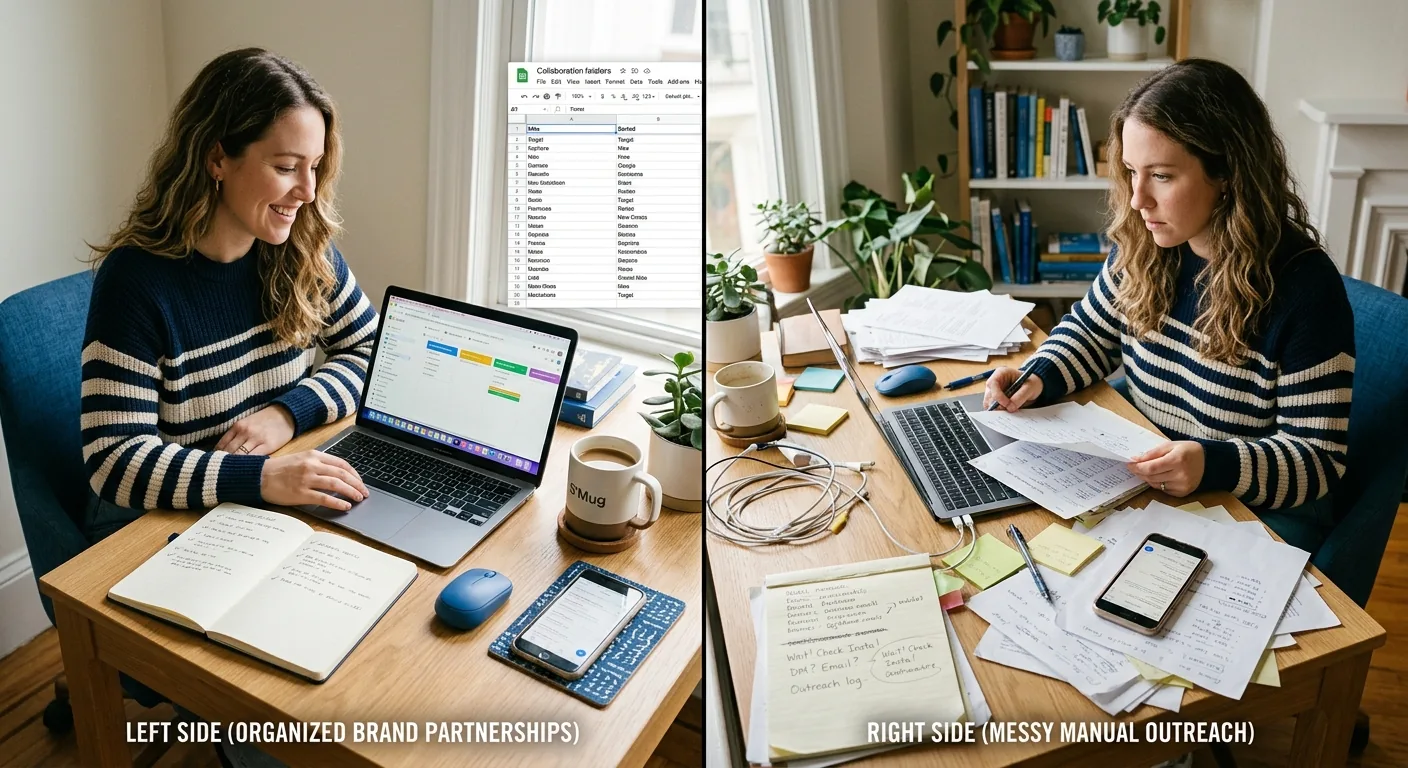
Use one primary call to action: invite the recipient to discuss fit, request the correct contact, or offer to send a concise media kit and concept outline. Keep a record of whom you contacted, the date, the email version used, the follow-up date, and the response. This supports organized communication while allowing you to decide case by case which opportunities deserve further attention.
Preparation Checklist Before Contacting a Brand
Complete this checklist before customizing the email. First, identify the exact brand, product line, campaign, or category you want to reference. A specific reason for contacting the brand is more credible than a generic statement that you enjoy its products. Second, identify the recipient whenever possible. This may be a partnerships contact, creator relations contact, communications contact, marketing contact, or another public-facing business contact. If you cannot identify the right person, address the email to the partnerships or marketing team and ask for routing.
Third, prepare a short creator profile in your own words. Include your content focus, the communities or interests you speak to, and the formats you currently create. Do not describe audience size, engagement, demographics, reach, conversion, or prior campaign outcomes unless the information is current, accurate, and yours to share. If you attach a media kit, review it for consistency with the email. The recipient should not find conflicting audience descriptions, outdated links, or promises you no longer want to make.
Fourth, decide your boundaries before the conversation begins. Consider which formats you are open to, which subjects or claims you will not make, whether you want approval language in writing, and whether you are willing to discuss paid work, gifted products, affiliate arrangements, event attendance, long-term partnerships, or another structure. You do not need to include every boundary in the first email. You do need to know them so that enthusiasm does not lead you into an arrangement that conflicts with your values or workflow.
Finally, prepare the materials you may send after interest is confirmed: a media kit, selected work samples, a one-page concept, your preferred contact details, and any questions you need answered before proposing specifics. Only share materials you are comfortable having reviewed, forwarded internally, or retained by the recipient.
Primary Initial Outreach Email
Subject: Collaboration idea from [Your Name] for [Brand Name]
Hello [Name or Team],
My name is [Your Name], and I create [brief description of your content, platform, or creative work] for an audience interested in [relevant interests or community focus]. I am reaching out because [Brand Name] stands out to me for [specific, truthful reason connected to the brand, product, campaign, or shared value].
I would be interested in exploring a potential collaboration that introduces [product, service, theme, or campaign] through content that remains consistent with my voice and the expectations of my audience. One possible direction would be [brief concept, such as a tutorial, editorial feature, routine, review format, event recap, styled content set, or conversation-led post]. I would tailor the final concept after learning more about your current priorities and what kind of partnership you are considering.
If there is interest, I can share a concise media kit, selected examples of my work, and a more detailed concept outline. I would also welcome information about the appropriate contact, current creator opportunities, and any campaign context you would like me to consider.
Thank you for your time, [Your Name] [Creator name or business name, if used] [Website or portfolio] [Primary social link] [Email]
This version creates a professional opening without pretending that terms already exist. The phrase “remains consistent with my voice” is intentional: it communicates that collaboration must fit your established identity. The phrase “one possible direction” also preserves flexibility. It signals initiative without locking you into a concept before you know the brand's objectives, timeline, expectations, or internal process.
Alternative Email for a Product You Already Use
Subject: Potential creator partnership: [Your Name] x [Brand Name]
Hello [Name or Team],
I am [Your Name], a [creator type or content descriptor] whose work focuses on [topic, audience interest, or creative category]. I am contacting you because I have personal familiarity with [specific product, service, or brand category], and I believe there may be a thoughtful opportunity to discuss it with my audience in a way that is useful, accurate, and natural to my content.
Rather than sending a generic proposal, I wanted to reach out with a focused idea. I could explore [brief, realistic concept] while keeping the content grounded in my usual approach to [your format or editorial style]. If a partnership conversation is relevant, I would be glad to share examples, current channel information, and a short outline of how I would approach the concept.
I am selective about collaborations and aim to work with brands that fit both my editorial direction and my audience's interests. If [Brand Name] is open to creator conversations in this area, please let me know the best next step or the appropriate person to contact.
Best, [Your Name] [Links and contact information]
Only use personal-familiarity language if it is true. If you have not used the product, replace that sentence with a specific observation about the brand's public work, product category, or campaign direction. Do not claim independent testing, long-term use, audience demand, or product outcomes unless you can support those statements from your own experience or records.
Follow-Up Email Sequence
Follow up once after a reasonable interval that you choose based on your workflow and the context of the original message. The purpose of a follow-up is to make the earlier note easy to find, not to create pressure.
Subject: Following up: [Your Name] x [Brand Name]
Hello [Name or Team],
I wanted to briefly follow up on my note regarding a potential collaboration around [short concept or category]. I know schedules can be busy, so I wanted to resurface the idea in case it is relevant to your current priorities.
I would be happy to send a media kit, selected work samples, or a concise concept outline if helpful. If another colleague handles creator partnerships, I would appreciate being directed to the appropriate contact.
Thank you, [Your Name]
If you receive no response after this follow-up, close the outreach record and move on unless you have a genuinely new, relevant reason to contact the brand later. Repeated messages do not strengthen a proposal that has not received interest. Protect your time, your reputation, and your creative energy by concentrating on brands and contacts that engage respectfully.
If a brand responds with a broad request such as “send rates” or “tell us more,” do not assume the requested scope. Thank them, ask for the campaign objective, expected deliverables, timing, intended channels, approval expectations, and any other details you need to assess fit. Then respond with a tailored proposal rather than trying to force a generic package onto an undefined opportunity.
Reply Template When a Brand Expresses Interest
Subject: Re: [Your Name] x [Brand Name]
Hello [Name],
Thank you for getting back to me. I would be glad to learn more about the opportunity and assess whether there is a strong fit for both sides.
To help me understand the collaboration, could you share the campaign or partnership objective, the product or message you would like considered, the proposed content format, anticipated timing, the channels involved, and the point person for creative feedback? I would also appreciate any information about the intended use of the content, required messaging, brand guidelines, and the process for confirming final scope.
My priority is creating work that is accurate, useful to my audience, and consistent with my established voice. Once I have the relevant context, I can respond with an appropriate concept, availability, and the materials needed for a productive discussion.
Best, [Your Name]
This response establishes a deliberate process. It does not reject the brand, but it avoids agreeing to unclear expectations. You are allowed to ask questions before committing. You are also allowed to decline an opportunity if the requested content, timeline, message, review process, or other terms do not fit your work. A respectful collaboration should leave room for informed decisions by both parties.
Creator Control Language for Proposals and Conversations
Use plain, professional language to state your creative boundaries without making the conversation adversarial. You can say: “I can propose content that reflects my established style and speaks to my audience in a natural way.” You can say: “I only include statements that I can stand behind based on the information and experience available to me.” You can say: “I would like to review the complete scope before confirming deliverables.” You can say: “I can consider feedback for accuracy and campaign alignment while maintaining my editorial voice.”
When a requested idea does not fit, use a direct alternative rather than overexplaining. For example: “That format is not a fit for my channel, but I could consider [alternative format] if it supports the campaign objective.” Or: “I am not able to make that statement, but I can describe [truthful alternative observation or feature] in my own words.” Or: “I am not available for that timeline; my next possible window is [date or general period].”
Do not use control language as a performance. It should reflect actual choices you are prepared to make. If you say you are selective, be selective. If you say your audience relationship matters, ensure the proposed work respects that relationship. The point is not to appear difficult or inaccessible. The point is to set conditions for work you can create with confidence and present without compromising your identity.
Final Send Review
Review the email one final time before sending. Confirm that the recipient name, company name, subject line, links, and product references are correct. Remove any placeholder text. Check that your description of the brand is specific and truthful. Check that your concept is possible within your normal production process. Check that you have not accidentally promised a posting date, usage arrangement, performance result, product opinion, or deliverable that has not been discussed and confirmed.
Read the message aloud. It should sound like a confident invitation to explore a fit, not a scripted endorsement. If a sentence feels unlike your normal voice, rewrite it. If the email is long, remove background details that do not help the recipient understand the opportunity. If the email is vague, add one concrete reason you chose the brand or one concise concept direction.
Send from an email address you monitor regularly. Use a clear signature with the minimum contact information needed to continue the conversation. Keep copies of your communications and materials so you can refer back to what was said. If a conversation advances, review each new request against your own creative priorities before agreeing. Your outreach is successful when it creates opportunities that you can evaluate on your terms, whether or not any particular brand chooses to proceed.
Continue with the Brand Outreach overview and the Email Outreach collection. Then compare the related creator guide and the next practical resource for the next step in this workflow.
FAQ
What Should I Include in My First Outreach Email?
Include a brief introduction, one truthful reason the brand is relevant to your work, a simple collaboration direction, and one clear next step. Offer a media kit or work samples rather than attaching a large amount of material unless that is appropriate for the contact.
Should I Send My Rates in the First Email?
You can choose to share information about your preferred collaboration structure, but avoid committing to a specific arrangement before you understand the proposed scope. Ask for the relevant campaign context and decide what information you want to provide next.
How Do I Protect My Creative Voice in Outreach?
State that any concept should remain consistent with your established voice and audience relationship. Use language that leaves room to review the full scope before confirming deliverables, messages, timing, or feedback processes.
What If a Brand Asks for Something I Do Not Want to Create?
Respond clearly and respectfully. You can decline the requested format, explain that it is not a fit for your channel, and offer an alternative only if you genuinely want to. You do not need to accept work that conflicts with your values, workflow, or identity.
What If No One Replies?
Send one concise follow-up if you choose, then move on if there is no response. Keep the outreach record for your own organization and focus future effort on relevant, well-targeted contacts.