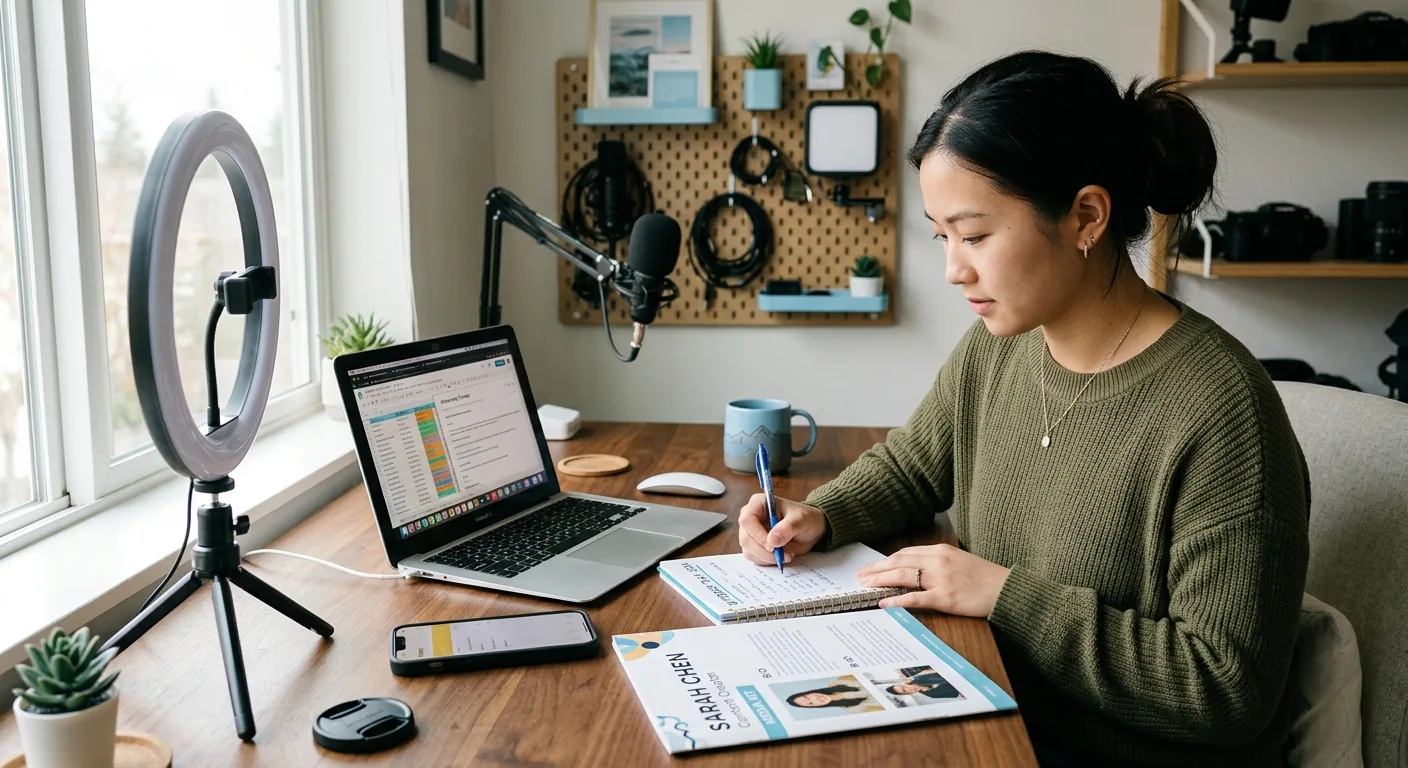
Start Brand Outreach as a New Creator
If you are wondering how to start influencer brand outreach as a new creator, start smaller and more clearly than you think: choose a short list of brands that genuinely fit your niche, gather simple proof that you can create useful content, define one realistic collaboration idea, and keep every outbound message and commercial decision under your creator approval. You do not need a huge following to begin. You do need a clear reason a brand should take your outreach seriously.
Start with a Simple Answer: Begin Outreach Only When You Can Show Fit, Proof, and a Clear Offer
New creators often delay outreach because they think they need a perfect media kit, thousands of followers, or a polished creator business setup. In most cases, your first step is simpler than that. You are ready to begin influencer brand outreach when you can answer three questions:
-
Why this brand?
-
Why are you a fit for it?
-
What would you actually make or offer?
That is the basic threshold.
A brand does not need to see a massive audience first. It needs to see relevance. If you are a lifestyle creator, that relevance might come from your content style, your product taste, your filming quality, your consistency, or your ability to make relatable UGC-style content that looks natural on social. A new creator with strong fit and clear examples can often be more outreach-ready than a larger creator with unfocused content.
The biggest mistake beginners make is reaching out too early with a vague message like “I’d love to collaborate.” That creates work for the brand because it has to figure out what you do, what audience you reach, and what kind of partnership you want. Your outreach gets easier when you remove that guesswork.
A better starting mindset is this: brand outreach is not just sending a message. It is presenting a simple business case.
That business case can be lightweight. It just needs to be real.
What to Prepare Before You Contact Your First Brand
Before you contact your first brand, build a small outreach prep stack. It does not need to be fancy, but it should help you speak clearly and confidently.
Here is a practical minimum:
- Your niche in one sentence
Example: “I create everyday lifestyle and affordable home content for young working women in the US.”
- 3 to 5 recent content examples
Pick posts or videos that represent the kind of work you want brands to hire you for.
- Basic audience proof
This can include platform, approximate audience size, location concentration if relevant, engagement pattern, or content themes that consistently perform well.
- A simple collaboration angle
Example: “I can create a short organic Reel showing how I use your product in a realistic morning routine.”
- Sample deliverables
Think in plain language: one Reel, three story frames, five edited product photos, or one UGC-style demo video.
- A short creator-reviewed draft
Your first message should already be reviewed by you before it goes out.
- Contact notes
Write down where you found the brand, whether it works with creators, what product line matches your content, and who you believe the correct contact might be. You should independently verify contacts before outreach.
You do not necessarily need a polished PDF media kit on day one. Many new creators can start with a strong proof page, a clean email signature, or a simple one-page summary of who they are, what they create, and what examples they can share. What matters is clarity.
If you are stuck, ask yourself these practical readiness questions:
-
Can I show content that looks like the work I want to be paid for?
-
Can I explain my audience without rambling?
-
Can I describe one useful idea for this brand?
-
Would I feel comfortable if the brand replied and asked for more details today?
If the answer is mostly yes, you are probably close enough to begin.
How to Choose Realistic First Brands When You Are Still a New Creator
Your first outreach list should be narrow, realistic, and aligned with what you already make.
That usually means avoiding brands that are obviously out of reach for your current content stage and focusing instead on brands where your niche, style, and audience make immediate sense. For a new lifestyle creator, this might include:
-
small or growing consumer brands
-
DTC brands already working with creators
-
niche beauty, wellness, home, food, or fashion brands
-
local or regional brands with social-friendly products
-
brands you already use and can talk about naturally
A good first target often sits in the middle: established enough to care about creator content, but not so large that your first pitch disappears into a huge partnership machine.
When building your first list, look for signs of creator fit:
-
the brand reposts creator content
-
the brand runs social-first campaigns
-
the brand’s site or social mentions ambassadors, creators, affiliates, or UGC
-
the product fits naturally into your existing content
-
you can picture at least one post idea without forcing it
Just as important, remove bad-fit brands quickly. If you cannot explain why your audience overlaps, if the product does not fit your content naturally, or if your only reason for contacting the brand is that it looks popular, move on.
For beginners, a short list of 10 to 20 researched brands is usually more useful than a giant spreadsheet of random names. A focused list makes it easier to customize your approach, track your decisions, and keep your outreach human-in-the-loop where commercial actions are discussed.
Also, keep expectations practical: selecting brands is not the same as finding final contacts. Creators should independently research and verify brand contacts before sending outreach.
Influencer Brand Outreach Decision Record for New Creators
One of the easiest ways to stay organized as a beginner is to create a simple decision record before each outreach attempt. This habit helps keep your process creator-owned instead of reactive.
Your decision record can live in a note, doc, or spreadsheet. For each brand, capture these fields:
-
Brand name Who are you contacting?
-
Why this brand fits my content One or two sentences only.
-
What proof I have List the exact posts, videos, or examples you would reference.
-
What offer I am making Be specific: gifted collaboration, paid UGC concept, sponsored post idea, product seeding interest, or intro request.
-
What deliverable I can realistically complete Only include what you can actually produce at your current level.
-
Contact source Where did you find the contact or outreach path? Keep your own notes and verify them independently.
-
What I still need before sending Missing metrics? Better examples? A cleaner pitch angle? A stronger CTA?
-
Final creator approval Have you reviewed the message, contact, and any commercial statements yourself?
This record helps you avoid beginner mistakes like:
-
sending the same pitch to every brand
-
overstating your audience or deliverables
-
contacting brands that do not fit your niche
-
forgetting what you offered
-
making commercial commitments before thinking them through
The real value is not complexity. It is consistency. If you keep a decision record, your outreach gets easier to improve because you can spot patterns in what you are choosing, what you are saying, and what you still need to tighten up.
Decision Criteria and Creator Review
Before you send a first outreach message, review your brand decision against a few practical criteria.
Fit
Does this brand make sense for your niche, audience, and content style right now?
Proof
Can you show recent content that supports the kind of collaboration you are asking for?
Offer Clarity
Are you asking for something specific enough that a brand can understand the opportunity quickly?
Deliverable Realism
Can you actually create what you mention, on your current timeline and skill level?
Contact Confidence
Have you independently verified that you are reaching out through a reasonable contact path?
Brand Knowledge
Do you understand the product, brand tone, and likely reason the partnership could make sense?
Creator Approval
Have you reviewed every outbound message, commercial term, and commitment yourself?
That last point matters most. Important outbound messages and commercial commitments remain creator-reviewed and approved. Even when you use tools to help you organize ideas or draft language, the final message still needs your judgment.
This matters for practical reasons, not just caution. Only you know whether a sentence sounds like you, whether a deliverable is realistic, whether you are comfortable with a product claim, and whether a proposed term matches how you want to run your creator business.
If your outreach process involves rates, gifting terms, usage rights, exclusivity, whitelisting, or payment timing, treat those topics as business decisions that deserve an extra pass. They are part of a workflow where commercial actions are discussed.
One Practical Creator Scenario
Imagine a US-based lifestyle creator in Chicago named Maya. She has 3,200 Instagram followers, 1,100 TikTok followers, and a small but consistent stream of home, coffee, and morning-routine content. She has never pitched a brand before.
Maya wants to start outreach to a small clean-skincare brand she already uses.
Here is how she applies the decision record:
Brand fit: The skincare brand already reposts creator videos and has a soft, everyday aesthetic that matches Maya’s content.
Proof: Maya selects four recent videos: a morning routine Reel, a bathroom shelf organization post, a get-ready-with-me clip, and a short UGC-style product demo she made for practice.
Offer: She decides not to ask broadly for “a collab.” Instead, she offers one specific idea: a short lifestyle Reel and three supporting story frames featuring how the product fits into a realistic morning routine.
Deliverable realism: She knows she can film that concept well because it matches content she already makes at home with natural light.
Contact source: She finds a contact form and a partnership email listed on the brand’s site, then checks the brand’s Instagram bio and recent creator callout posts to confirm the best path.
What she still needs: She realizes her audience summary is too vague, so she writes one clean sentence about her audience and notes her US-based reach.
Final creator approval: Before sending, Maya reviews the message, removes claims that sound too salesy, and makes sure she is not implying deliverables or terms she has not fully thought through.
That is a realistic first-outreach process. It is simple, but it is strategic. Maya did not wait until she had a perfect creator business setup. She got clear, chose a realistic brand, and moved forward with creator approval at every step.
Where CreaSeed Can Support Your Outreach Prep
CreaSeed can support the preparation side of outreach rather than replacing your judgment.
CreaSeed supports creator-reviewed drafts, opportunity organization, workflow preparation, and conversational next-step support when you are getting ready to contact brands. For a new creator, that can be useful when you need help turning scattered ideas into a cleaner outreach process.
For example, you might use CreaSeed to:
-
organize which brands you are considering and why
-
prepare a first-pass outreach draft for your review
-
tighten your collaboration angle before you send anything
-
keep notes on proof points, deliverables, and follow-up decisions
-
think through your next step in a conversational workflow
CreaSeed’s demonstrated interface includes conversational, assessment, opportunity, and text-suggestion surfaces. We have also shown a chat-style interface and opportunity organization views that can support outreach prep workflows. Some teams may also want broader tracker, integration, reporting, or full lifecycle coverage, and teams should confirm the current product setup if those areas matter to your workflow.
If you already know your brand target and want help shaping the actual outreach wording, you can also read our guide on turning your notes into a short skincare brand pitch. If you are planning what happens after the first message, our resource on setting a simple follow-up schedule for unanswered brand pitches can help. And if you want a clearer way to manage brand conversations, see our guide on tracking each stage from first pitch to deal close. You can also learn more about AI Creator Agent for creator workflow support.
The main takeaway is simple: start with a creator-owned influencer-brand-outreach decision record, keep every important message under your approval, and use support tools to prepare better—not to hand off your commercial judgment.
Keep this decision connected to Brand Outreach and the focused Writing Brand Pitches collection. For a concrete next step in the same decision cluster, continue with Brand Outreach before making a creator-approved commitment.
FAQ
Do I Need a Media Kit Before I Start Influencer Brand Outreach?
No. A new creator does not always need a formal media kit before first outreach. You do need clear proof: a few strong content examples, a short audience summary, and a specific collaboration angle. A simple one-page summary or clean email follow-up can be enough at the beginning.
How Many Brands Should a New Creator Contact First?
Start with a small, researched list rather than a large blast. For most beginners, 10 to 20 realistic brands is a strong first batch. That gives you enough room to learn from the process while still keeping each outreach message customized and creator-reviewed.
What Proof Should I Include If I Do Not Have Past Brand Deals?
Use proof of content quality and brand fit. Include recent posts, short-form videos, UGC-style samples, audience basics, and examples that match the kind of deliverable you are offering. You do not need past sponsorships to show that you can create useful content.
Should I Pitch Big Brands First?
Usually, no. Your first outreach tends to go better when you start with brands that naturally match your niche and already work with creators or UGC. Smaller or growing brands often make better first targets because your fit is easier to explain and your offer can feel more relevant.
Can CreaSeed Handle the Whole Outreach Process for Me?
CreaSeed is best used as creator workflow support for preparation, drafting, organization, and next-step coordination. Creators independently verify contacts and approve every outbound message, commercial term, and commitment.
Explore how CreaSeed can support your creator workflow.
For creator-reviewed workflow support, see CreaSeed’s AI Creator Agent.