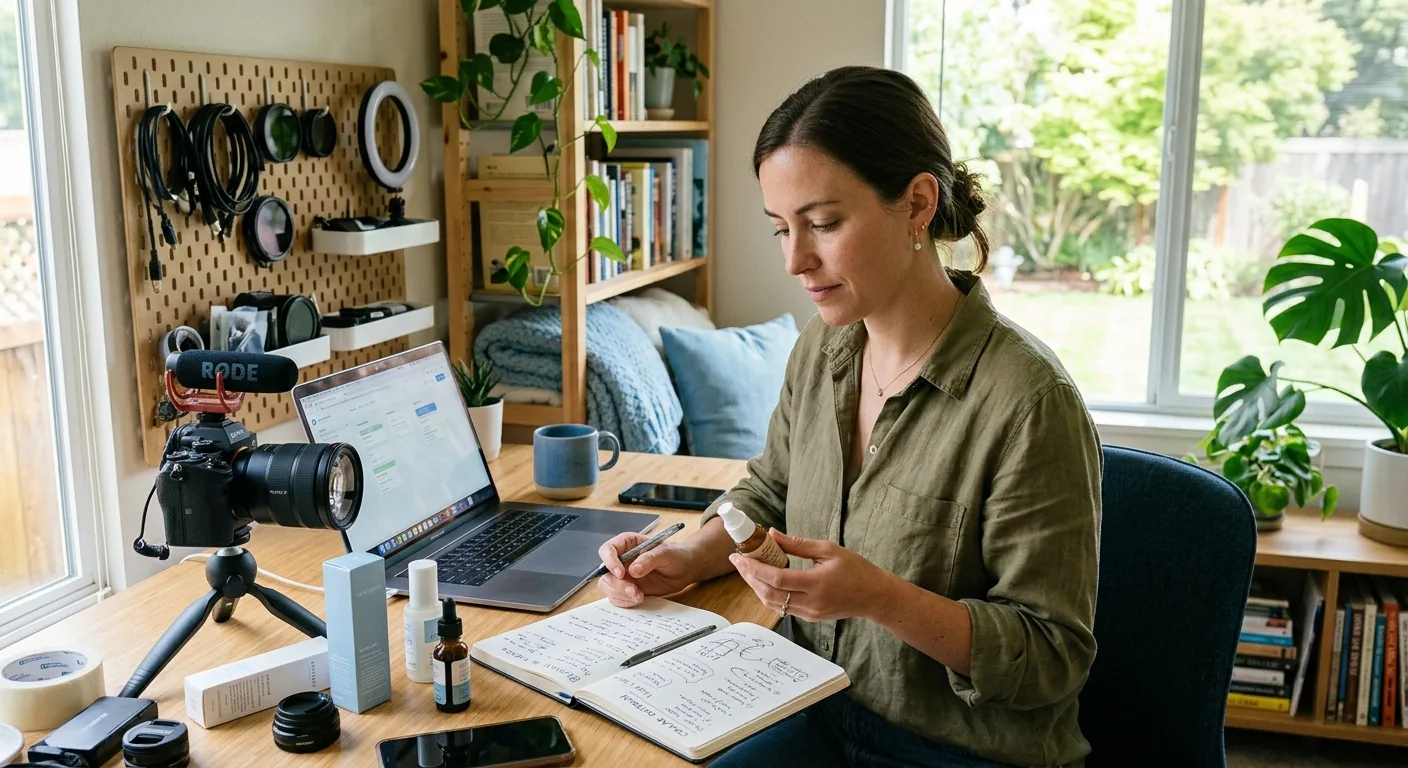
Discover Influencer Brand Outreach
If you want to discover influencer brand outreach opportunities, the key question is simple: are you actually ready to find brands that fit your content, offer, and review capacity right now? For most solo, nano, micro, and UGC creators, the right answer is proceed only when your niche, proof, and creator-reviewed outreach standards are clear; pause when your positioning is still fuzzy; or clarify when you need better fit or contact evidence before spending time on outreach discovery.
Quick Read: Should You Start Discovering Brand Outreach Opportunities Yet?
You are ready to start discovering influencer brand outreach opportunities when you can clearly answer three things:
-
What kind of brand fit you want
-
What proof you already have
-
Whether you can review opportunities carefully
You should be able to name your category, audience, and content angle in plain language.
You do not need celebrity scale, but you do need enough visible proof that a brand can understand your value.
Discovery is only useful if you can independently verify contacts and approve every outbound message, commercial term, and commitment.
A fast readiness call looks like this:
-
Proceed if your niche, offer, and proof are clear enough to start identifying likely-fit brands.
-
Pause if your content direction or creator offer is still too vague to know which brands actually match.
-
Clarify if your content is strong but you still need better contact confidence, fit notes, or workflow organization before moving ahead.
This matters because discovering brand outreach opportunities is not the same as running a full outreach campaign. It is the narrower step of deciding whether you can start finding the right targets without wasting time on brands that are misaligned, unreachable, or too broad for your current stage.
Clarify the Decision for Discover Influencer Brand Outreach
The decision here is not “Should brand outreach exist in my creator business?” The decision is much narrower: “Am I ready to begin discovering outreach opportunities that are worth my time?”
That distinction matters for smaller creators.
A lot of creators start discovery too early. They know they want brand deals, so they begin searching every skincare, fitness, wellness, parenting, or lifestyle brand they can find. But if they have not clarified their content angle, deliverable style, or basic proof points, discovery turns into noise.
You are not ready just because:
-
you want paid partnerships
-
you have a media kit draft somewhere
-
you posted consistently for two weeks
-
you saw another creator working with similar brands
You may be ready when you can say things like:
-
“I make short-form UGC for affordable skincare brands aimed at women in their 20s and 30s.”
-
“My last 12 posts show a clear home-organization angle and product-first storytelling style.”
-
“I know which brands fit my audience, and I can review opportunities before anything goes out.”
That last point is especially important. Discovery should lead into a creator-controlled workflow, not random outreach. Important outbound messages and commercial commitments remain creator-reviewed and approved. Creators independently verify contacts and approve every outbound message, commercial term, and commitment.
So before you discover influencer brand outreach opportunities, ask yourself:
-
Am I trying to find any brand, or the right kind of brand?
-
Do I know what a realistic fit looks like for my current content?
-
If I find a possible opportunity, can I evaluate it quickly and responsibly?
If you cannot answer those questions yet, the right next step may be pause or clarify, not proceed.
Decision Criteria and Evidence to Record
Use the checks below as a compact readiness audit. You do not need a complicated scoring system. You do need honest evidence.
Niche Clarity
Record whether your content is easy to classify in one or two short lines.
Strong signs:
-
your content falls into a clear category or subcategory
-
your recent posts share a recognizable theme
-
your audience would expect related brand partnerships
Weak signs:
-
your feed jumps between unrelated topics
-
you cannot explain your niche without listing everything you post
-
the brands you want range across too many unrelated categories
If your niche is unclear, pause . Discovery gets messy when you cannot tell what fit looks like.
Audience Proof
You do not need huge numbers to begin discovery, but you do need proof that your content reaches and resonates with a real audience.
Record evidence such as:
-
recent posts with meaningful engagement
-
repeat comments that show audience interest
-
saves, shares, replies, or story reactions
-
examples of followers responding to product, routine, or recommendation content
This is not about forcing a benchmark. It is about showing that your audience behavior supports the type of brand you plan to approach.
If your audience proof is inconsistent but your niche is clear, you may still clarify rather than pause completely.
Content Consistency
Discovery works better when a brand can look at your recent content and immediately understand your style.
Record:
-
the last 9 to 15 pieces of content in your main channel
-
whether they support a similar visual and message direction
-
whether they demonstrate the kind of content a brand would want from you
For example, if you want to discover outreach opportunities in clean beauty but your last several posts are travel memes, gym clips, and unrelated hauls, your discovery list will be harder to trust.
Offer Clarity
A creator who is ready for discovery can explain what they would reasonably offer in a partnership.
That might include:
-
UGC videos
-
short-form social posts
-
story sets
-
product demo content
-
review-style content
-
creator whitelisting discussions, if relevant
Keep legal, tax, payment, usage-rights, exclusivity, and whitelisting decisions informational and creator-controlled. Those topics often come later, but they still need your review and approval before any commitment is made.
If you cannot describe your likely deliverables yet, pause . You do not need final pricing to start discovery, but you do need a basic offer.
Brand-Fit Signals
Record why a brand belongs on your discovery list.
Useful signals include:
-
the brand already works with creators at your size or style
-
your audience overlaps with the brand’s likely customer
-
your content naturally features that product type
-
the brand’s tone matches your content tone
Weak signals include:
-
“I like them personally”
-
“They look popular”
-
“They work with influencers, probably”
Discovery becomes productive when each target has a reason to be there.
Contact Path Confidence
This is where many creators rush.
Before moving forward, record:
-
where you found the brand contact path
-
whether it appears current and relevant
-
whether you know if outreach should go to partnerships, PR, creator marketing, or a general channel
You should not assume any list of contacts is correct just because it exists online. Creators independently verify contacts before relying on them. If your fit is strong but your contact path is shaky, the right call is usually clarify .
Time Available for Review
Discovery creates follow-up work. If you identify opportunities but cannot review them, sort them, or approve next steps, your list may stall.
Record whether you have time each week to:
-
review potential matches
-
verify contact details
-
approve outreach language
-
track what you have already evaluated
If not, pause until your workflow is realistic.
Proceed, Pause, or Clarify: How to Call the Next Step
After the audit, make a clean decision.
Proceed
Choose proceed when:
-
your niche is clear
-
your recent content supports the same direction
-
your audience proof is good enough to explain your value
-
your creator offer is understandable
-
you can verify contacts and review messages yourself
Proceed does not mean rushing into mass outreach. It means you are ready to begin discovering likely-fit outreach targets with discipline.
Pause
Choose pause when:
-
your feed is too mixed to show a reliable category fit
-
your offer is unclear
-
your recent content does not support the kind of brands you want
-
you do not have time to review opportunities properly
Pause is not failure. It is often the fastest way to avoid low-fit outreach work that leads nowhere useful.
Clarify
Choose clarify when:
-
your niche and content are strong, but your target brand list is still too broad
-
you found possible brands, but you are unsure who to contact
-
you need better organization before taking the next step
-
you want a cleaner way to prep notes or draft outreach for your own review
Clarify is the right answer when the opportunity is close, but one missing piece could waste your time if ignored.
One Practical Creator Scenario
A realistic example: a US-based UGC creator in Austin wants to discover influencer brand outreach opportunities in skincare.
She has 3,200 followers on Instagram and TikTok, creates short product demos, and has posted several “morning routine” and “sensitive skin” videos in the last month. She is not trying to pitch every beauty brand. She wants to know if she is ready to start identifying likely-fit skincare companies for outreach.
Here is how the audit plays out:
-
Niche clarity: strong. Her content clearly centers on skincare routines and product-first UGC.
-
Audience proof: decent. A few recent videos have steady saves, comments, and product questions.
-
Content consistency: strong. Her recent posts match the category she wants to target.
-
Offer clarity: moderate to strong. She can offer short UGC videos, product demos, and usage clips.
-
Brand-fit signals: strong. She can name three types of brands that fit: affordable skincare, sensitive-skin products, and routine-based beauty products.
-
Contact path confidence: weak to moderate. She has found some general contact forms and one creator email, but she has not verified which channels are current.
-
Time for review: strong. She can set aside time twice a week to review opportunities and approve messages.
Her result is clarify .
Why not proceed immediately? Because the missing issue is not content quality. It is contact confidence. She is close, but she should tighten her list, verify the right outreach paths, and organize basic notes before moving forward.
If she solves that gap, she can move to proceed quickly. If instead her feed had been split between skincare, comedy clips, travel edits, and random affiliate posts, the answer would likely be pause.
Where Creator-Reviewed Support May Help
If you are in the clarify stage, light workflow support can help you get organized before discovery turns into outreach. CreaSeed may support creator-reviewed preparation, opportunity organization, draft preparation, and next-step coordination, while keeping important commercial decisions under creator approval.
Keep that role narrow and practical. Support is useful when you want help:
-
organizing possible brand opportunities into a cleaner list
-
preparing notes on why a brand seems like a fit
-
drafting outreach language for your own review
-
keeping discovery and next-step follow-up more structured
If your team expects broader CRM, tracker, integration, reporting, or full-lifecycle workflow coverage, confirm the current product setup before assuming that scope.
For adjacent decisions, you can also compare manual outreach vs. a more structured creator workflow for growing creators, look at what changes when you are ready to execute influencer brand outreach, or review whether influencer brand outreach is worth considering for your collaboration goals.
Continue with the Brand Outreach overview and the Email Outreach collection. Then compare the related creator guide and the next practical resource for the next step in this workflow.
FAQ
Do I Need a Media Kit Before I Discover Influencer Brand Outreach Opportunities?
Not always. You do need enough clear proof to explain your niche, content style, and likely offer. A polished media kit can help, but discovery can start before that if your recent content and creator positioning already make sense.
Should I Start Discovery If My Audience Is Still Small?
Yes, sometimes. Smaller creators can still be ready if their niche is clear, their content is consistent, and their offer fits the kinds of brands they want to approach. Small audience size alone does not mean pause.
What Is the Biggest Reason to Pause Discovery?
The most common reason is lack of clarity. If you cannot explain your niche, your content value, or the kinds of brands that fit you, discovery usually becomes a long list of weak targets instead of a focused opportunity set.
What Does Clarify Usually Mean for a Creator?
Clarify usually means your core content is strong, but one decision is still unresolved. Often that missing piece is contact confidence, a tighter target list, or better organization before you approve any outreach language or commercial next step.
Can I Rely on Discovered Contacts Without Checking Them?
No. Creators independently verify contacts and approve every outbound message, commercial term, and commitment. Discovery is only useful when you keep a human-in-the-loop where commercial actions are discussed.
What Should I Do After I Reach a Proceed Decision?
After proceed, move into a tighter execution step: finalize your target list, verify contact paths, prepare creator-reviewed messaging, and decide how you will track follow-up. Keep the next step focused and controlled rather than broad and rushed.
Explore how CreaSeed can support your creator workflow.