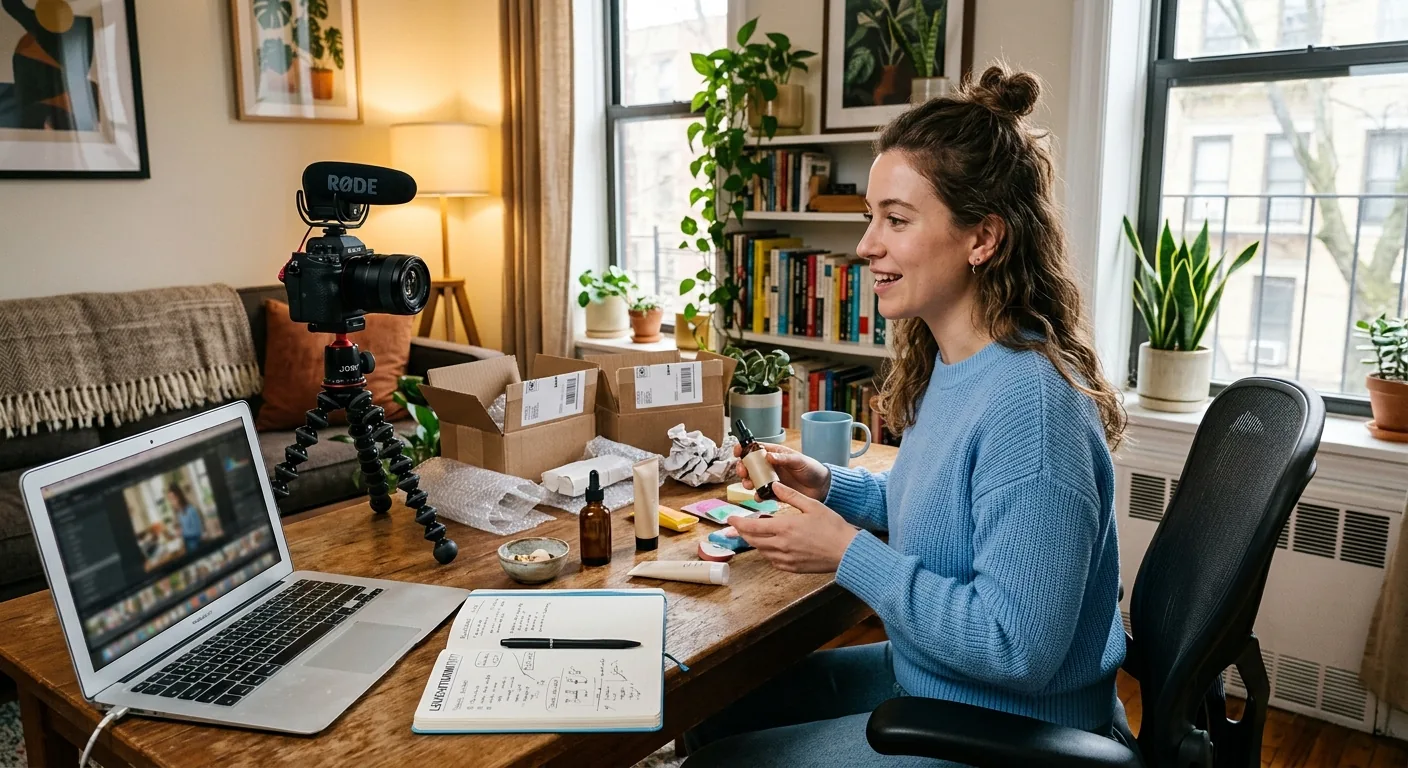
Brand Collaborations for Small Creators in Niche Audiences
Yes — small creators in niche audiences can absolutely be realistic candidates for brand collaborations. Many brands care less about huge reach alone and more about whether your audience is clearly defined, trusts your recommendations, and matches the product category. If you are a nano, micro, or UGC creator, the smarter question is not "Am I too small?" but "Is this brand a strong fit for my audience, my workload, and my business direction?" That is where a creator-owned decision record helps.
Yes, Small Niche Creators Can Be a Strong Fit for the Right Brands
A niche audience can be valuable because it is specific. If you create for a tightly defined group — home coffee hobbyists, budget tabletop gamers, sensory-friendly parents, apartment gardeners, vintage camera collectors, or another focused community — your content often carries context that broad lifestyle content does not. Your audience may already look to you for product opinions, setup ideas, tutorials, comparisons, and practical recommendations.
That does not mean every niche creator will get every deal. It does mean smaller audience size does not automatically rule you out.
For many small creators, the strongest early collaboration opportunities tend to come from brands that want:
-
alignment with a specific interest or use case
-
believable product integration into normal content
-
creator trust and clear audience relevance
-
usable content, not just broad exposure
-
a working relationship with a creator who understands the category
This matters because a niche creator often has a more obvious story to tell. If your audience already expects you to test, explain, compare, or demonstrate products in your category, a sponsored post can feel more natural when the match is real.
The practical takeaway: do not disqualify yourself too early. Instead, review each opportunity with a simple record of fit, effort, and terms before you spend time pitching or agreeing to anything.
What Brands Often Value More than Raw Follower Count
Follower count still matters in some campaigns, but it is not the only signal. For small creators in niche audiences, several other factors can carry real weight.
Audience Relevance
A brand usually wants to know whether the people watching you are the same people likely to care about its product. A creator with 8,000 highly focused followers in a niche can be more relevant to a specialized product than a much larger general-interest account.
Content Credibility
Brands often look at whether your content style makes recommendations believable. If you regularly share honest reviews, tutorials, product workflows, or side-by-side comparisons, your audience may already expect product-related content from you.
Consistency and Clarity
A smaller creator with a clear niche and consistent posting style can be easier for a brand to understand than a larger account with mixed topics. Brands often want to know what kind of content they are buying into and how their product might appear.
Quality of Integration
A well-matched creator can make the product feel like part of the content rather than an interruption. For example, a coffee scale fits naturally inside a home espresso workflow. A storage solution fits naturally inside a small-space organization channel. That kind of integration matters.
Professionalism
Even at a small stage, brands may notice whether you communicate clearly, respond thoughtfully, and understand deliverables. You do not need to sound corporate. You do need to sound organized.
If you remember only one idea from this section, let it be this: brands usually need fit, clarity, and usable content — not just the biggest possible audience.
Brand Collaborations for Small Creators in Niche Audiences: Decision Record
Here is a creator-owned decision record you can use before you pitch a brand, reply to an inbound message, or agree to a collaboration. It is intentionally simple. The goal is to help you protect your audience, time, and business direction.
1. Is the Audience-Brand Match Obvious?
Ask yourself:
-
Would my audience immediately understand why this brand belongs here?
-
Does this product solve a problem my audience actually has?
-
Can I explain the value without stretching or forcing it?
If you have to invent the fit, it is probably weak.
2. Can I Make Content About This Honestly?
A niche deal is usually stronger when you can speak from real use, real interest, or real category familiarity. If the product category is outside your normal content, your audience may feel that mismatch quickly.
3. Is the Work Worth the Trade?
Look at the full effort, not just the visible deliverable. A single reel or short can still require:
-
concept planning
-
setup or product testing
-
filming time
-
editing time
-
caption writing
-
revisions
-
posting and follow-up
Small creators often underprice effort because the deliverable sounds small. Your decision record should include the actual workload.
4. Do the Deliverables Make Sense for My Content Style?
A collaboration can look good on paper and still be a poor fit in practice. If the brand wants a format you rarely make, an unnatural tone, or unusually rigid talking points, the result may not feel like your channel.
5. Are the Terms Clear Enough to Evaluate?
Before moving forward, make sure you understand the basics:
-
what content is expected
-
when it is due
-
how many revisions are included
-
what compensation is offered
-
when payment is expected
-
what usage rights the brand wants
-
whether exclusivity is involved
-
whether whitelisting or paid usage is requested
If these points are vague, you do not yet have enough information to say yes.
6. Does This Help My Longer-Term Direction?
Not every deal should be judged only by short-term cash or free product. Ask:
-
Does this move me deeper into my niche?
-
Would I be proud to show this on my media kit later?
-
Does this help me build the kind of creator business I actually want?
7. Would I Still Like This Deal After One Revision Cycle and One Delay?
This is a simple stress test. If the deal only feels worthwhile under perfect conditions, be careful. Small creators need opportunities that still make sense when real-world friction shows up.
Decision Criteria and Creator Review
Once a collaboration passes your first-fit check, the next step is review and control. Important outbound messages and commercial commitments should remain creator-reviewed and approved.
That means:
-
creators independently verify contacts and approve every outbound message, commercial term, and commitment
-
review matters anywhere outreach, replies, or negotiation-adjacent communication are involved
-
you should read the exact wording before anything goes out under your name
-
you should confirm what you are agreeing to before discussing rates, usage, timelines, or deliverables further
This is especially important for small niche creators because your reputation is concentrated. A broad creator may absorb an off-brand deal more easily. A niche creator often cannot. One poor-fit sponsor can confuse your audience faster because your content identity is more specific.
Your review criteria can stay simple:
-
Is the message accurate to my voice?
-
Does it overstate my interest or audience fit?
-
Does it commit me to terms I have not accepted?
-
Am I comfortable if this message is screenshotted or forwarded?
If you work with collaborators, assistants, or a small team, decide in advance who approves what. For example, one person may draft, but the creator should still approve final outreach and commercial decisions.
One Practical Creator Scenario
Here is one realistic sample scenario.
A US-based micro creator runs a budget tabletop gaming channel with 11,000 followers across short-form video and Instagram. Most content is about affordable game setups, storage ideas, rules explainers, and game-night hosting. A small accessories brand reaches out about a paid collaboration for card sleeves, token organizers, and a tabletop mat.
On follower count alone, the creator worries they may be too small. But the decision record gives a clearer answer.
Applying the Decision Record
Audience-brand match: Strong. The products directly fit the creator's content category and audience habits.
Content honesty: Strong. The creator already talks about setup choices and game-night practicality, so the integration feels believable.
Workload: Moderate. The brand wants one short-form video, three story frames, and one still photo. That sounds manageable at first, but the creator adds testing time, setup styling, and revision time to the estimate.
Deliverable fit: Mostly strong. The video fits naturally. The still photo is less important to the creator's usual style, so they note that for negotiation.
Terms clarity: Incomplete. The initial message mentions payment but does not clearly explain usage rights or whether the brand wants paid ad usage.
Long-term direction: Positive. This kind of collaboration strengthens the creator's position inside their niche.
So the creator does not instantly accept and does not instantly decline. Instead, they move to a creator-reviewed next step: clarify the missing terms, refine a reply, and decide whether the final scope still feels worth the effort.
That is a good example of how a small niche creator can think. The point is not to rush toward any deal. The point is to identify the right deals faster.
Where CreaSeed Fits in a Creator-Reviewed Collaboration Workflow
CreaSeed can support this stage of the process as creator-approved workflow support.
For this use case, CreaSeed can help with practical prep work such as:
-
organizing opportunities so you can compare possible brand fits
-
preparing creator-reviewed drafts for outreach or replies
-
helping you think through next steps before you respond
-
keeping opportunity review and message preparation in one working flow
CreaSeed also supports a practical working style through surfaces for conversation, assessment, opportunity review, and text suggestions. That can be useful when you are trying to turn scattered ideas into a clearer reply or shortlist of potential brand fits.
For example, a small creator may use CreaSeed to:
-
collect a few possible collaboration targets around one niche
-
note why each one does or does not fit the audience
-
prepare a reply draft for creator approval
-
refine a sponsorship message so it sounds more like the creator
That said, creator approval stays central. Creators review and approve each outbound message and commercial decision. CreaSeed is best thought of as support for preparation, drafting, organization, and next-step coordination — not as a hands-off manager.
If your team needs broader CRM, tracker, integration, reporting, or full lifecycle coverage, confirm the current product setup before treating CreaSeed as the answer for that wider scope.
If you want to go deeper from here, you can explore how AI Creator Agent supports creator-reviewed next-step prep, learn how to manage active creator sponsorship deliverables and deadlines once a deal is live, compare a spreadsheet workflow with a more guided creator workflow, or review how to price creator sponsorships after an inbound brand offer.
Questions to Settle Before You Say Yes to a Niche Brand Deal
Before you accept a collaboration, try to settle these points in plain language:
-
What exactly am I delivering?
-
What is the deadline?
-
How many revision rounds are expected?
-
When and how will payment happen?
-
Does the brand want organic posting only, or broader usage rights too?
-
Is exclusivity included, and for how long?
-
Is whitelisting or paid amplification involved?
-
Do I need to purchase anything first?
-
Who approves the final content?
-
What happens if the timeline slips?
A small creator does not need a huge operations system to ask smart questions. You just need enough clarity to avoid accidental overcommitment.
A final note on terms: contracts, payment timing, tax treatment, usage rights, exclusivity, and whitelisting can all affect whether a deal is actually worthwhile. Those topics are important, but they are informational here, not legal or tax advice. If a deal becomes materially important to your business, it can be worth getting qualified professional guidance.
Continue with the Brand Deals overview and the Finding Opportunities collection. Then compare the related creator guide and the next practical resource for the next step in this workflow.
FAQ
Can Small Creators in Niche Audiences Really Get Brand Deals?
Yes. Small creators can be a fit when the audience is clearly relevant, the content style suits the product, and the creator can present the collaboration credibly. A smaller audience does not automatically disqualify you.
What Is the Biggest Mistake Niche Creators Make with Brand Collaborations?
A common mistake is saying yes based on category excitement alone without reviewing workload, usage rights, exclusivity, and overall fit. A deal can look exciting and still be a poor business decision.
Should I Pitch Brands If I Do Not Have a Huge Following?
You can, especially if your niche is clear and your content naturally supports the product category. Focus on relevance, content quality, and clarity of fit rather than trying to sound bigger than you are.
What Should I Review Before Sending Outreach or Accepting a Deal?
Review audience fit, content credibility, deliverables, timeline, compensation, usage rights, exclusivity, and revision expectations. Also make sure every outbound message and commercial commitment is creator-reviewed and approved.
How Can CreaSeed Help Without Taking over Creator Decisions?
CreaSeed can support creator-reviewed drafts, opportunity organization, workflow preparation, and next-step thinking. Creators still independently verify contacts and approve every outbound message, commercial term, and commitment.