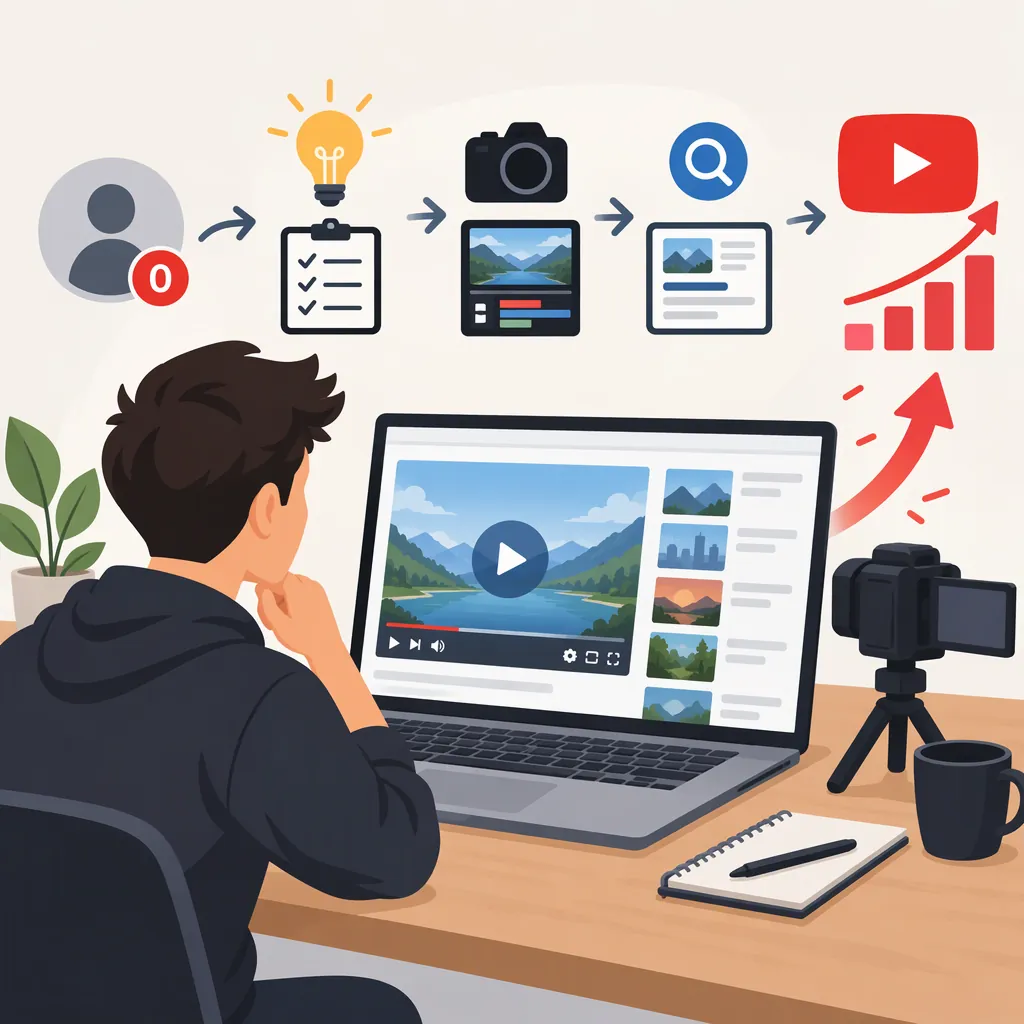
How to Get Views on YouTube with 0 Subscribers
To get views on YouTube with 0 subscribers, start with a video that answers a specific question, give it an accurate title and readable thumbnail, and share it where that topic is already relevant. Then use viewers’ questions to plan related videos rather than treating subscriptions as the first goal. The supplied source recommends search-focused titles, custom thumbnails, relevant sharing, and Shorts; these are approaches to test, not guarantees of views or subscriber growth. [reference-1]
Choose a Question Before Making the Video
With no subscriber base to rely on, make the intended viewer and the video’s purpose explicit. Prefer a focused question over a broad introduction to your channel.
For example, a proposed video about cooking could answer “How do I keep rice from sticking?” rather than simply introduce a new cooking channel. This is an illustrative content choice, not a claim about search demand.
The supplied guide recommends researching topics with YouTube’s search suggestions before filming and using relevant wording in the title and description. Treat suggestions as prompts for investigation, not proof that a topic will attract views. [reference-1]
Before recording, write down the question, the result you will demonstrate, and what the viewer needs to know beforehand. If the idea contains several unrelated questions, narrow it.
One-Video Planning Template
Intended viewer: ___
Specific question: ___
Result demonstrated in this video: ___
Required materials or prior knowledge: ___
Working title: ___
A related question for a later video: ___
Make the Title, Thumbnail, and Video Agree
Give the viewer one clear expectation. The title should describe the question or outcome, the thumbnail should reinforce it, and the video should deliver it.
The source recommends custom thumbnails with readable text and emphasizes fulfilling the thumbnail’s promise. It also recommends placing relevant topic wording early in the description. [reference-1]
Use those recommendations conservatively:
- Write a specific title without claiming a result you cannot demonstrate.
- Keep thumbnail text short enough to read at a small size.
- Show the actual subject or result rather than an unrelated attention-grabber.
- Use the opening to establish what the viewer will learn.
- Describe the video plainly instead of repeating a keyword list.
These are packaging choices to test, not a formula for a particular click rate or ranking.
Share Where the Video Is Relevant
Separate having zero YouTube subscribers from having no audience anywhere. If you already have a relevant website or another place where people follow your work, a video can be shared there. The source specifically recommends presenting videos and topic-matched playlists to existing website visitors. [reference-1]
If you do not have an existing audience, do not build your plan around website traffic you lack. Instead, identify places where your video genuinely answers a question, check their sharing rules, and contribute useful context rather than posting a bare link repeatedly.
A practical sharing test is: would this contribution still help someone if they did not watch the video? If not, rewrite it to explain the key point. This is a relevance-first recommendation, not evidence that any particular community will produce views.
Connect Viewer Questions to Related Videos
Plan for a useful next interaction, not just a subscription request. Make the channel description explain the subject you cover, and keep the next video related enough that someone interested in the first can understand why it matters. The source recommends a clear channel description and topic-focused playlists. [reference-1]
As an editorial practice, note genuine questions viewers leave and answer them when you can. A repeated or detailed question can become a candidate for a follow-up video; it is not proof of broad demand.
If comments are absent, do not invent audience preferences. Choose the next logical question yourself and label it as a hypothesis. The aim is to connect discovery, useful viewing, and continued interest without assuming every view will become a subscriber.
Viewer Feedback Log
Video: ___
Question actually received, if any: ___
Clarification needed: ___
Possible follow-up topic: ___
Why it relates to the original video: ___
Status: viewer-requested / creator hypothesis
One change to test next: ___
Test Shorts Without Expecting Guaranteed Growth
Shorts are an optional format, not a requirement for starting. The supplied guide suggests highlights, quick tips, and Q&A as possible Shorts topics. [reference-1] Choose a short format when the idea can stand on its own; do not cut away the context needed to understand the answer.
For your next upload, choose one change to examine: a narrower topic, a clearer title, a simpler thumbnail, or a more direct opening. Keep a record of what changed and what happened, while avoiding firm conclusions from a small amount of activity.
The supplied reference is a commercial third-party guide, not YouTube documentation or controlled evidence of results. Its recommendations support these starting experiments, but do not establish a guaranteed timeline, view count, ranking benefit, or conversion from Shorts viewers to subscribers.
FAQ
What Should I Focus on First: Views or Subscribers?
For a new channel, start with a clear reason to watch an individual video, then make the channel’s ongoing subject understandable. The source recommends both video-level packaging and channel-profile clarity. Treat subscriptions as a possible outcome of continued interest, not a guaranteed result of a view. [reference-1]
Do I Need Shorts to Get My First Views?
The supplied source recommends Shorts as one option alongside titles, thumbnails, and relevant sharing; it does not establish that Shorts are required. Use a Short for a self-contained tip or answer, and a longer video when the topic needs more explanation. [reference-1]
How Long Will It Take to Get Views with 0 Subscribers?
The supplied reference does not establish a dependable timeline for a new channel. Use its topic, packaging, and sharing recommendations as experiments, but do not assume that publishing on a schedule will deliver a specific number of views. [reference-1]