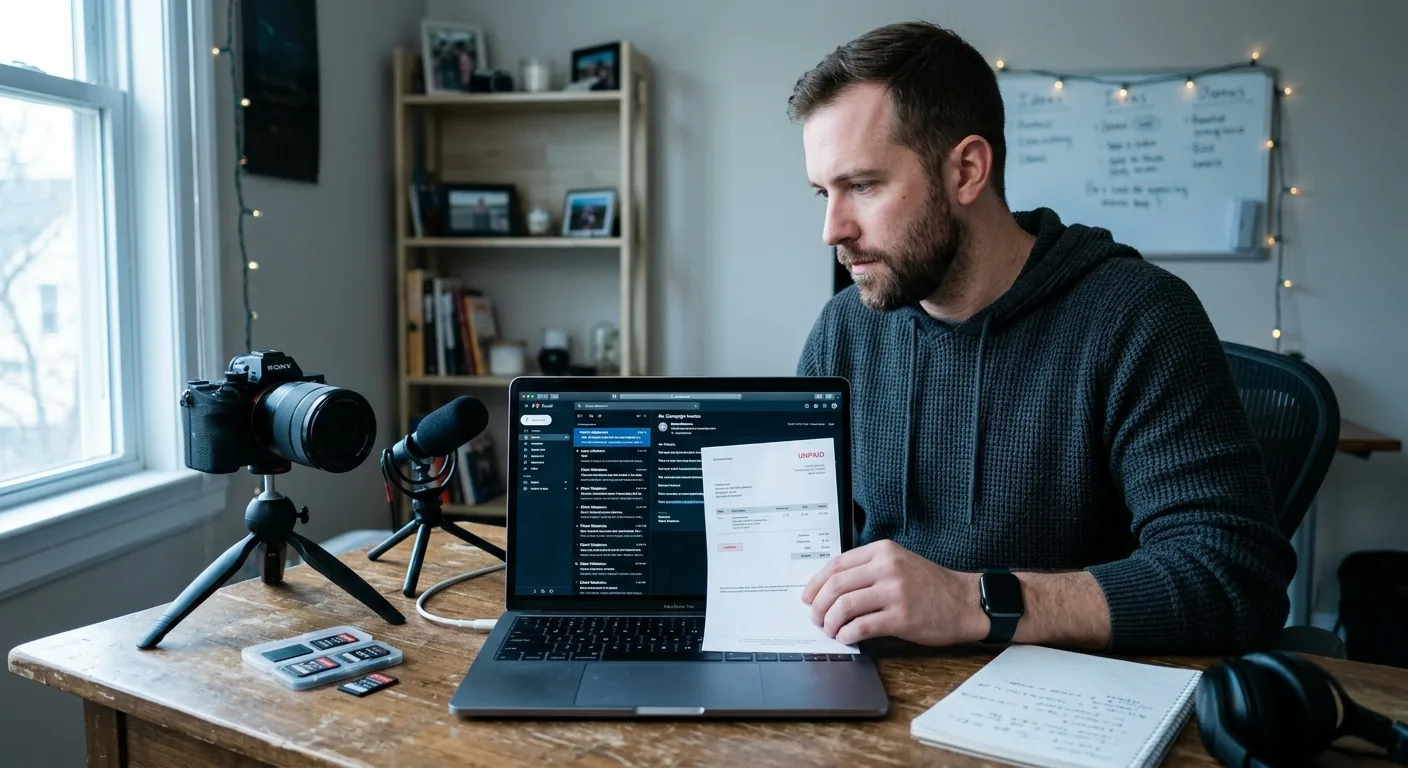
What Creators Should Consider When a Brand Deal Stalls After Delivery
If a brand deal goes quiet after you deliver, start by checking four things before you send another message: proof of delivery, the agreed approval and revision process, payment timing, and any open questions around usage rights, exclusivity, or whitelisting. In other words, the issue is not just “they have not replied yet.” The real question is whether you are still inside a normal review window or whether something important is unresolved and needs a follow-up.
That distinction matters because post-delivery problems can look similar on the surface but lead to very different next steps. A normal review delay should be handled differently from an overdue invoice, an out-of-scope revision request, or a brand trying to expand usage after content was already delivered. Important outbound messages and commercial commitments should stay under creator approval, especially when money, rights, or revised terms are involved.
The Quick Answer: Check Delivery Proof, Approval Status, Payment Timing, and Rights Before You Follow Up
When a brand collaboration slows down after delivery, do not rely on memory or frustration alone. Pull together the basics first:
-
What exactly you delivered
-
When and how you delivered it
-
What the brief or agreement said about approval
-
Whether revisions were included, and how many
-
Whether you already invoiced, and when payment is due
-
Whether usage rights, exclusivity, or whitelisting are still open
Those checks tell you whether the situation is routine or whether you need to act.
For example, if you delivered everything on time and the brand said review takes 5 to 7 business days, a short silence may be normal. But if the review window has passed, the invoice due date is close, or the brand is asking for extra edits that were not in the original scope, you are no longer just waiting. You are managing a post-delivery business issue.
A good follow-up at this stage should be factual, calm, and specific. It should restate what was delivered, reference the agreed timeline or next milestone, and ask for the exact update you need.
Decision Boundary: Is This a Normal Post-Delivery Delay or a Problem That Needs Action?
The fastest way to make a good decision is to classify the situation.
Likely a Normal Delay
You are probably still in a normal waiting period if:
-
You delivered recently and the agreed review window has not passed
-
The brand acknowledged receipt
-
No new asks have appeared
-
Payment is not due yet based on the original terms
-
The brand’s review process was known to be slow
In that case, your best move is often to wait until the expected date, then send a short, professional check-in.
Likely an Approval Gap
This is an approval issue if:
-
You delivered, but the brand has not confirmed receipt or review status
-
The brief required approval before posting or before final acceptance
-
You are unclear whether the content was reviewed by marketing, legal, or another team
The next step here is not to renegotiate. It is to ask a clean status question: was the content received, who is reviewing it, and when should you expect feedback?
Likely a Revision Scope Problem
You may have a revision problem if:
-
The brand asks for major changes after delivery
-
The requested edits go beyond the original brief
-
The brand keeps changing direction instead of requesting clear revisions
-
The request effectively creates new deliverables
At that point, you should compare the new ask against the original agreement and decide whether it fits the included revision scope. If not, your follow-up should separate included edits from additional work.
Likely a Payment Risk
This becomes a payment issue if:
-
The invoice has already been sent and the due date is near or passed
-
The agreement tied payment to delivery or approval, and that milestone is unclear
-
The brand is using vague review language to delay the payment conversation
You do not need to sound aggressive. You do need to be precise about the invoice date, payment terms, and the status needed to keep the project moving.
Likely a Rights or Usage Issue
Pay close attention if the brand wants to:
-
Reuse the content longer than expected
-
Run it as an ad through whitelisting
-
Expand usage to extra platforms or markets
-
Add exclusivity limits you had not already discussed
That is no longer a simple “when will you reply?” problem. It is a rights and scope question. This kind of issue is best handled carefully and, when needed, with professional legal advice. The key operational step is to pause and verify what was actually agreed before saying yes.
Creator Workflow: What to Review Step by Step After You Have Delivered
Here is a practical post-delivery workflow you can run in order.
1. Confirm What You Delivered
List the exact assets you sent: number of videos, hooks, captions, stills, drafts, raw files, links, or posting confirmations. Include the delivery date, file names, and where they were sent.
This sounds basic, but it prevents messy follow-ups like “just checking in” when the brand may be missing a file, reviewing only part of the package, or waiting on a format you forgot to mention.
2. Match Delivery Against the Brief or Agreement
Open the brief, email thread, or contract and check:
-
Deliverable count
-
Format
-
Deadline
-
Required talking points
-
Approval terms
-
Revision terms
-
Payment trigger
Your next step should come from the written scope, not from assumptions. If the brand is slow but still acting inside the original process, your follow-up should support that process. If the current request conflicts with the written scope, your follow-up should name that difference clearly.
3. Check Whether Approval Is Still Pending
Ask yourself:
-
Did the brand confirm receipt?
-
Did they give a review timeline?
-
Was approval required before posting, payment, or final acceptance?
-
Is the delay simply on the brand side, or is the next move actually yours?
Sometimes creators feel stuck when the problem is simply missing clarity. If you do not know whether the brand is reviewing, waiting on another stakeholder, or expecting a revision, that is the first question to resolve.
4. Review Any Revision Request Against Scope
Not all edits are equal. A small hook change or CTA adjustment may be a normal revision. A new script angle, reshoot, or extra variation may be additional work.
Before you respond, separate the request into two buckets:
-
What is reasonably inside the original revision scope
-
What changes the workload, timeline, or deliverable count
That makes your response more professional and reduces emotional back-and-forth.
5. Check Invoice Status and Payment Timing
If invoicing is part of the workflow, verify:
-
Whether the invoice was sent
-
The invoice date
-
The due date
-
Whether payment depends on delivery, approval, posting, or another milestone
Keep this practical and informational. Payment terms can vary, and specific contract interpretation may require legal or accounting advice. For your workflow, the main goal is simple: know what milestone has been reached and what the agreement says happens next.
6. Review Rights Before You Agree to Anything New
If the brand asks to extend usage, add paid usage, request whitelisting access, or broaden exclusivity, stop and review the original deal terms first. Even a casual “can we also use this for ads?” can change the value of the deal.
This is where many after-delivery problems happen. A creator thinks they are answering a quick favor, but the brand is actually asking for expanded rights.
7. Prepare a Follow-Up for Creator Approval
Once you know what category the problem falls into, draft a follow-up that does three things:
-
Restates the current facts
-
Asks for one clear next step
-
Avoids accidental new commitments
For example, a strong follow-up might ask for approval status, confirm whether requested changes are within scope, or request a payment update tied to the agreed milestone. It should stay under creator approval before sending.
What to Record Before the Next Step
Before you follow up or agree to changes, record the details that may matter later. You do not need a complicated system. You do need a complete enough record that you can speak clearly.
Keep these items together:
-
Delivery date and method
-
Final files or links sent
-
The original brief or scope summary
-
Approval terms
-
Revision terms
-
Invoice number, date, and due date if applicable
-
Brand replies or acknowledgments
-
Any request related to usage rights, exclusivity, or whitelisting
-
Your planned next follow-up date
A simple note set can prevent major confusion. If a brand asks for “just one more version,” you can compare that request to the original scope. If they say they never received a file, you can point to the delivery record. If payment timing becomes unclear, you already have the relevant milestone and invoice details in one place.
This is also the right moment to draft your message before sending it. Writing the follow-up after you organize the facts usually leads to a calmer, more useful email or DM.
A Realistic US Creator Example of Handling an After-Delivery Brand Deal Problem
Here is a realistic composite example.
A Texas-based UGC creator delivers two edited short-form videos for a skincare brand on Monday. The brief said the brand would review within 5 business days and one round of minor revisions was included. Payment was due after approval and invoice submission.
By the following Tuesday, the creator has heard nothing.
Instead of immediately sending a frustrated message, the creator checks the record:
-
Both video files were delivered by email with a drive link
-
The brand replied “received, thank you” on Monday
-
The 5-business-day review window ended the previous Friday
-
The invoice draft is ready, but final approval is still pending
-
The original agreement mentions one minor revision round only
That changes the situation. This is not a missing delivery issue. It is a delayed approval issue.
The creator’s next action is a short email for approval:
Hi [Name], just checking in on the two delivered video assets sent on Monday, [date]. I wanted to confirm where things stand in your review process, since the expected review window has now passed. If any minor revisions are needed within the agreed round, I’m happy to review them. If approval is already in progress, please let me know the next timing so I can coordinate invoicing on my side.
That message works because it is specific, not emotional. It confirms delivery, references the expected review period, leaves room for in-scope revisions, and asks for the exact next step.
If the brand then replies asking for three new hooks, a reshoot, and ad usage rights, the creator now has a different decision. That is no longer a simple delayed review. It is a scope and rights expansion discussion that should be handled carefully before any new commitment is made.
Where CreaSeed Can Support the Workflow Without Taking over Commercial Approval
For this kind of post-delivery issue, CreaSeed can support preparation and organization without taking over your business decisions.
CreaSeed’s role here is narrow and practical:
-
organizing the deal context you need to review
-
helping you prepare drafts for creator review
-
supporting next-step coordination in a conversational workflow
-
keeping creator approval in place for important outbound communication
For creators working through a stalled deal after delivery, AI Business Partner fits as workflow support around the business side of the situation. AI Creator Agent fits as conversational support when you want help framing the next message, thinking through what to ask, or preparing a follow-up for your own review.
CreaSeed also supports workflow preparation through surfaces designed for conversation, assessment, opportunity organization, and text suggestions. That can be useful when you need to turn scattered deal details into one clean next step.
Just as important, CreaSeed should not be treated as a hands-off talent manager. It does not replace creator approval. It should not be treated as making commercial commitments on your behalf. If your team wants broader CRM coverage, tracking, reporting, integration depth, or full-lifecycle workflow management, teams should confirm the current product setup for those needs.
If you want more context around related collaboration decisions, you can also review our guides on comparing creator brand deal workflow options, evaluating creator brand collaboration categories, and checking the next steps in a creator brand deal workflow. If you are also thinking about how to assess the business value of an opportunity, see how account value workflow can compare with a spreadsheet approach.
FAQ
How Long Should I Wait Before Following up After Delivery?
Use the review window in the brief or agreement first. If no timeline was given, a reasonable follow-up is usually based on normal business cadence rather than same-day pressure. The main rule is not an exact number of days. It is whether the expected review period has passed and whether you have enough clarity to ask a specific question.
What If the Brand Asks for More Revisions than We Originally Agreed?
Compare the request to the original revision scope before responding. Minor edits may be included, but major creative changes, extra versions, reshoots, or new deliverables can be separate work. Your reply should calmly separate in-scope revisions from anything that would change the workload or rights.
What Should I Check Before Agreeing to Expanded Usage Rights?
Check the original deal terms, especially where the content can be used, for how long, and whether paid usage, whitelisting, or exclusivity was already included. Expanded usage can change the value of the deal. If the wording is unclear, get professional advice before agreeing.
Can I Send a Payment Follow-Up Before the Brand Finishes Approval?
Yes, if payment timing is tied to a date or milestone that has already been reached, or if you need clarity on what triggers payment. Keep the message factual: what was delivered, what the agreement said, whether an invoice was sent, and what update you need next. Do not make new commercial commitments in a rushed message.
What Should Be in My Post-Delivery Follow-Up?
A good follow-up should include what you delivered, when you delivered it, the expected review or payment milestone, and one clear question. For example: approval status, revision needs, payment timing, or rights clarification. Keep the tone professional and make sure the message is reviewed before sending.
Can CreaSeed Handle the Whole Post-Delivery Process for Me?
CreaSeed can support organization, workflow preparation, and draft preparation, but important commercial communication should still stay under creator approval. If you need broader CRM, tracking, reporting, integration, or full-lifecycle operations coverage, your team should confirm the current product setup.