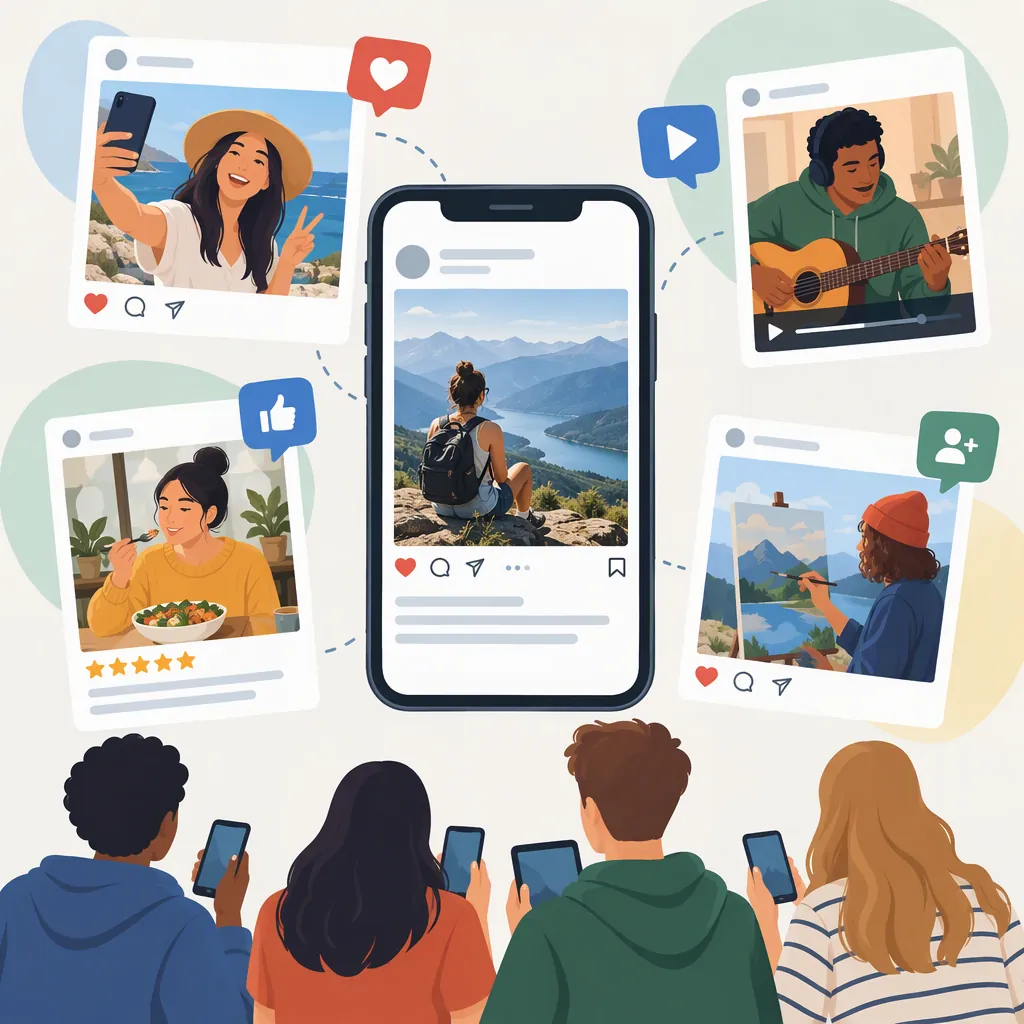
User-Generated Content Platform and Website Examples
User-generated content platform examples include creator marketplaces such as Billo, Influee, and JoinBrands, and content management or review platforms such as Flowbox, Archive, Yotpo, and Bazaarvoice. Instagram, TikTok, and Reddit illustrate places where user contributions appear, rather than the same kind of sourcing or management tool. Start by distinguishing whether you need newly commissioned content, existing customer posts, or a place to publish contributions. These examples come from the supplied commercial articles, not independent product testing. [ugc-platforms] [ugc-campaigns]
What Counts as a UGC Platform?
The phrase UGC platform can describe different parts of a content workflow. Useme’s overview distinguishes creator marketplaces, which connect businesses with people producing new content, from management platforms, which focus on collecting, organizing, moderating, and obtaining permission for existing content. Some categories overlap. [ugc-platforms]
For this article, it helps to separate three roles:
- Creation: commissioning a video, photo, or other asset from a creator.
- Management: reviewing existing contributions and documenting permission for reuse.
- Publication: providing a website, gallery, feed, or community where contributions appear.
A platform name alone does not explain which role you need. For example, a request for edited product videos is different from a request to display customer photos on a website.
UGC Platform Examples by Category
The following is a category map, not a ranking or endorsement. It summarizes how the supplied Useme article groups its examples; it does not verify current capabilities, availability, pricing, or licensing terms. [ugc-platforms]
| Category in the Reference | Examples | Workflow Question to Ask |
|---|---|---|
| Creator marketplaces and content production | Influee, Billo, Trend, JoinBrands | Do you need someone to produce new assets from a brief? |
| UGC and influencer campaigns | Insense | Do you need finished assets, creator publication, or both? |
| Reviews and visual customer content | Yotpo, Bazaarvoice | Are reviews and customer contributions the main content source? |
| Content collection and management | Flowbox, Archive | Do you already have posts that need review and organization? |
| Local creator campaigns | Hummingbirds | Does the work require participation in a specific community? |
| Administration for direct creator hires | Useme | Is contracting and payment administration a separate need? |
The reference explicitly describes Useme as adjacent to the UGC workflow rather than a typical collection platform or creator database. Keeping that distinction visible prevents unlike services from being treated as interchangeable. [ugc-platforms]
UGC Website and Campaign Examples
A campaign example shows how contributions are used; it does not necessarily identify the software behind them.
| Example | Contribution or Display Pattern | What It Illustrates |
|---|---|---|
| Instagram hashtag campaigns | EmbedSocial describes Glossier customer photos and ASOS outfit submissions. [ugc-campaigns] | A social network can be the submission and discovery location. |
| TikTok challenges | EmbedSocial describes Chipotle’s Lid Flip Challenge. [ugc-campaigns] | A shared prompt can organize user-created videos. |
| Reddit communities | EmbedSocial describes user images and videos incorporated into Reddit’s “Maybe Together We’ll” campaign. [ugc-campaigns] | Community contributions can become source material for a separate campaign. |
| Georgia State University’s website | TrueLoyal describes displaying posts associated with #GSUnited on the university website. [ugc-marketing] | Content can move from social submissions to an owned website. |
| Spotify playlists | TrueLoyal describes a campaign built around user-created playlist titles. [ugc-marketing] | User contributions can include text and curation, not just photos or videos. |
These are reported campaign examples, not confirmation that the campaigns remain active. They illustrate formats and publication patterns without establishing that a particular tool caused an engagement or sales result.
How to Compare the Examples
Compare the workflow before comparing platform names. Useme’s guide identifies deliverables, revisions, usage rights, payment arrangements, integrations, and reporting as evaluation areas. [ugc-platforms]
For video work, make the requested files explicit: finished edits, raw footage, captions, aspect ratios, and alternate versions. Also document whether editing and repurposing are permitted. Do not treat a general statement that “rights are included” as a substitute for the actual agreement. The reference recommends confirming channels, territory, duration, paid advertising, and editing permissions before production. [ugc-platforms]
The worksheet below is a planning template, not a record of any provider’s capabilities.
UGC Workflow Comparison Worksheet
- Content source: newly commissioned / existing customer contributions / both.
- Required deliverables: formats, quantities, lengths, aspect ratios, captions, and raw files.
- Publication destination: community, social account, website, email, or paid advertising.
- Review process: reviewer, approval criteria, revision rounds, and deadline.
- Permission record: rights holder, permitted channels, territory, duration, and editing scope.
- Administration: creator fee, platform charges, payment timing, and documentation responsibilities.
- Content organization: creator, campaign, product, approval status, and rights expiration.
- Evidence status: confirmed in an agreement / described in a reference / still unknown.
What These References Do Not Establish
All three supplied references are commercial articles. They provide useful terminology and reported examples, but they are not an independent, like-for-like product evaluation. [ugc-platforms] [ugc-campaigns] [ugc-marketing]
This article therefore does not rank providers, repeat campaign performance statistics, or claim that UGC guarantees trust, sales, or search visibility. It also does not establish current product terms or legal permission for a particular asset.
For permission, the references advise requesting consent before reposting and checking the scope of a creator agreement before reuse. Treat those as workflow safeguards, not a complete legal assessment. [ugc-campaigns] [ugc-platforms]
FAQ
Is Instagram a UGC Platform?
In the broad sense, it is a place where user-created content appears: the supplied campaign article describes customer-photo and hashtag campaigns on Instagram. That role differs from a dedicated tool for commissioning assets or managing existing contributions. Specify which meaning you intend when comparing examples. [ugc-campaigns] [ugc-platforms]
How Do UGC Creator Platforms Differ from Influencer Platforms?
Useme’s guide distinguishes paying for a finished content asset from also paying for access to a creator’s audience. The categories can overlap, so clarify whether the deliverable includes creator publication or only files for your own channels. [ugc-platforms]
Can Publicly Posted Customer Content Be Reused Automatically?
Do not assume permission from public visibility alone. EmbedSocial’s article advises requesting permission before reposting, while Useme’s guide recommends confirming the channels, duration, territory, and advertising uses covered by an agreement. These references do not determine the legal status of a specific post. [ugc-campaigns] [ugc-platforms]
Sources
-
[ugc-platforms] 11 Best UGC Platforms in 2026: How to Choose the Right One
-
[ugc-campaigns] 21 User-Generated Content Examples for Your Campaigns
-
[ugc-marketing] 7 Brilliant Examples Of User Generated Content Marketing