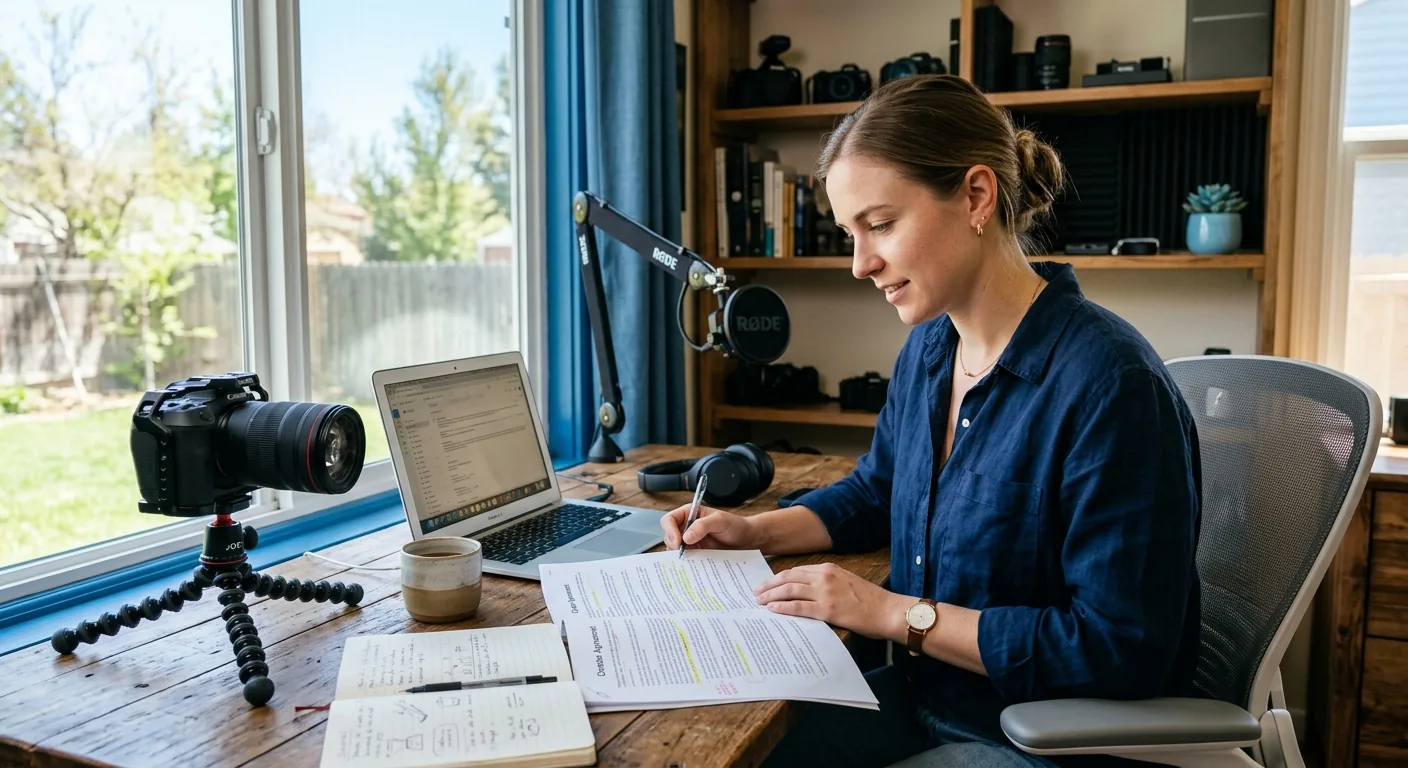
Consider Legal Boundaries When Evaluating
Yes—if you’re evaluating a creator brand deal, you should look at the legal boundaries before you say yes, before you deliver content, and definitely before you post. In practical terms, that means confirming what you are expected to create, how and when you get paid, what the brand can do with your content, whether exclusivity or whitelisting is involved, what disclosure is expected, and what happens if the plan changes. This page is informational only and is not legal or tax advice, but it can help you decide whether a deal is clear enough to move forward.
Quick Answer: Legal Boundaries Matter Before You Say Yes
A brand deal is not just a creative opportunity. It is also a set of business terms that can affect your time, income, content rights, and future partnerships. For solo creators and small teams, the biggest risk is often not an obviously bad contract. It is a vague one.
If a brand or agency says things like “we’ll sort that out later,” “standard terms apply,” or “we just need a quick yes,” slow down. A creator deal should be specific enough for you to review and approve with confidence. If it is not clear what you are delivering, how the brand may reuse your content, or when payment happens, you do not have enough information yet.
A useful way to think about legal boundaries is simple:
-
What are you agreeing to do?
-
What is the brand allowed to do with your content and likeness?
-
What are you being paid , and on what timeline?
-
What happens if either side needs to change, delay, cancel, or dispute something?
That review matters even at the discovery stage, when you are just deciding whether an opportunity is worth pursuing. You do not need to become a lawyer to spot issues early. You do need a repeatable creator-owned process for checking whether the terms feel clear, proportional, and reviewable.
The Legal-Boundary Questions That Should Be Clear in Every Creator Deal
Before moving a deal forward, you should be able to answer a core set of questions. These are not “nice to have” details. They shape whether the opportunity actually fits your business.
Start with the basics:
-
Who is the deal with? Confirm the actual brand, agency, or representative involved.
-
What deliverables are required? For example: one TikTok, three story frames, raw UGC clips, still photos, or revised versions.
-
What is the payment amount and timing? Is it flat fee, partial upfront, net 30, net 60, milestone-based, or dependent on approval?
-
What is the posting schedule? When are drafts due, when is posting due, and what happens if the brand is late on feedback?
-
What approval process applies? How many revision rounds are included, and who signs off?
-
What usage rights are included? Organic reposting only, paid ad use, website use, email use, retail use, or broader licensing?
-
Is exclusivity required? If yes, for how long, in what category, and on which platforms?
-
Is whitelisting or paid permissions involved? If yes, for how long and under what limits?
-
What happens if the campaign changes or gets canceled? Is there a kill fee, partial payment, or rescheduling process?
-
Who is responsible for what? That includes product shipping, briefing, link tracking, approvals, disclosure instructions, and payment processing.
A good creator rule: if you cannot write the deal back in plain English, it is probably not clear enough yet.
For example, “one video for $800” is not a full deal description. You still need to know whether that includes scripting, revisions, posting, raw footage delivery, usage rights, ad usage, exclusivity, and timeline expectations. A small missing term can become a big issue later.
This is also where organization matters. CreaSeed may support draft preparation, opportunity organization, workflow preparation, and next-step coordination. That can be useful when you want to gather open questions, compare one deal against another, and keep important outbound messages and commercial commitments reviewed and approved by the creator.
Disclosure, Approval, and Brand-Claim Limits to Review Before Posting
Disclosure is one of the easiest places for creator confusion to turn into creator risk. If there is a paid relationship, gifted product with expectations, affiliate arrangement, or another material connection, disclosure may matter. The exact requirements depend on the situation, so treat this as an informational checkpoint, not legal advice.
What matters in practice is clarity.
You should know:
-
whether the brand expects a sponsored disclosure
-
where that disclosure should appear
-
whether the brand has specific wording preferences
-
whether the content brief asks you to make product claims that feel too broad or unsupported
A common problem is verbal guidance that sounds casual but leaves too much room for interpretation. If a rep says, “just make it sound natural” or “don’t make it look too ad-like,” that does not replace clear disclosure instructions. Another problem is scripted claims. If the brief tells you to say a product “works for everyone,” “solves” a regulated issue, or makes measurable results sound universal, pause and review carefully.
You should also watch for approval terms that give the brand too much control without a timeline. If a contract says content must be approved before posting, that is not unusual. But it should also say how long the brand has to respond, what counts as one revision round, and what happens if they go silent near your deadline.
A healthy question set looks like this:
-
What disclosure do you expect on each platform?
-
Are there any claims I should avoid making?
-
How many review rounds are included?
-
What is the approval timeline after I submit a draft?
-
If feedback arrives late, does the posting date shift too?
Human review matters here. Creators independently verify contacts and approve every outbound message, commercial term, and commitment. If you use CreaSeed in your workflow, it may help you prepare draft questions or responses, but your final commercial decision stays with you.
Usage Rights, Whitelisting, and Exclusivity: Where Creator Control Can Shrink Fast
A lot of creators focus first on the fee. That makes sense. But the real weight of a deal often sits in the rights terms.
Usage rights define what happens after you create the content. A brand might want to repost your video organically on its social channels. That is one level of use. It might also want to run the content as a paid ad, place it on a landing page, include it in email campaigns, use it in retail screens, or cut it into multiple edited versions. That is a very different scope.
Whitelisting and paid permissions need close review because they can expand how your identity and content are used. You should understand:
-
which account is used for promotion
-
how long access or permissions last
-
which platforms are covered
-
whether edits are allowed
-
whether spending limits or campaign limits are defined
Exclusivity matters too. “No competitor work” can sound simple, but it can become restrictive fast if the category is broad. Does “skincare” mean all beauty? Does “creator tools” include multiple adjacent apps? Is the restriction 30 days, 6 months, or longer? Does it apply only to sponsored posts, or also to unpaid mentions?
These terms can shrink your future options even when the initial fee looks attractive. That is why the decision is not just “Is the payment good?” It is also “Is the payment proportional to the access, control, and limitations I am giving up?”
CreaSeed can fit here as workflow support rather than legal analysis. We support creator-first organization and preparation. In practice, that can mean using conversational, assessment, opportunity, and text-suggestion surfaces to capture what is known, list what is missing, and prepare follow-up questions about unclear rights terms for creator review. If your workflow needs broader CRM, tracker, or full lifecycle coverage, your team should confirm the current setup.
Creator Brand Deals Creator Guide: Decision Record
Use this creator-owned decision record before you move any deal forward. You can keep it in your notes, your workspace, or your review doc.
Opportunity snapshot
-
Brand or agency name:
-
Contact name and role:
-
Contact independently verified by creator:
-
Platform(s) involved:
-
Campaign type:
Deliverables
-
What content is required:
-
Number of assets:
-
Draft due date:
-
Post date:
-
Revisions included:
Money
-
Fee offered:
-
Payment timing:
-
Invoice or payment platform details:
-
Late payment or cancellation terms mentioned:
Rights and permissions
-
Organic reposting included:
-
Paid usage included:
-
Whitelisting or permissions involved:
-
Length of usage:
-
Platforms/channels covered:
-
Editing rights mentioned:
Restrictions
-
Exclusivity required:
-
Category definition:
-
Start and end date:
-
Any platform-specific restrictions:
Posting and approval
-
Disclosure instructions provided:
-
Brand claim limits or scripts provided:
-
Approval timeline defined:
-
Final sign-off process clear:
Open questions
-
What is still vague?
-
What needs written confirmation?
-
What feels disproportionate?
Creator note
-
Go:
-
Clarify:
-
Pause:
-
Why:
The point of this record is not paperwork for its own sake. It helps you separate “interesting opportunity” from “clear business deal.”
Decision Criteria for Creator Review
A simple way to evaluate a creator deal is to sort it into one of three buckets: Pass, Clarify, or Pause .
Pass
Move forward when the deal terms are specific enough to understand and compare.
A pass usually means:
-
deliverables are clearly defined
-
payment amount and timing are written down
-
rights scope is limited and understandable
-
exclusivity is narrow or absent
-
approval timing is realistic
-
disclosure expectations are clear
Clarify
Clarify when the opportunity looks potentially workable, but important terms are still missing.
Examples:
-
the fee is stated, but payment timing is missing
-
the brand wants paid usage, but duration is unclear
-
exclusivity is mentioned, but the category is too broad
-
approvals are required, but response deadlines are not listed
A clarify decision does not mean the deal is bad. It means you need written answers before approval.
Pause
Pause when the legal boundary is too vague, too broad, or too one-sided to evaluate responsibly.
Examples:
-
unlimited usage with a small fee
-
open-ended whitelisting
-
broad exclusivity without extra compensation
-
“post first, contract later” pressure
-
unclear responsibility for cancellations or delays
This framework keeps the workflow creator-controlled. Important outbound messages and commercial commitments should remain reviewed and approved by the creator. If you want support organizing the opportunity, drafting your questions, or preparing your reply, CreaSeed may help as part of that workflow.
You may also want to explore adjacent tasks once a deal becomes more real:
-
Learn how to manage active creator sponsorship deliverables and deadlines clearly
-
Review a practical approach for pricing a creator sponsorship after an inbound brand offer
-
Compare your current workflow in this guide to tracking creator pitches in a spreadsheet versus using a more structured tool
One Practical Creator Scenario
Here is one realistic example.
A US-based micro creator who posts beauty and skincare UGC gets an inbound message about a paid TikTok and three raw clips for a new serum launch. The offer looks decent at first glance: $900 for content due next week.
Using the decision record, the creator notices three issues right away:
-
Whitelisting is mentioned but not defined. The message says the brand wants “ad access,” but does not say for how long or on which platforms.
-
Approval timing is vague. The brand wants pre-approval but gives no response deadline.
-
Payment terms are incomplete. The fee is named, but there is no payment schedule.
Instead of saying yes on the spot, the creator marks the deal as Clarify .
They prepare a follow-up with questions like:
-
Can you confirm whether paid usage or whitelisting is included, and for how long?
-
How many revision rounds are expected?
-
What is the approval window after draft delivery?
-
When is payment issued?
-
Does the deal include category exclusivity?
That is a strong legal-boundary move because it turns a fuzzy opportunity into a reviewable one. It also protects the creator from agreeing to broad paid permissions or timeline pressure without realizing it.
If the creator uses CreaSeed, the fit here is preparatory and organizational. CreaSeed may help organize the opportunity, capture missing terms, and draft follow-up questions for creator review. But the creator still independently verifies contacts and approves every outbound message, commercial term, and commitment.
Keep this decision connected to Brand Deals & Opportunities and the focused Finding Brand Opportunities collection. For a concrete next step in the same decision cluster, continue with Discover Brand Opportunities before making a creator-approved commitment.
FAQ
Is It a Red Flag If a Brand Deal Does Not Mention Usage Rights?
Yes, it is at least a clarification point. If usage rights are missing, you do not yet know whether the brand expects only a post on your channel or broader reuse of your content. Ask what channels are covered, whether paid usage is included, whether edits are allowed, and how long the rights last.
Should Creators Ask About Whitelisting Before Agreeing to the Rate?
Yes. Whitelisting or paid permissions can change the value of the deal a lot. A rate that feels reasonable for one organic post may not feel reasonable if the brand also wants ad access or extended paid usage. Clarify the scope first, then evaluate the fee against that scope.
What If the Brand Says the Contract Is Standard and Not to Worry?
You should still review the terms carefully. “Standard” does not mean “standard for you.” Your audience, category limits, content style, and business boundaries are your own. A contract can be common from the brand side and still be too broad for your workflow.
Can CreaSeed Replace Legal Review for Creator Contracts?
No. CreaSeed supports preparation, organization, and drafting within a creator-reviewed workflow. It can help you gather questions, compare deal details, and prepare next steps, but it does not replace legal advice or your own approval process.
When Should a Creator Pause Instead of Clarify?
Pause when the missing terms are so broad or vague that you cannot evaluate the deal responsibly. Examples include unlimited usage, undefined exclusivity, pressure to post before terms are final, or unclear payment responsibility. Clarify works when the deal looks potentially workable and just needs specific written answers.
What Is the Safest Next Step After Spotting Unclear Legal Boundaries?
Document the unclear terms, prepare your questions in writing, and only move forward after you approve the next commercial step. That keeps the process organized and human-reviewed when commercial actions are discussed.
Next Steps
If you are evaluating creator opportunities and want help staying organized before you reply, explore how AI Creator Agent supports preparation and next-step coordination within a creator-reviewed workflow. You can also explore how CreaSeed can support your creator workflow.