How to Follow up with a Brand After a Pitch
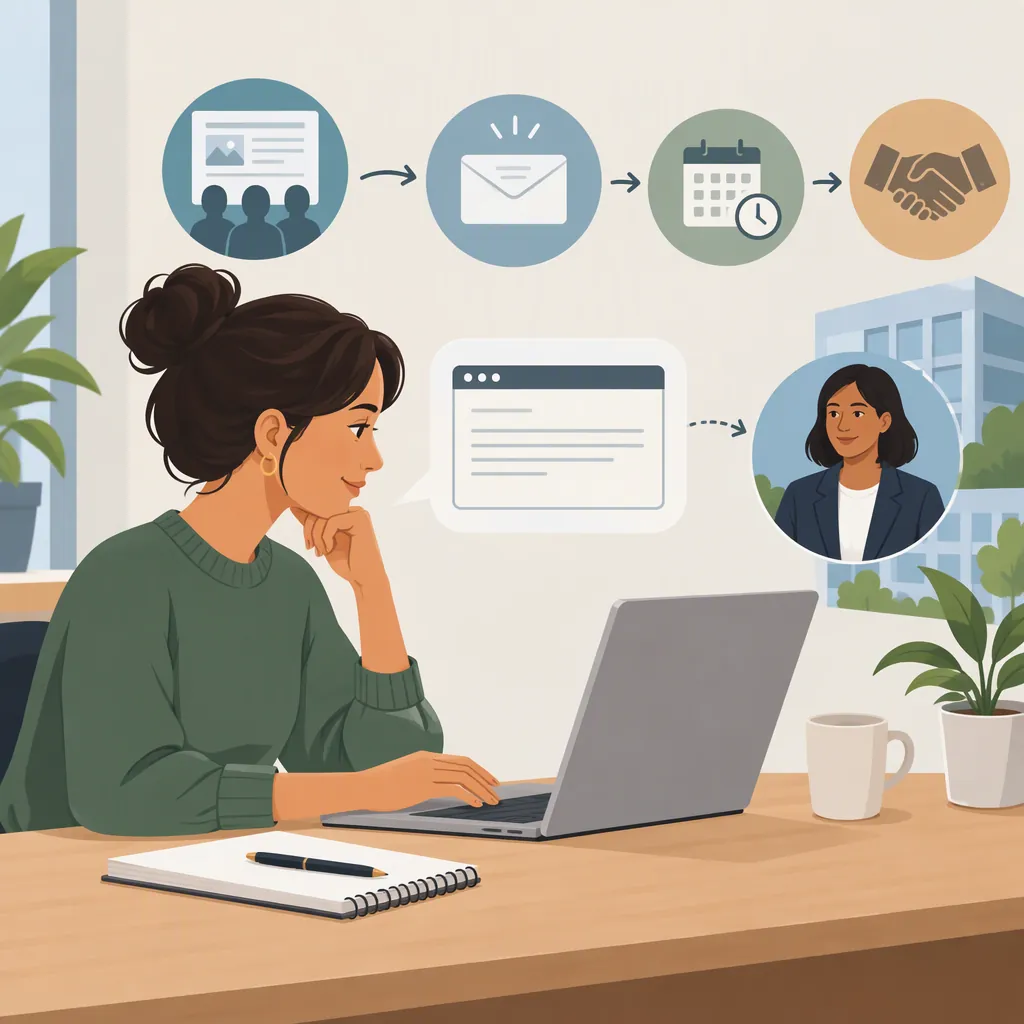
To follow up with a brand, briefly reference your original pitch, add one relevant detail or update, and ask one easy-to-answer question. If the brand has not given a response timeline, consider a first follow-up after 5–7 days. Agency Access suggests spacing later messages 3–4 weeks apart and limiting outreach to 2–3 follow-ups. These are recommendations for creative prospecting, not a universal schedule or a guarantee of a reply. [source_1]
Choose Your Follow-Up Timing
Start with any timeline the brand has already shared. If a contact said they would review your proposal next week, let that review window pass before asking for an update. Treat an explicit request not to contact them as a stopping point.
For unanswered initial outreach, Agency Access recommends a first follow-up around 5–7 days after the initial email. It suggests 3–4 weeks between later messages, with something new to share, and a limit of 2–3 follow-ups. [source_1]
Use that schedule as a starting point, not a rule for every brand. The source addresses creative buyers and decision-makers; it does not establish an optimal cadence for every creator partnership or sponsorship proposal. Its wording also does not specify business days versus calendar days.
If your proposal has a genuine deadline, state the date plainly. Do not invent urgency or send repeated reminders simply because the opportunity matters to you.
Write a Brief, Specific Message
Agency Access advises referencing the initial email, adding relevant new work or information, using a professional and warm tone, and ending with a simple question. It recommends keeping the email ideally under 150 words. [source_1]
For a brand pitch, translate those principles into four parts:
- Context: Identify the proposal and when you sent it.
- Relevance: Explain the connection to the brand using a detail you can verify.
- Useful update: Add a genuinely new idea, work sample, or clarification, if you have one.
- Next step: Ask whether the proposal is under consideration, whether more information is needed, or whether someone else handles these proposals.
Choose one question rather than combining a status request, a meeting request, and a request for feedback. Use the existing email thread when it still provides the right context. If you start a new thread, use a descriptive subject such as “Follow-up: [Proposal Topic].”
Avoid treating silence as approval or rejection. Keep the wording factual rather than implying the recipient owes you a response.
Pre-Send Review
- Confirm the recipient and proposal topic.
- Check any response timeline the brand supplied.
- Reference the original message accurately.
- Remove unverified brand details and performance claims.
- Include only a relevant, accessible work sample if needed.
- Ask one clear question.
- Check that the message respects any request to stop contact.
Adapt a Follow-Up Email Template
The examples below are original drafting aids, not messages from real brand conversations. Replace bracketed placeholders with accurate details and remove any line that does not apply.
The first example is for an unanswered pitch. The second is for a proposal the brand has already discussed. Both use the brief reminder and clear-question structure recommended by Agency Access. [source_1]
First Follow-Up After an Unanswered Pitch
Subject: Follow-up: [Proposal Topic]

Hi [Name],

I'm following up on the [proposal topic] pitch I sent on [date]. The idea focuses on [brief concept] and its connection to [verified brand priority or campaign].

Since that email, I've added [relevant update or work sample description].

Is this proposal something your team is currently considering?

Best,
[Your Name]
Follow-Up After a Discussed Proposal
Subject: Re: [Existing Proposal Subject]

Hi [Name],

Following up on our discussion about [proposal topic]. You mentioned a review around [agreed timeframe], so I'm checking whether there is an update.

I can clarify [specific unresolved item] if helpful.

Is there a revised review timeline I should note?

Best,
[Your Name]
Handle the Reply Without Assuming Agreement
Use the reply to decide what to do next rather than automatically sending another reminder:
- The brand needs more time: Record the new review date and wait until that window has passed.
- The brand requests information: Answer the request directly. Distinguish confirmed terms from items still open for discussion.
- You reached the wrong person: Ask whether they can identify the appropriate contact; do not assume they will forward the pitch.
- The brand declines: Acknowledge the decision without arguing. Ask about future contact only if the reply leaves that possibility open.
- The brand remains silent: Decide whether you have something genuinely useful to add before sending another message.
These are practical workflow suggestions, not evidence that any particular response strategy will produce a partnership.
Simple Outreach Record
Brand: [Name]
Contact: [Name and role]
Proposal topic: [Topic]
Initial pitch date: [Date]
Brand's stated review timeline: [Timeline or not provided]
Last follow-up date: [Date or none]
Number of follow-ups sent: [Count]
Latest response: [Factual summary or no response]
Next action: [Wait, send requested information, follow up, or close]
Next action date: [Date or not applicable]
Contact restrictions: [Any stated preferences or none known]
Know When to Stop Following Up
Agency Access warns against overcommunication and recommends stopping after 2–3 follow-ups rather than continuing indefinitely. It also advises making each message new or relevant. [source_1]
A conservative approach is to stop sooner if the brand declines, asks you not to contact it, or you have nothing useful to add. Do not treat the suggested maximum as a quota you must reach.
A final message is optional. If you send one, close the loop without guilt, threats, or a manufactured deadline. Afterward, mark the proposal as inactive rather than leaving repeated reminders scheduled.
A later, materially different proposal should be evaluated as new outreach, not used to bypass a request to stop contact.
Optional Closing Message
Subject: Re: [Existing Proposal Subject]

Hi [Name],

I'm closing the loop on the [proposal topic] pitch sent on [date]. I won't send further reminders about this proposal.

Thank you for your time.

Best,
[Your Name]
FAQ
How Long Should I Wait Before Following up with a Brand?
If the brand has not supplied a timeline, 5–7 days is a suggested starting point from Agency Access. Its guidance concerns creative prospecting, so it is not a universal rule for every brand proposal. If the brand gave a review window, use that context instead. [source_1]
How Many Times Should I Follow Up?
Agency Access recommends 2–3 follow-ups, spaced out and each adding something new or relevant. Treat that as a maximum guideline, not a requirement. Stop earlier after a decline, a request to stop contact, or when you have nothing useful to add. [source_1]
What Should a Brand Follow-Up Email Include?
Include a brief reference to your original pitch, a relevant detail or update, and one clear question. Agency Access recommends a warm, professional tone and an email ideally under 150 words. Avoid repeating the entire proposal unless the recipient asks for it. [source_1]
What If I Do Not Have Anything New to Share?
Do not manufacture an update or exaggerate brand relevance. A brief status question may be appropriate after an agreed review window, but repeated messages with no new purpose are a reason to pause. Agency Access recommends adding new or relevant material to follow-ups. [source_1]