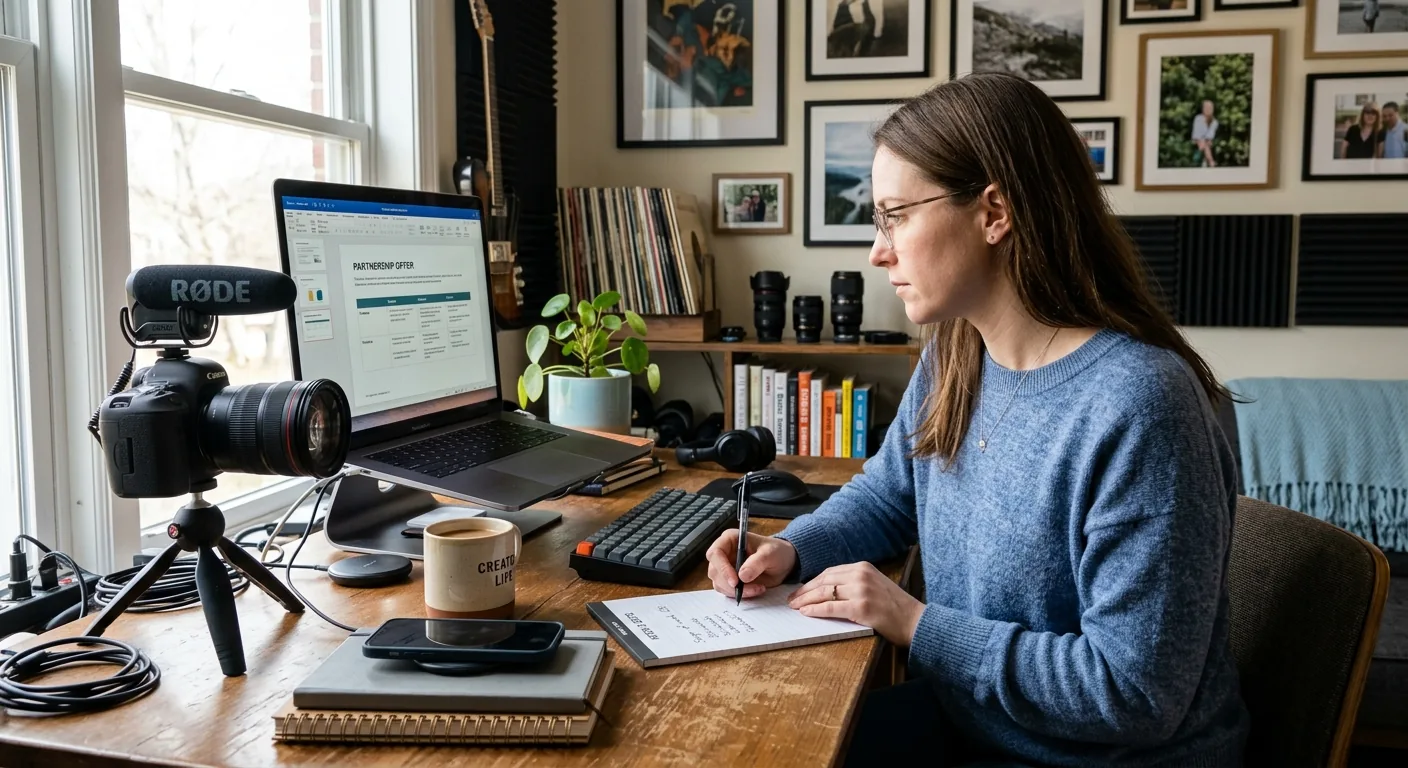
Manage Creator Brand Deals After an Inbound Offer
If a brand reaches out with an offer, your best next step is to slow down, verify the fit, review the business terms, and reply only after you understand what is being asked. For most creators, managing creator brand deals after an inbound offer means keeping commercial decisions human-in-the-loop, protecting creator approval on important messages, and organizing the opportunity before saying yes, no, or maybe.
Inbound offers can be exciting, especially when you are a solo creator, UGC creator, or small team handling everything yourself. But the first email or DM is rarely the whole deal. A message that sounds simple can still hide unclear usage rights, rushed timelines, open-ended revisions, or payment terms that do not work for your workflow. The goal is not to stall forever. It is to respond professionally without locking yourself into the wrong terms too early.
What To Do First When A Brand Reaches Out
Start by separating the excitement of being chosen from the business decision you still need to make. An inbound offer is a lead, not an automatic yes.
Here is a strong first-pass workflow:
-
Confirm the brand and campaign are relevant to your audience or content style.
-
Identify what type of collaboration is being requested.
-
Look for missing details before discussing rates or confirming availability.
-
Keep your response creator-reviewed and approved before anything goes out.
-
Save the opportunity somewhere organized so you can compare it with other offers or follow-ups.
At this stage, you are not trying to negotiate every line item at once. You are trying to answer a simpler question: Is this worth moving forward?
A few green flags usually help:
-
The brand clearly explains the product or campaign.
-
The deliverables sound realistic for your content format.
-
The timeline is specific.
-
The contact sounds professional and gives enough context to continue.
A few caution flags matter too:
-
The ask is vague but urgent.
-
The brand wants broad usage without mentioning compensation for it.
-
The revision process is not defined.
-
The message pushes for immediate agreement before details are shared.
If the offer seems promising but incomplete, that is normal. You do not need to accept or decline right away. A clean clarification step is often the smartest move.
How To Decide About Manage Creator Brand Deals After Inbound Offer
Managing creator brand deals after inbound offer usually comes down to three possible paths: pursue it, clarify it, or decline it.
Pursue It
Move forward when the brand is relevant, the content request fits your capabilities, and the business terms look workable. This does not mean the deal is final. It means it deserves a real conversation.
Clarify It
Choose this path when the opportunity looks good, but the message leaves out key details. Many inbound offers are incomplete on the first pass. Clarifying does not make you difficult. It makes you professional.
Decline It
Pass when the offer is off-brand, under-scoped, unrealistic, or likely to create more stress than value. A fast no can protect your schedule and keep your business focused.
A practical decision filter can help:
-
Brand fit: Would you actually want your name attached to this product?
-
Content fit: Does the ask match what you make well?
-
Workload fit: Is the scope realistic for your time and team size?
-
Timing fit: Can you deliver without squeezing existing commitments?
-
Term fit: Are usage, exclusivity, payment timing, and revisions reasonable?
This is also where creator control matters. Important outbound messages and commercial commitments should remain creator-reviewed and approved. That human-in-the-loop step matters because deal language can affect pricing, usage, scheduling, and future opportunities.
If you want workflow support here, CreaSeed may fit as preparation help rather than a hands-off replacement for your judgment. CreaSeed can support conversational preparation, opportunity organization, draft preparation, and next-step coordination while keeping creator approval in the loop.
If your team needs broader tracking, reporting, integrations, or full lifecycle management, confirm the current product setup before treating CreaSeed like a full CRM or operations suite.
The Deal Details To Review Before You Say Yes
Before you agree to anything, review the parts of the offer that most often create problems later.
Deliverables
What exactly are you being asked to create?
Examples include:
-
One TikTok video
-
Three Instagram Stories
-
Five UGC photo assets
-
A raw footage package for brand editing
Be careful with words like “a few edits,” “supporting assets,” or “light reshoots” if they are not defined. Those can expand the workload fast.
Timeline
Check:
-
Content due date
-
Review window
-
Posting date
-
Product shipping timing
-
How fast feedback will be returned
A short timeline is not always bad, but it should be realistic for your calendar.
Usage Rights
Usage rights change the value of a deal. A brand asking to repost your content on its social channels is different from a brand asking to use your content in paid ads, on retail pages, or across multiple channels for months.
If the offer mentions paid usage, whitelisting, licensing, or broad repurposing, slow down and clarify exactly what is included.
Exclusivity
Exclusivity can affect future income. A skincare brand asking for 30 days of category exclusivity is very different from asking for 6 months across a wide product category.
Ask what category is restricted, how long the restriction lasts, and whether compensation reflects that limit.
Payment Amount And Timing
Look beyond the headline number.
Review:
-
Total payment
-
Deposit or payment structure if any
-
Net terms such as Net 15 or Net 30
-
Payment trigger, such as on signing, on delivery, or after posting
-
Whether revisions or extra usage are included or billed separately
Revisions
Define how many revision rounds are included. If revisions are unlimited or loosely worded, the project can expand beyond the original rate.
Informational Boundary
Contract language, tax handling, exclusivity, and usage rights can have legal or financial consequences. This section is informational, not legal or tax advice. If the deal is large, long-term, or unusually restrictive, it is smart to get qualified legal or tax guidance.
How To Reply Without Locking Yourself Into The Wrong Terms
A good first reply should show interest without committing to unclear terms.
You do not need to write a long negotiation email immediately. A short professional message can keep momentum while protecting your options.
A useful structure is:
-
Thank the brand for reaching out.
-
Confirm interest if the offer appears relevant.
-
Ask for the missing business details.
-
Avoid final language until the scope is clear.
For example:
Thanks for reaching out. I’d love to learn more about the opportunity. Could you share the requested deliverables, timeline, usage rights, revision expectations, and budget range so I can review fit on my end?
That kind of response does three things well:
-
It keeps the tone warm.
-
It signals that you handle collaborations professionally.
-
It prevents accidental agreement to terms you have not reviewed.
If the brand already sent terms but they need adjustment, your next reply can stay just as controlled. You can acknowledge interest and note the areas that need clarification, such as paid usage, exclusivity length, or revision limits.
For creators who want help shaping those responses, CreaSeed may support creator-reviewed drafts and next-step preparation. The Sponsor Reply Assistant and AI Creator Agent fit this kind of workflow when you want help organizing what to say and how to say it. Important outbound messages still remain creator-reviewed and approved before sending.
A Practical US Creator Example
Imagine a UGC creator in Texas gets an inbound email from a skincare brand.
The message says the brand wants:
-
Two short product demo videos
-
Three edited photos
-
A one-week turnaround
-
“Usage rights included”
-
A flat fee of $450
At first glance, the deal sounds straightforward. But the creator pauses before accepting.
On review, they notice several open questions:
-
Are the videos organic social only, or can the brand use them in paid ads?
-
How long do the usage rights last?
-
Are revisions limited?
-
Does the one-week turnaround start from product delivery or from agreement?
-
When is payment due?
Instead of saying yes right away, the creator sends a short clarification email. They ask for:
-
Exact usage terms
-
Revision limits
-
Payment timing
-
Confirmation of whether the fee includes all requested assets
The brand replies and clarifies that it wants 90 days of paid social usage and up to three revision rounds. Now the creator has a clearer view of the real workload and value. At that point, they can decide whether to accept, counter, or decline.
In a workflow like this, CreaSeed may help the creator organize the opportunity, list the open questions, and prepare a draft response for creator approval. That is useful when you want faster preparation without giving up control over commercial decisions.
Where CreaSeed Can Support Your Review Workflow
CreaSeed is best positioned here as creator-approved workflow support, not as an autonomous manager running your brand deals for you.
For inbound offers, CreaSeed may support:
-
Organizing opportunities so you can review them more consistently
-
Conversational preparation when you are deciding how to respond
-
Draft preparation for sponsor replies or clarification emails
-
Next-step coordination after you identify missing terms
Relevant product support on this page includes AI Creator Agent for conversational preparation and Sponsor Reply Assistant for creator-reviewed response drafting. The demonstrated CreaSeed interface also aligns with conversational, assessment, opportunity, and text-suggestion surfaces, which fits the workflow of reviewing a new inbound offer and preparing your next move.
That said, CreaSeed should not be treated as a promise of automatic sending, autonomous negotiation, contract signing, guaranteed deal outcomes, or a creator-led contact research and verification. If your workflow depends on broader inbox coverage, integrations, tracking, reporting, or full-lifecycle management, confirm the current setup before rolling it into your process.
If you are comparing approaches, the real trade-off is usually this:
-
Manual workflow: More control, more admin time
-
Spreadsheet or template workflow: Better organization, but still heavily manual
-
Manager or agency workflow: More outside help, less direct control, and different economics
-
CreaSeed workflow support: Creator-reviewed preparation and organization without removing creator approval from important commercial actions
If that is the kind of support you want, you can explore how AI Creator Agent supports creator-reviewed preparation and next steps.
FAQ
Should I Reply To An Inbound Brand Offer Right Away?
You should usually reply promptly, but not blindly. A fast acknowledgment is helpful, especially if the opportunity looks relevant, but final commercial commitments should wait until you review scope, timing, usage rights, payment, and revisions.
What Should I Ask Before Accepting A Brand Collaboration?
Ask for the exact deliverables, deadlines, usage rights, exclusivity terms if any, revision expectations, payment amount, and payment timing. If any of those are vague, get them clarified before agreeing.
Is It Okay To Counter An Inbound Offer?
Yes. If the workload, usage, or timing does not match the original terms, a respectful counter is normal. Many creators need to adjust pricing or terms after the brand shares the full scope.
Can CreaSeed Reply Or Negotiate For Me Automatically?
CreaSeed may support creator-reviewed drafts, preparation, and opportunity organization, but important outbound messages and commercial commitments remain creator-reviewed and approved. It should not be treated as automatic sending, autonomous negotiation, or contract signing.
Do I Need Legal Or Tax Help For Creator Brand Deals?
Sometimes, yes. For routine deals, clear written terms may be enough to move forward confidently. For larger campaigns, long usage periods, restrictive exclusivity, or unusual payment terms, qualified legal or tax guidance can be worth getting. This page is informational and not legal or tax advice.
How Do I Know If CreaSeed Fits My Workflow After An Inbound Offer?
CreaSeed is a good fit if you want help organizing opportunities, preparing questions, and drafting creator-reviewed responses without giving up approval control. If you also need confirmed CRM-like tracking, reporting, integrations, or full lifecycle coverage, your team should confirm the current product setup first.
Related Resources
-
Compare creator workflow support with working through a professional manager
-
Read practical guidance on building trust around creator brand deals
-
See how to handle creator brand deals after a replacement scenario