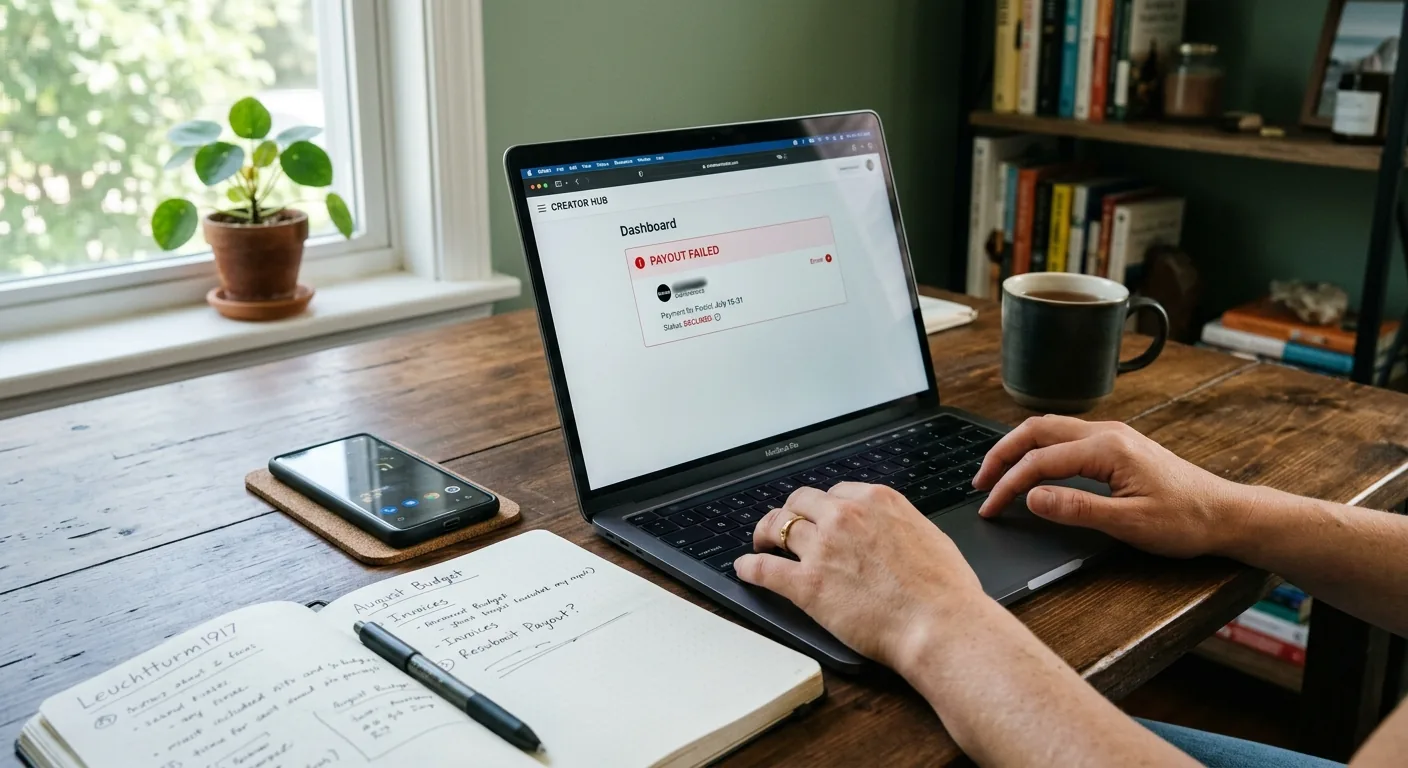
Creator Valuation After a Payment Problem
A payment problem does not automatically lower your creator account value. In most cases, it should first change how you judge deal risk, payment terms, and future collaboration fit —not your overall worth as a creator. Start by checking whether the issue came from unclear terms, missing approval history, invoice timing, or a brand-side delay. Then make one practical decision: keep your current valuation, tighten your deal criteria, or escalate beyond workflow support.
For creators, “valuation” here is not a formal accounting number. It is a working judgment about whether similar brand opportunities still fit your rates, boundaries, and risk tolerance going forward. Important outbound messages and commercial commitments should always stay under creator approval, with a clear human-in-the-loop step before anything is sent.
Quick Answer: Does a Payment Problem Change Your Creator Valuation?
Usually, no—not by itself.
One late payment, a confusing invoice thread, or a missed internal brand approval does not prove your content is worth less. What it does affect is your view of the opportunity. After a payment issue, many creators do best by asking:
-
Was this a one-off admin problem or a pattern?
-
Were the payment terms clear before work started?
-
Did I have written approval on scope and deliverables?
-
Do I want different terms next time, even if I keep the same rate?
That is the core decision behind creator valuation after payment problem. You are not trying to invent a universal score. You are deciding whether your current value still supports this kind of deal under the same conditions.
A useful rule: if the content was delivered as agreed and the brand still valued the work, your baseline value may be unchanged. The adjustment may belong in terms , not pricing . For example, you might keep your rate but require a deposit, shorter payment windows, clearer approval milestones, or stricter written sign-off before posting.
What “Valuation” Should Mean in This Situation
Here, valuation means a practical creator-side judgment , not a formal financial valuation.
After a payment problem, your valuation question is usually one of these:
-
Should I still treat this type of brand opportunity as worth pursuing?
-
Should I change my rate, or just change my terms?
-
Has the risk of delay become high enough that I need stronger boundaries?
-
Does this brand category still fit my business goals?
That distinction matters. Many creators react to payment friction by lowering their rates too fast. But a late or messy payment can reflect operational issues on the brand side, not a drop in your audience fit, creative quality, or campaign value.
In this situation, valuation is better understood as risk-adjusted deal fit . That means combining:
-
your normal pricing confidence
-
the effort required to complete the work
-
the clarity of scope and approvals
-
the likelihood of delayed or disputed payment
-
the amount of admin follow-up the deal requires
If a sponsorship becomes expensive in time, stress, or uncertainty , it may become a worse fit even if the headline rate looked fine. That does not mean your value dropped. It means the opportunity became less attractive under those terms.
So the right outcome is often one of these:
-
Keep your valuation and keep your rate.
-
Keep your rate but tighten terms.
-
Raise your required protections for similar deals.
-
Decide this opportunity type no longer fits your workflow.
Decision Boundary: When This Is a Workflow Issue Vs. When You Need Legal, Tax, or Accounting Help
Some payment problems are still normal workflow problems. Others are no longer just workflow.
A workflow issue usually looks like this:
-
the invoice was sent late or to the wrong contact
-
the due date was not clearly documented in one place
-
deliverables changed in a message thread but were not summarized
-
the brand approved content, but the approval trail is scattered
-
follow-up timing was inconsistent
-
nobody is disputing the basic deal, but payment is slow
In those cases, the next step is usually to organize the facts, prepare a clear creator-reviewed follow-up, and decide whether future terms need to change.
You may need legal, tax, or accounting help when the issue moves beyond ordinary follow-up. Common escalation triggers include:
-
the brand disputes what was delivered
-
written terms conflict across email, DMs, or a contract
-
usage rights or licensing terms are unclear
-
the brand is using content beyond what you approved
-
tax handling questions affect what you were actually owed
-
nonpayment continues well beyond normal reminders
-
you are considering formal collections or contract enforcement
That boundary matters because workflow support helps you get organized, communicate clearly, and prepare your next move. It does not replace legal advice, tax advice, accounting advice, or collections support.
If you are unsure which side you are on, ask a simple question: am I clarifying and documenting, or am I now disputing rights, obligations, or money owed under conflicting terms? If it is the second one, professional advice may be the better next step.
Creator Workflow: Review the Deal, the Payment Terms, and the Missed Step
Use this tight workflow to complete the task without overcomplicating it.
- Re-read the original agreement or message thread.
Look for the promised deliverables, due dates, posting requirements, payment amount, payment window, and any revision terms. If there was no formal contract, pull the clearest written record you have.
- Confirm what you actually delivered.
Match the agreement against what you sent or posted. Include links, files, timestamps, and any revisions completed. If you delivered exactly what was approved, that supports holding your valuation steady.
- Check the payment timeline.
When was the invoice sent? Was there a net term such as 15, 30, or 45 days? Did the brand ask for a vendor form, W-9, or other paperwork before processing? Sometimes the missed step is administrative rather than strategic.
- Review the approval trail.
Find the message where the brand approved the content, requested edits, or confirmed final delivery. This matters because payment friction is easier to address when your approval history is clean.
- Identify the actual failure point.
Ask: was the problem unclear scope, missing paperwork, weak documentation, internal brand delay, or a real payment dispute? Name the issue in one sentence.
- Make the valuation decision.
Choose one:
-
keep your current rate and terms
-
keep your current rate but change terms next time
-
keep the rate but avoid this type of opportunity
-
pause and escalate for outside help
-
Draft the next message for creator review.
Keep it short, factual, and specific. For example: restate deliverables, reference the approval date, note the invoice date, restate the payment due date, and ask for an updated payment timeline. Any message that discusses payment, rights, or revised commitments should remain creator-approved and human-in-the-loop before sending.
This is where many small creator teams save time: not by automating the relationship, but by reducing confusion before the next follow-up.
A Realistic Example: A U.S. Creator Reassesses Value After a Late Payment
Here is an illustrative example.
A UGC creator in Texas agrees to produce three short-form videos for a skincare brand for $900. The brand approves the concept in email, asks for one round of revisions, and approves the final files. The creator sends the invoice the same week, with net 30 terms.
At day 35, no payment has arrived. The creator checks the thread and realizes three things:
-
the scope and amount were clearly agreed
-
final approval exists in writing
-
the brand’s finance contact was never copied on the invoice
The creator follows up with a short, factual message that includes the invoice, the approval date, and a request for an updated payment timeline. The brand replies that the invoice needs to be resubmitted through a vendor portal.
Now the creator has to decide whether this changes valuation.
The answer: not necessarily . The creator does not lower rates just because payment was late once. Instead, the creator decides:
-
keep the $900 baseline rate for similar work
-
require the correct billing contact before starting future projects
-
add a written payment process checkpoint before final delivery
-
prefer shorter payment terms for first-time brand relationships
That is a complete creator valuation after payment problem decision. The creator’s value stayed the same. The workflow standard changed.
If the same brand later delayed again, disputed delivery, or ignored written approvals, the creator might then decide that similar deals need stronger terms or are no longer worth pursuing.
What to Record Before the Next Step
Before you follow up, change your future terms, or escalate, gather the details that make the situation clear.
Record these items in one place:
-
brand name and main contact
-
project name or campaign name
-
agreed payment amount
-
payment terms and due date
-
deliverables promised
-
deliverables actually delivered
-
revision requests and completion dates
-
final approval message or screenshot
-
invoice sent date
-
invoice number, if you used one
-
any paperwork the brand required before payment
-
usage-rights references, if relevant to the dispute
-
your last follow-up date
-
your planned next follow-up date
You do not need a huge system to do this. The goal is to create a clean summary you can review quickly. That summary helps you answer three practical questions:
-
Did I meet the agreed scope?
-
Is payment actually overdue under the written terms?
-
What should change before I accept a similar deal again?
For solo creators, even a one-page note can be enough. For a small team, it may help to keep a shared record of approvals, invoice timing, and next-step notes so nobody has to reconstruct the story from scattered inboxes later.
How CreaSeed Can Support a Creator-Reviewed Next Step
CreaSeed is built to support creator-approved workflow preparation, not hands-off commercial execution.
For this use case, CreaSeed may help you:
-
organize the opportunity context in one working flow
-
prepare a clear summary of what happened
-
draft a follow-up message for creator review
-
think through next-step options in a conversational format
CreaSeed supports workflow preparation through conversational, assessment, opportunity, and text-suggestion surfaces. In practice, that means a creator can use tools such as AI Creator Agent for next-step preparation, or use CreaSeed to structure notes before sending a follow-up that stays under creator approval.
That support is especially useful when the real problem is not “what should I charge?” but “what exactly happened, what do I say next, and what should I change next time?”
Just keep the boundary clear: CreaSeed does not replace your judgment, and important outbound messages and commercial commitments remain creator-reviewed and approved. If your team wants broader CRM, tracker, reporting, integration, or full-lifecycle coverage, confirm the current product setup.
If you want to go deeper on related decisions, you can also read:
-
How beginner creators can think about creator valuation before setting deal expectations
-
How to judge creator valuation when pricing affects selection decisions
-
When to compare creator valuation workflow against agency support as you grow
-
What changes when you compare account value workflow against a spreadsheet approach
FAQ
Should I Lower My Rates After One Late Payment?
Usually no. One late payment often says more about process friction than your market value. First check whether the issue came from unclear terms, missing paperwork, invoice routing, or brand-side delay. Many creators keep their rate and instead tighten payment terms, approval steps, or follow-up standards.
What Is the Best Next Step After a Payment Problem with a Brand?
The best next step is to document the facts, identify the missed step, and send a clear creator-approved follow-up. Include the agreed deliverables, approval date, invoice date, due date, and a direct request for an updated payment timeline. If the issue turns into a scope dispute, rights dispute, or long-running nonpayment problem, it may be time to escalate beyond workflow support.
What Records Matter Most Before I Follow Up?
The most useful records are the agreed payment terms, due date, deliverables, revision history, final approval trail, invoice status, and any relevant usage-rights reference. Those details help you decide whether the problem is a simple process delay or something more serious.
Can a Payment Issue Change Deal Fit Without Changing My Creator Value?
Yes. That is often the most accurate conclusion. Your content, audience fit, and creative value may be unchanged, while the administrative burden or payment risk makes that type of opportunity less attractive. In that case, change the terms or the collaboration criteria rather than assuming your value dropped.
How Can CreaSeed Help with Creator Valuation After a Payment Problem?
CreaSeed may help with creator-reviewed drafts, opportunity organization, and workflow preparation for your next step. It can support note organization, conversational preparation, and drafting a follow-up for creator approval. It should be used as human-in-the-loop support, not as an autonomous tool for sending messages, negotiating deals, or making commercial commitments without you.