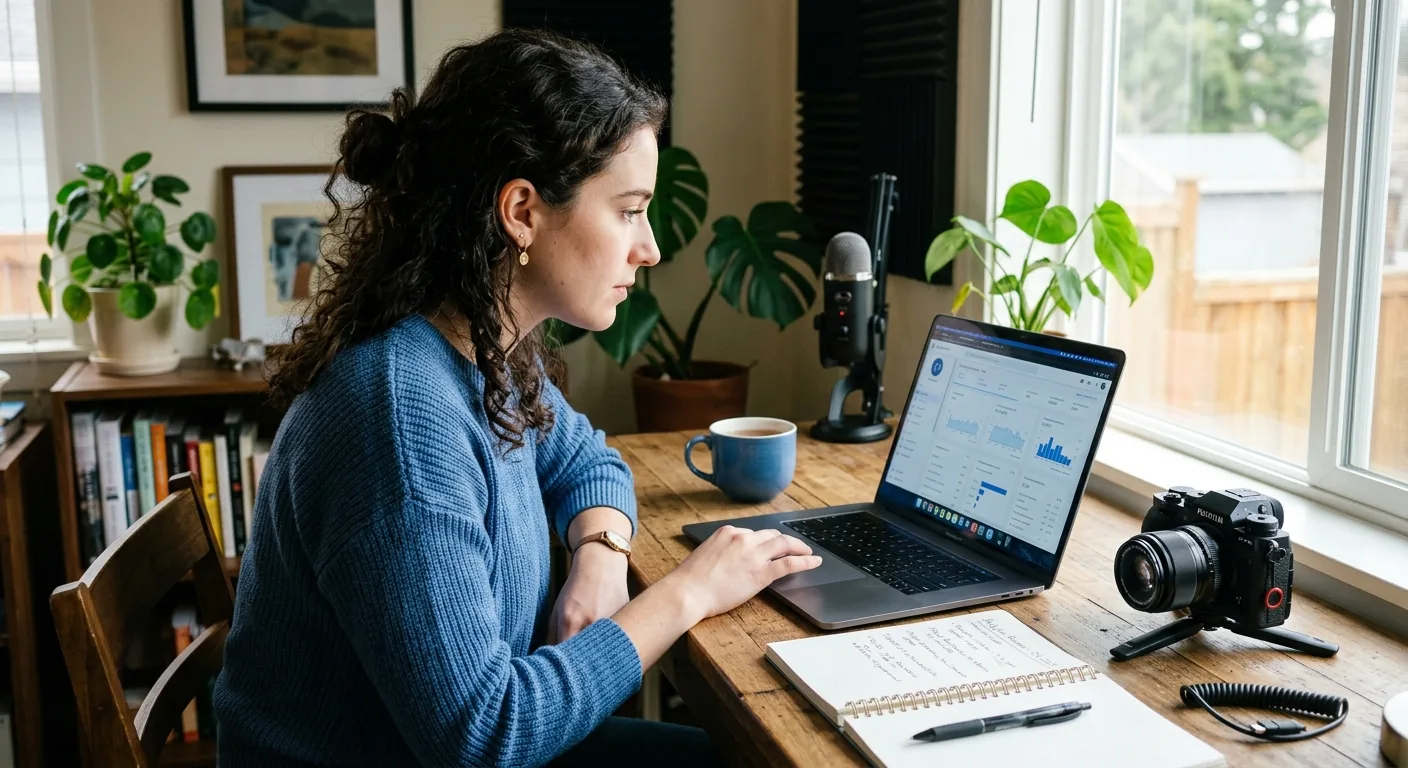
Creator Business AI Assistant Awareness
A creator business AI assistant can help you notice possible brand collaboration opportunities, organize why they may fit, and prepare a creator-reviewed next step. At the awareness stage, that means spotting relevant opportunities and capturing useful notes before outreach, negotiation, or any commercial commitment.
Important outbound messages and commercial commitments remain creator-reviewed and approved, with a clear human-in-the-loop whenever commercial actions are discussed.
Quick Answer: What This Can Help You Do
If you are evaluating creator business AI assistant awareness , you are not looking for a tool to hand off your business decisions to. You are trying to answer a narrower question: Can this help me discover relevant brand collaboration opportunities without losing control of my voice, standards, or approvals?
A practical awareness workflow can help you:
-
collect early signals that a brand or campaign may fit your niche
-
organize fit notes so good leads do not disappear in DMs, email, or your own memory
-
prepare draft thinking about why an opportunity may be worth exploring
-
decide what deserves a manual next step
For this stage, CreaSeed may support creator-reviewed preparation rather than autonomous outreach. CreaSeed supports a workflow built around conversational preparation, opportunity organization, draft preparation, and creator review.
That means it may be useful when you want help sorting ideas and preparing next moves, while keeping final judgment with you.
What “Awareness” Means in a Creator Business Workflow
In creator business work, awareness is the early-fit stage. It happens before pitching, before rate discussion, and before any contract conversation. The goal is simple: identify opportunities that look relevant enough to review further.
For a solo creator or small team, this stage usually includes a mix of messy signals:
-
a brand appears to be working with creators in your category
-
a campaign brief lands in your inbox
-
a friend shares a possible intro
-
you notice a product line that matches your audience interests
-
a past sponsor launches a new campaign
The challenge is not just finding names. The challenge is deciding whether a signal is worth your time.
That is where a creator business AI assistant may help. A useful assistant at this stage does not replace your judgment. Instead, it helps you structure the questions you should already be asking:
-
Does this brand fit my audience?
-
Does this campaign fit my content style?
-
Is the timing realistic?
-
What information is missing?
-
Is this interesting enough for a manual follow-up?
Within CreaSeed, the most relevant fit for this stage is creator-reviewed workflow support through AI Business Partner and conversational preparation through AI Creator Agent . For awareness-stage work, that means CreaSeed may help you think through early opportunity fit, organize notes, and prepare next-step language while keeping creator approval in place.
Just as important, awareness is not full deal management. If you need broader CRM coverage, tracker functionality, reporting, deeper integrations, or full lifecycle management, teams should confirm the current product setup instead of assuming all of that is included.
Decision Boundary: When an AI Assistant Helps and When You Still Need Manual Review
The biggest mistake at the awareness stage is asking AI to do too much. A better approach is to draw a clear boundary between tasks that benefit from support and tasks that still need direct creator review.
Good Uses for an AI Assistant at the Awareness Stage
An AI assistant may be helpful when you want to:
-
summarize why a brand looks relevant
-
compare an opportunity against your niche, audience, and content format
-
organize scattered notes from email, DMs, screenshots, or research
-
draft internal talking points for your own review
-
prepare a shortlist of follow-up questions
-
turn rough thoughts into a cleaner opportunity record
These are preparation tasks. They reduce friction without taking control away from you.
Where Manual Review Is Still Required
Manual review is still required when you move from awareness into any commercial action, including:
-
sending outreach
-
replying to a sponsor with commitments or positioning
-
discussing rates, deliverables, exclusivity, usage rights, or timelines
-
accepting terms
-
approving final brand-facing language
This matters because awareness is about filtering and preparing, not delegating business authority. CreaSeed should be treated as creator-approved workflow support, not as a hands-off talent manager. Important outbound messages and commercial commitments remain creator-reviewed and approved.
A practical rule is this:
If the action could affect your reputation, pricing, obligations, or relationship with a brand, keep a human-in-the-loop and make creator approval explicit.
That boundary protects your voice and reduces avoidable mistakes, especially when an opportunity still has missing details.
Creator Workflow: A Reusable Awareness Worksheet
Use this worksheet any time you want to evaluate whether a brand collaboration opportunity deserves a real next step. You can use it on your own, in a spreadsheet, in notes, or alongside CreaSeed.
Step 1: Gather Your Inputs
Start with the minimum information needed to judge fit.
Record:
-
your niche
-
your audience profile
-
your main content formats
-
the brand category
-
the source of the opportunity
-
your deal preferences
-
obvious red flags
-
any evidence notes you already have
Example inputs might look like this:
-
Niche: budget-friendly skincare and everyday beauty routines
-
Audience: US women 18 to 34, mostly TikTok and Instagram
-
Content formats: short-form tutorials, product try-ons, routine breakdowns
-
Brand category: drugstore skincare
-
Source: inbound email or noticed campaign on social
-
Deal preferences: short-form UGC, clear usage terms, realistic production timeline
-
Red flags: vague deliverables, no timeline, brand mismatch, low product relevance
Step 2: Run the Five Checkpoints
For each opportunity, check these five points.
-
Relevance
-
Audience Fit
-
Content Fit
-
Timing
-
Missing Information
Relevance: Does the brand naturally fit what you already talk about?
Audience Fit: Would your audience reasonably care about this product or campaign?
Content Fit: Can you picture a credible piece of content in your normal style?
Timing: Is the campaign timing workable for your schedule, season, and content calendar?
Missing Information: What do you still need to know before taking any real next step?
If an opportunity fails three or more checkpoints, it usually does not deserve immediate attention. If it passes most checkpoints but still has gaps, it may be worth a manual follow-up later.
Step 3: Write a One-Sentence Fit Summary
Force clarity with one short sentence:
-
“Strong fit because the product matches my audience’s current interests and I can already picture two content angles.”
-
“Possible fit, but unclear campaign timing and missing usage details make it too early to prioritize.”
-
“Weak fit because the brand category overlaps with my niche, but the audience need is not obvious.”
This single sentence makes future review much easier.
Step 4: Prepare a Creator-Reviewed Next-Step Note
Before you do anything outward-facing, write an internal note about what should happen next.
Examples:
-
“Save and revisit next week after checking current skincare campaign priorities.”
-
“Draft a short reply for creator review if the brand confirms deliverables and timing.”
-
“Do not pursue unless the content angle feels authentic.”
Step 5: Final Review Step
Now pause and review.
Ask:
-
Would I feel comfortable attaching my name to this opportunity?
-
Am I missing anything important?
-
If a message goes out later, has creator approval been clearly preserved?
That final pause is where awareness stays useful instead of turning rushed.
A Realistic US Creator Example
Here is a realistic example of how this bounded task can work.
Maya is a US-based micro creator in Austin who posts skincare routines, drugstore beauty comparisons, and UGC-style product demos. She gets an email from a small wellness-adjacent skincare brand launching a new hydration serum.
At first glance, the opportunity seems promising, but Maya does not want to waste time on every inbound pitch. She uses an awareness worksheet to decide whether this deserves a next step.
Maya’s Inputs
-
Niche: affordable skincare and beauty
-
Audience: mostly US women 20 to 35
-
Formats: TikTok tutorials, Instagram Reels, voiceover demos
-
Brand category: skincare
-
Source: inbound email
-
Preferences: honest product fit, short-form content, manageable turnaround
-
Red flags: vague compensation language, missing timeline
Maya’s Checkpoints
Relevance: Strong. Skincare is already central to her content.
Audience Fit: Strong. Hydration products usually perform well with her audience.
Content Fit: Strong. She can already picture a morning-routine Reel and a before-and-after style demo.
Timing: Unclear. The email mentions “soon” but gives no production schedule.
Missing Information: Compensation structure, usage expectations, and posting window.
Maya’s One-Sentence Fit Summary
“Good early fit because the category matches my niche and audience, but I need clearer campaign details before deciding whether to reply.”
Maya’s Next-Step Note
“Keep this opportunity active, draft questions about deliverables and timing, and review any outward message before sending.”
That is a successful awareness-stage outcome. Maya has not promised anything. She has not negotiated. She has not sent a message without review. She has simply completed the bounded task: deciding whether the opportunity appears relevant enough to consider.
If Maya uses CreaSeed at this stage, the fit is in helping her organize the opportunity, think through the evaluation, and prepare creator-reviewed draft language for a possible next move.
What to Record Before the Next Step
Before you move an opportunity forward, capture enough detail so you do not have to re-evaluate it from scratch later.
Record these fields:
-
Brand Name : who the opportunity is tied to
-
Source of Opportunity : email, DM, referral, inbound form, or your own research
-
Category : beauty, food, wellness, home, fashion, or another niche
-
Why It May Fit : one to three short notes on audience, content, or brand alignment
-
Open Questions : what is still unclear
-
Draft Angle : your early thought on how you might approach the opportunity
-
Required Manual Checks : timeline, usage expectations, pricing context, brand reputation, or authenticity concerns
-
Approval Status : not reviewed, ready for creator review, approved for next-step draft, or hold
This record is useful even if you work solo. It keeps your business thinking visible and makes it easier to compare opportunities fairly instead of reacting emotionally to whichever brand emailed last.
If you are using CreaSeed, this is the kind of preparation work where creator-reviewed organization and next-step coordination may help. If you need persistent CRM-style records, tracking across a larger pipeline, or broader reporting, teams should confirm the current product setup.
How CreaSeed May Fit This Stage
For awareness-stage opportunity discovery, CreaSeed fits best as a support layer for thinking, organizing, and preparing.
CreaSeed may support this stage through:
-
conversational preparation with AI Creator Agent
-
creator-reviewed workflow support through AI Business Partner
-
opportunity organization for possible brand matches
-
assessment-style review using surfaces such as Creator Assessment
-
draft preparation for creator-reviewed next steps
-
opportunity exploration tied to Brand Deal Discovery
CreaSeed can support awareness work with conversational, assessment, opportunity, and text-suggestion experiences. That matters because awareness work is often a mix of judgment and cleanup: collecting signals, comparing fit, and deciding what deserves your attention.
Just keep the product boundary clear. CreaSeed may help with preparation, draft support, and next-step coordination. It should not be treated as a promise of promised deal outcomes, guaranteed replies, or fully autonomous commercial commitments. It also should not be treated as a creator-led contact research and verification.
When you evaluate fit, a good question to ask is:
Do I need better organization and creator-reviewed preparation, or am I assuming a full system that I should verify first?
If your main pain point is scattered opportunity notes, rough draft thinking, or inconsistent follow-up preparation, CreaSeed may be a strong match for this awareness-stage task. If you need broader lifecycle coverage, deeper inbox or reporting workflows, or a full tracker replacement, teams should confirm the current setup before assuming that scope.
FAQ
Can a Creator Business AI Assistant Replace My Judgment on Brand Fit?
No. At the awareness stage, an AI assistant may help you organize information, surface fit notes, and prepare draft thinking, but it should not replace your judgment. Creator approval remains essential, especially before any brand-facing step.
Is Awareness the Same Thing as Outreach?
No. Awareness comes earlier. It is the stage where you notice a possible opportunity, record why it may fit, and decide whether it deserves manual follow-up. Outreach starts when you choose to contact or reply to a brand.
Can CreaSeed Send Brand Messages Without My Approval?
CreaSeed should be used with creator approval in place for important outbound messages and commercial commitments. For this workflow, keep a human-in-the-loop anywhere commercial actions are discussed.
What If I Already Use a Spreadsheet?
That is completely reasonable. A spreadsheet can still work well for awareness-stage tracking. CreaSeed may be helpful when you want more support with conversational preparation, opportunity organization, and creator-reviewed draft thinking rather than a manual notes-only process.
Should I Assume CreaSeed Covers CRM, Reporting, and Full Deal Lifecycle Management?
No. For broader CRM, tracker, reporting, integration, or full lifecycle coverage, teams should confirm the current product setup. The focus here is the narrower awareness-stage task of discovering and organizing relevant brand collaboration opportunities.
Explore how CreaSeed can support your creator workflow.
You can also continue with related resources:
-
Read our guide to operating a creator business AI assistant in day-to-day workflow
-
Compare options in our creator business AI assistant selection guide
-
Learn about boundaries for using AI support during creator deal negotiation
-
See a practical comparison of creator account value versus a spreadsheet-based workflow