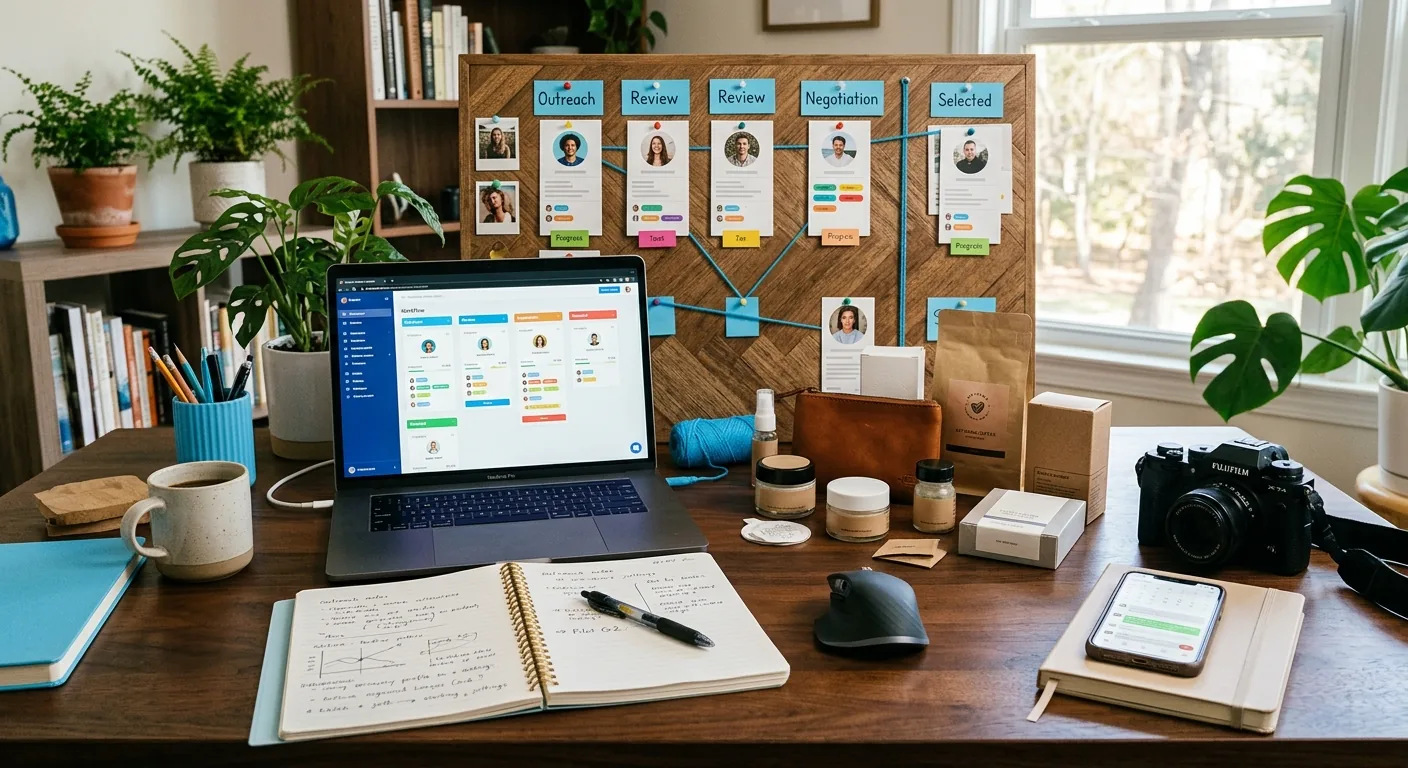
Brand Outreach Workflow for Selection
A brand outreach workflow for selection helps you decide which collaboration opportunities are worth pursuing before you send a pitch, write a detailed reply, or start discussing terms. If you have multiple brands on your list—or a few inbound leads that all look promising at first glance—a simple selection workflow helps you stay focused, protect your time, and keep every outbound message, commercial term, and commitment creator-reviewed and approved.
The Short Answer: When a Brand Outreach Workflow Helps You Choose Better Opportunities
A selection workflow is useful when your problem is not “how do I write a pitch?” but “which opportunity deserves attention first?” That usually happens in a few common creator situations:
-
You found several brands that seem relevant, but you only have time to contact one or two this week.
-
You received inbound interest from brands that vary in fit, budget potential, or effort required.
-
You want a repeatable way to sort serious opportunities from vague ones.
-
You are trying to avoid spending hours on brands that do not match your audience, content style, or business goals.
For creators, the biggest value of this workflow is clarity. Instead of relying on a gut feeling alone, you create a short decision record for each opportunity. That record helps you compare options side by side and choose a next step such as pursue now, hold for later, research more, or pass.
This is also where creator control matters most. The workflow can support preparation and organization, but you still independently verify contacts and approve every outbound message, commercial term, and commitment.
What “Selection” Means Before You Pitch or Reply
In practice, selection is the step between “I found a brand” and “I’m ready to reach out.” It is not full negotiation, and it is not deep campaign planning. It is the filter that tells you whether an opportunity deserves the next block of your time.
Before you move forward, ask a few simple questions:
-
Is this brand actually relevant to my niche, audience, and content style?
-
Can I picture a real piece of content featuring this product or service without it feeling forced?
-
Do I understand why this partnership would make sense for both sides?
-
Do I have a reasonable path to contact the brand that I am comfortable using?
-
If the opportunity moved forward, would I be open to discussing the likely deliverables, usage, and scope?
Selection is especially important for solo and small creator teams because time loss compounds quickly. A weak-fit outreach target does not just create one bad email. It can lead to follow-up work, research, draft revisions, and emotional energy spent on a brand that was never a strong match.
A good workflow prevents that. It helps you qualify the opportunity before you write custom outreach or give a detailed inbound response.
It also keeps the process human-in-the-loop where commercial actions are discussed. Even if you use tools to organize notes or prepare draft language, you stay in charge of what gets sent, what gets said, and what you are willing to commit to.
Brand Outreach Workflow for Selection: Decision Record
Here is a simple creator-owned decision record you can use for each opportunity. Keep it short enough that you will actually use it, but specific enough that it helps you compare one brand against another.
- Opportunity source Where did this brand come from?
-
Personal shortlist
-
Inbound email or DM
-
Referral
-
Marketplace listing
-
Past conversation revived
-
Why this brand is relevant Write one or two sentences only. Example: “Skincare brand with products that match my clean beauty UGC niche and typical audience interests.”
-
Audience fit Rate the overlap in plain language:
-
Strong fit
-
Partial fit
-
Weak fit
Ask yourself whether your audience would recognize the product category, trust your recommendation, or care enough to watch the content.
- Content fit Can you create believable content for this brand?
-
Easy to picture
-
Possible but needs thought
-
Hard to make authentic
This protects you from chasing brands that look good on paper but do not fit your real creative style.
- Contact confidence How confident are you that you have a real, appropriate path for outreach?
-
Comfortable moving forward
-
Needs more research
-
Unclear, low confidence
You independently verify contacts before moving forward. Do not treat a vague handle, scraped email, or random message request as enough by itself.
- Effort level Estimate the work required if the conversation continues:
-
Low effort
-
Moderate effort
-
High effort
Think about product testing time, filming complexity, revisions, travel, exclusivity, approvals, and turnaround pressure.
-
Early commercial comfort Without turning this into a pricing exercise, ask a simple question: if this brand replied positively, would I feel comfortable discussing the likely scope, usage, and budget range? If the answer is no, that is useful information.
-
Creator concerns List any red flags or hesitation points:
-
Brand mismatch
-
Reputation concerns
-
Unrealistic content ask
-
Unclear deliverables
-
Too much effort for the likely value
-
I would not want my name attached to this
- Next action Choose one label:
-
Pursue now
-
Hold for later
-
Needs research
-
Pass
- Approval checkpoint Before any message goes out, confirm:
-
I reviewed the final outreach myself.
-
I am comfortable with the positioning and tone.
-
I am ready to handle replies personally.
-
I will review and approve any commercial term or commitment before it is shared.
That final checkpoint is what keeps the workflow creator-owned instead of hands-off.
Decision Criteria and Creator Review
A strong selection process is less about finding “perfect” brands and more about using consistent criteria. If you change your standards every time, it becomes hard to tell whether you are making a good decision or just reacting to whoever contacted you last.
Here are the criteria that usually matter most.
Brand Relevance to Your Niche
A brand can be well known and still be a poor fit. Relevance is about whether the partnership makes sense for the content you actually make, not the content you wish you made six months from now.
For example, a UGC skincare creator may be a much stronger fit for a functional sunscreen or cleanser brand than for a random wellness app with no obvious content angle.
Real Audience Overlap
You do not need identical audiences, but you do need believable overlap. Ask whether your viewers or followers would reasonably care about the offer. If you have to stretch too hard to explain why the collaboration fits your audience, that is usually a sign to pause.
Content Feasibility
Some opportunities sound exciting until you imagine producing them. Can you make the content with your normal setup? Would you need extra props, locations, testing time, editing rounds, or legal review? A good selection workflow catches those practical issues early.
Clarity of the Ask
If a brand’s interest is vague, your next step might be research rather than immediate outreach. “We’d love to work together sometime” is not the same as a real opportunity. Selection means deciding whether there is enough clarity to justify your effort.
Early Commercial Fit
You do not need to settle terms during selection, but you should know whether the opportunity belongs in your business lane. If you suspect the ask will involve heavy usage rights, broad exclusivity, or a large deliverable load that does not match your usual work, note that before you invest more time.
Personal Comfort and Reputation Fit
This part matters more than many creators admit. If you would hesitate to post the content, explain the brand to your audience, or attach your name to the deal, that concern belongs in the decision record.
Where Creator Review Is Required
Creator review should stay visible at three points:
-
Before outreach drafting moves to a final message : you decide whether the opportunity is worth contacting at all.
-
Before any reply that discusses commercial scope : you review how the brand is positioned and what you are willing to explore.
-
Before any term, deliverable, timing, usage, payment, or commitment is shared : you approve the substance, not just the wording.
That applies whether you work alone or with a small team. If someone helps with admin, the creator still reviews the message and approves the commercial direction.
One Practical Creator Scenario
Here is one realistic example.
A Texas-based UGC skincare creator has three brand opportunities on her shortlist for the month:
-
A clean sunscreen brand she already knows and likes
-
A trendy beauty supplement brand with unclear claims and unclear campaign scope
-
A premium cleanser brand with a strong aesthetic fit but a more demanding production style
She uses the decision record before reaching out.
Clean sunscreen brand Audience fit: strong. Content fit: easy to picture. She can already imagine routine-based UGC, before-and-after shelf content, and summer travel clips. Contact confidence: moderate to high after finding a reasonable business contact path she is comfortable verifying. Effort level: moderate. Concerns: none beyond normal outreach prep. Next action: pursue now.
Beauty supplement brand Audience fit: partial. Content fit: possible, but she is not fully comfortable with the angle. Contact confidence: low. Effort level: uncertain because the brand’s expectations are vague. Concerns: unclear positioning, unclear fit, and she does not want to attach her name until she understands the offer better. Next action: pass for now.
Premium cleanser brand Audience fit: strong. Content fit: strong, but production would take more planning because the brand style is more polished than her usual fast-turn UGC. Contact confidence: moderate. Effort level: high. Concerns: worthwhile, but not first priority this week. Next action: hold for later.
At the end of the review, she chooses the sunscreen brand for outreach first. Only then does she start preparing a draft message. She still reviews the final wording herself, and if the brand replies with interest, she also reviews every commercial term and commitment before responding.
That is what a selection workflow is supposed to do: reduce clutter, make the next step obvious, and keep your outreach energy aimed at the strongest opportunity.
Where CreaSeed Can Support Your Workflow Without Taking over Creator Decisions
CreaSeed can support this kind of workflow as creator-approved preparation and organization support. For this use case, that means help with tasks like organizing opportunity notes, preparing creator-reviewed draft language, and coordinating next steps after you decide an opportunity is worth pursuing.
CreaSeed offers tools such as AI Business Partner for creator-reviewed workflow support and AI Creator Agent for conversational preparation and next-step support. The interface may include conversational, assessment, opportunity, and text-suggestion surfaces that can fit naturally into early outreach prep.
For example, after you label an opportunity “pursue now,” CreaSeed may help you:
-
turn your notes into a cleaner outreach brief
-
prepare a creator-reviewed draft message
-
organize your shortlist and reasons for pursuing or passing
-
keep your next action visible so good opportunities do not get buried
What CreaSeed does not replace is your judgment. You still decide whether the brand fits, whether the contact path is appropriate, what message reflects your voice, and which commercial terms you are comfortable discussing. Creators independently verify contacts and approve every outbound message, commercial term, and commitment.
If your team wants broader inbox, tracker, reporting, integration, or full-lifecycle workflow coverage, confirm the current setup based on your needs.
Continue with the Brand Outreach overview and the Writing Brand Pitches collection. Then compare the related creator guide and the next practical resource for the next step in this workflow.
FAQ
What Makes a Brand Opportunity Worth Outreach?
A brand opportunity is worth outreach when the fit is clear enough that custom effort makes sense. Usually that means the brand matches your niche, your audience would care, you can picture authentic content, and you are comfortable moving into a real conversation if the brand responds.
What Should I Check Before Moving from Shortlist to Message Draft?
Check five things first: brand relevance, audience overlap, content feasibility, contact confidence, and your own comfort level with the opportunity. If any of those are weak, pause and choose either needs research or pass before you spend time drafting.
When Should I Pass on a Brand Instead of Researching More?
Pass when the mismatch is already clear. Common examples include a brand that does not fit your audience, an offer that would feel inauthentic, a reputation concern you do not want tied to your name, or a workload that seems misaligned from the start. Research more when the fit might exist but important details are still unclear.
Is a Selection Workflow Only Useful for Outbound Outreach?
No. It also helps with inbound leads. If brands are emailing or messaging you, a selection workflow helps you sort serious, relevant opportunities from vague or distracting ones before you write a deep reply.
Can CreaSeed Decide Which Brands I Should Contact?
CreaSeed may support your preparation, organization, and creator-reviewed drafts, but the selection decision stays with you. You choose which opportunities to pursue, and you review and approve each outbound message and each commercial decision.
Do I Need to Think About Contract or Payment Issues During Selection?
Only at a high level. During selection, you mainly want to notice whether the likely scope feels commercially realistic for you. Specific contract, payment, tax, usage-rights, exclusivity, and whitelisting questions should be reviewed carefully before agreement. That part is informational only and not legal or tax advice.
Next Steps
If you want support with creator-reviewed preparation after you choose an opportunity, explore AI Creator Agent for creator workflow support.
You may also find these resources helpful: