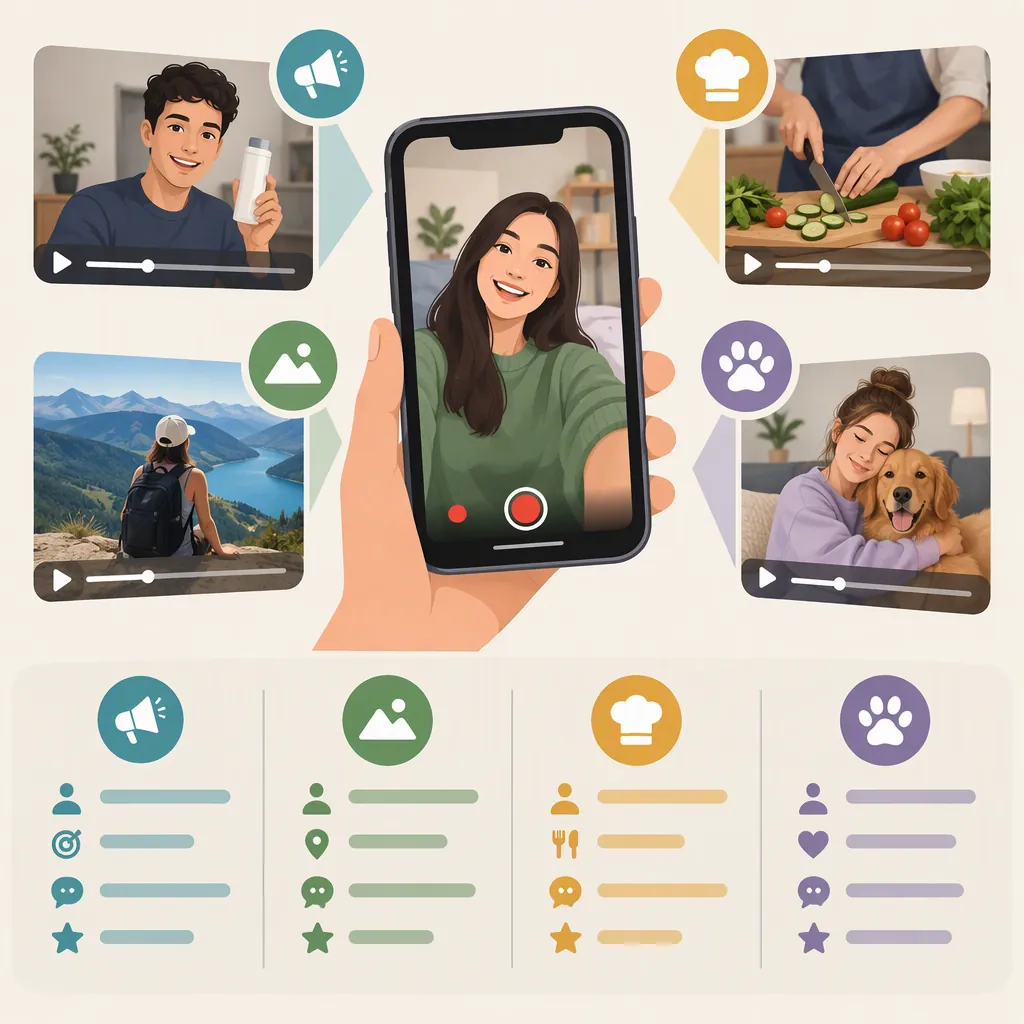
What Does UGC Video Mean?
UGC stands for user-generated content. A UGC video is a video made by a user, customer, fan, or creator rather than by the brand itself. Examples include product reviews, unboxings, and tutorials. In marketing, the term also commonly includes paid creator videos, although some sources reserve UGC for voluntary content from genuine users. [c1] [c2] [c3]
UGC Video Meaning in Plain English
The simplest way to understand UGC video is as the video form of user-generated content. Instead of a company speaking directly through a brand-produced video, an individual shares a demonstration, opinion, or experience. Flixier describes UGC video as content made by ordinary people that showcases a product or service. [c2]
However, the label does not tell you everything about how a video was made. A customer might independently record a purchase, or a creator might be hired to follow a brand's brief. Influee includes both under UGC, while BrandLens uses a narrower definition centered on voluntary content from real users. [c1] [c3]
For clarity, describe the source as well as the format: customer-created review, commissioned creator demo, or paid UGC-style video. These descriptions avoid treating every person-on-camera clip as an independent customer recommendation.
Common Types of UGC Videos
The references identify several recurring video formats. These describe what viewers see, not whether the creator was paid. [c1] [c2]
| Format | What the Video Shows |
|---|---|
| Unboxing | Opening a package, revealing its contents, and sharing first impressions. |
| Product review | An evaluation that may discuss strengths, limitations, and experience over time. |
| Tutorial or how-to | A person demonstrating how to use something. |
| Testimonial | A person describing their experience with a product or service. |
| Product demo | A product being used to perform a task or illustrate a feature. |
For example, a customer explaining how they set up a newly purchased item would fit the tutorial format. A creator hired to demonstrate the same setup could produce a similar-looking video, but its commercial context would be different. These are illustrative scenarios, not reports about actual customers.
Organic UGC, Paid Creator Content, and Influencer Videos
Organic UGC generally means content people create voluntarily rather than as a commissioned deliverable. Commissioned UGC means content a creator makes for a brand under a brief. That distinction is central to Influee's explanation, although BrandLens would not classify paid creator work as genuine UGC. [c1] [c3]
Influencer marketing introduces another distinction: distribution. Influee describes a UGC creator as someone hired to supply content for a brand's channels, whereas an influencer publishes to their own audience. [c1]
It helps to separate three questions:
- Who made it? A customer, fan, hired creator, or brand production team?
- Why was it made? Voluntary sharing or a commercial arrangement?
- Where will it appear? The person's account, the brand's account, a website, or an advertisement?
A casual visual style cannot answer those questions. A phone-shot clip may be commissioned, and a customer video may be carefully edited. Treat appearance and commercial context as separate issues.
What to Check Before Reusing a UGC Video
Finding a video online is not the same as having permission to reuse it. The references emphasize obtaining permission and defining usage scope. BrandLens specifically identifies channels, duration, and attribution as details to address in a consent process. [c1] [c3]
Do not assume that paying a creator automatically grants every possible right. Record the agreed uses rather than relying on the label “UGC.” A practical review should also distinguish a genuine personal account from scripted demonstration content, so an edit does not turn one into the other.
The checklist below is an organizational aid, not a legal determination. The supplied references are not a complete guide to US copyright, advertising disclosure, or platform requirements.
UGC Video Review Checklist
- Content source: Identify who created the video.
- Commercial context: Record whether payment, gifting, or another arrangement was involved.
- Permission: Record the authorization or agreement covering reuse.
- Channels: Specify where the video may appear, including any paid advertising.
- Duration: Record when permitted use begins and ends.
- Attribution: Record any agreed credit requirements.
- Editing: Confirm which changes are permitted and preserve the original meaning.
- Experience claims: Check that statements do not imply an experience the speaker did not have.
- Disclosure review: Check applicable requirements for the intended publication.
- Documentation: Keep the final video and permission records together.
What the UGC Label Does Not Prove
UGC describes a content category, not a guarantee of honesty, independence, or effectiveness. Because the supplied definitions include different relationships between people and brands, the label alone cannot establish whether the speaker is an unpaid customer. [c1] [c3]
The supplied articles also make promotional claims about trust and marketing performance. This explanation does not treat those claims as universal results or reproduce their performance statistics. All three references come from commercial providers, and they do not use a single consistent definition of UGC.
The useful takeaway is narrower: identify who created the video, whether it was commissioned, what it actually shows, and what reuse permissions exist. Those details are more informative than the UGC label by itself.
FAQ
What Does UGC Stand For?
UGC stands for user-generated content. It includes more than video: the references also describe photos, written reviews, and social posts as UGC. [c1]
Are UGC Videos Always Unpaid?
No, not in common marketing usage. Influee includes both organic customer content and commissioned creator content. BrandLens reserves genuine UGC for voluntary content from real users, so the terminology varies by source. [c1] [c3]
Does a UGC Creator Need a Large Following?
Not necessarily. Influee describes UGC creators as supplying content for a brand's channels and being selected for content quality rather than follower count. That differs from hiring an influencer to reach their own audience. [c1]
Can a Brand Reuse a Public Customer Video?
Public availability should not be treated as permission. The references recommend securing authorization and documenting the intended uses, including channels and duration. Whether a particular reuse is permitted requires reviewing the relevant rights and agreement. [c1] [c3]