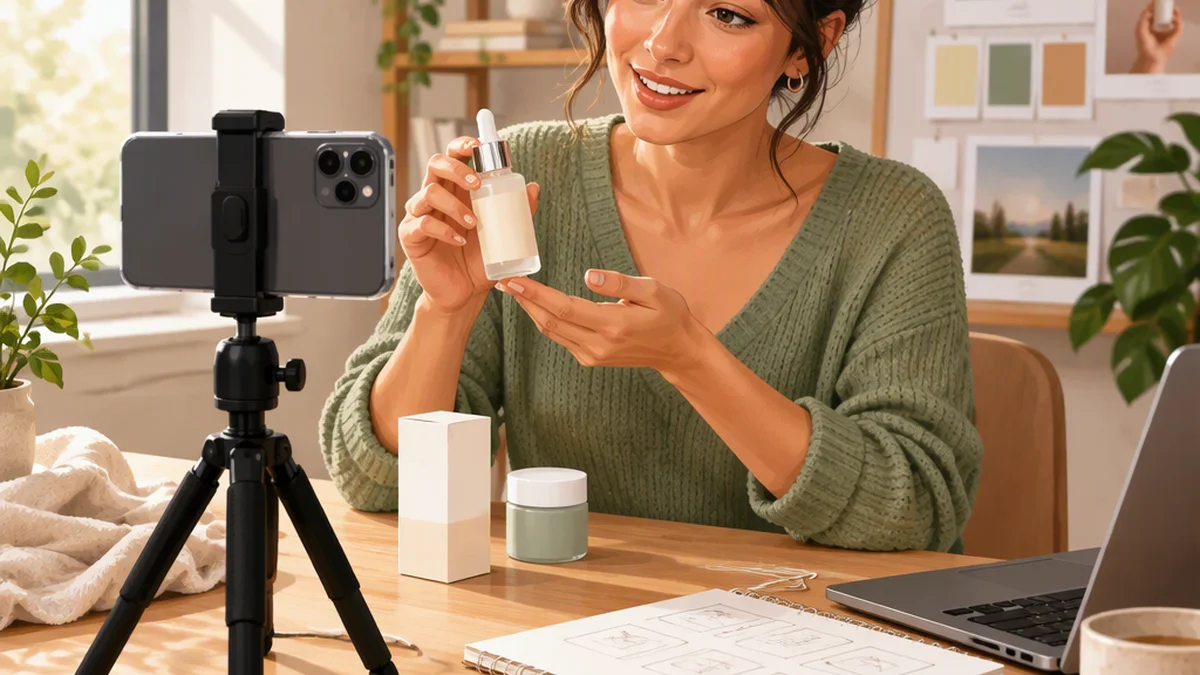
TikTok UGC Creator: What the Role Means and How to Work with Brands
A TikTok UGC creator makes short-form, brand-relevant content that a business may license or otherwise use in its marketing. “UGC” means user-generated content, but in commercial creator work it often describes commissioned videos made in a natural, customer-like style.
The creator’s value is usually their ability to develop a clear concept, demonstrate a product or service truthfully, record usable footage, and deliver an edited video suited to TikTok. A large following is not necessarily required when the brand is buying content rather than access to the creator’s audience.
What a TikTok UGC Creator Typically Delivers
A UGC project can range from a talking-to-camera clip to a package of edited vertical videos, raw footage, still images, alternate hooks, captions, and voiceover variations. Write down the exact deliverables before production: creating a video for a brand is different from publishing it on your own account.
Common formats include:
- Product demonstration: Show how an item is opened, set up, used, cleaned, or worn.
- Problem-and-solution video: Identify a specific everyday frustration, then demonstrate how the product or service addresses it.
- Testimonial: Describe a genuine personal experience. First-person statements about use, duration, and results must reflect what actually happened—not a fictional customer story or a brand-supplied claim.
- Tutorial or how-to: Demonstrate steps, expected results, and practical limitations.
- Lifestyle footage: Capture natural-looking scenes that give the brand editable visual material.
- Creative variations: Supply multiple opening lines, calls to action, or edits so the brand can test different messages.
If you have not used a product, use an explanatory or demonstration format rather than presenting yourself as a satisfied customer. Brand-provided evidence does not establish that you personally experienced a result.
UGC Creator Versus Influencer
The distinction affects pricing, disclosure, usage rights, and campaign expectations.
| Arrangement | What the brand is primarily buying | What to confirm |
|---|---|---|
| Content-only UGC | Assets for the brand to publish or use | Deliverables, editing permissions, channels, usage duration, and payment |
| Influencer posting | Content plus access to the creator’s audience | Posting requirements, audience fit, disclosure, publication timing, and any reuse rights |
| Combined project | Content production and creator publication | Separate scope and compensation for each component |
One creator can do all three. However, a content-creation fee does not automatically include a post on the creator’s account, paid-ad usage, raw footage, perpetual rights, exclusivity, reshoots, or permission for the brand to edit the work.
Three TikTok Usage Scenarios to Clarify
Before quoting, ask how the brand intends to use the video:
- Brand-account publishing: Confirm the final files, captions, permitted edits, publication channels, and usage period. Specify who will review claims and handle any required commercial labeling.
- Creator-account publishing: Confirm the account, posting date, caption, call to action, how long the post must remain available, and disclosure responsibilities. Do not promise views or sales you cannot guarantee.
- Advertising using the creator’s post or identity: Confirm the specific permissions needed, authorization period, payment, approved edits, and use of the creator’s name or likeness. Treat this as a separate authorization—not something implied by delivering a video—and verify TikTok’s current requirements before agreeing.
How to Start as a TikTok UGC Creator
Choose a Practical Starting Niche
Pick categories you can represent accurately and film well. Examples include home organization, food preparation, beauty routines, software screen recordings, fitness accessories, books, pet products, or local services.
A niche is a positioning tool, not a permanent restriction. Start where you can create realistic scenes and understand the audience’s questions.
Create Sample Content Before Seeking Paid Work
Make portfolio examples using products you already own, fictional briefs, or clearly labeled spec work. Spec work is an uncommissioned sample; do not imply that the brand sponsored or approved it.
Show different formats, such as a product demonstration, a voiceover edit, a talking-head explanation, and a concise tutorial. Samples must also be truthful: do not invent personal experience, usage duration, or results to make a script sound convincing.
Build a Simple Portfolio
A portfolio can be a public profile, a short presentation page, or a folder of viewable examples. Include:
- A short introduction and the categories you cover.
- Four to eight strong samples.
- Typical deliverables.
- Contact information.
- A note that rates and rights are quoted per brief.
Avoid promises of guaranteed views, sales, or return on ad spend.
Write a Clear Outreach Message
Contact relevant brands with a specific, accurate observation about their product or current content. Offer one or two content ideas rather than a vague promise to “make viral videos.”
Keep the message brief and ask whether they need creator-produced assets, creator posting, or both.
Confirm Scope in Writing
Before filming, agree on the key message, prohibited claims, deliverable count, aspect ratio, video length range, revision limit, deadline, payment timing, usage rights, exclusivity, and whether raw files are included.
If a brief asks you to describe an experience you have not had or make a claim you cannot support, request different wording or a different format before production.
Deliver Organized Assets
Use descriptive file names and separate final exports from raw clips when raw footage is included.
Example file names:
Brand_Product_HookA_Final.mp4Brand_Product_HookB_Final.mp4Brand_Product_Raw_01.mp4
Include any agreed captions, thumbnail suggestions, or script text in a clearly labeled document.
A Practical Content Workflow
Begin with the audience problem, not the product description:
- Identify the viewer. Who is the video for, and what are they trying to solve?
- Choose one core message. Avoid squeezing every product feature into one short video.
- Plan the structure. Use a hook, context, demonstration, outcome, and call to action.
- Match the footage to the words. If the script says an item is compact, show it in a bag or beside a common object. If setup is simple, show the setup.
- Review claims and permissions. Check the script, footage, music, and intended use before delivery.
A TikTok opening should establish relevance quickly, but it does not need to be sensational. A clear question, recognizable problem, or direct use-case statement can work. Keep the middle focused on one idea and finish with an appropriate next step, such as learning more or visiting the brand’s destination.
Do not make medical, financial, safety, performance, or comparative claims unless they are substantiated and the wording is appropriate for the intended use. Claims about your own experience must also be personally true.
Example Outreach Template
Adapt this example to your actual experience and the brand you are contacting.
Subject: UGC content idea for [Brand]
Hi [Name],
I’m a short-form UGC creator focused on [category]. I noticed that [specific, accurate observation about the brand, product, or campaign].
I have an idea for a vertical video that opens with [hook], then shows [demonstration], and closes with [call to action]. The concept would be creator-produced content for [brand-owned social content / other proposed use].
My portfolio: [link]
Are you currently sourcing content assets, creator posts, or both? I can send a scope and quote based on the number of videos, revisions, and requested usage rights.
Best,
[Name]
[Email]
Brief Checklist for Creators and Brands
Use this checklist before production:
- Audience and message: Who is the intended viewer, and what single message must the video communicate?
- Claims: What statements need substantiation? Which words, visuals, or competitor references are prohibited?
- Deliverables: Are final videos, captions, stills, raw clips, or source project files required?
- Technical format: What orientation, resolution, duration, caption placement, music permissions, and safe areas are needed?
- Creative scope: How many concepts, hooks, edits, and revision rounds are included?
- Usage: Can the content appear on organic social, websites, email, retail displays, paid advertising, or other channels?
- Duration and territory: For how long and where may the content be used?
- Editing and likeness: May the brand crop, subtitle, combine, or create new versions featuring the creator?
- Advertising authorization: Will the campaign use the creator’s post, account identity, name, or likeness in ads?
- Exclusivity: Which competing categories are restricted, and for how long?
- Disclosure and review: Who will check claims, approve captions, and handle required commercial labeling for each publication scenario?
- Approval and payment: What are the delivery date, approval process, payment amount, and payment deadline?
Disclosure and Truthful Presentation
If you publish content connected to payment, a gifted product, or another material relationship, check the rules that apply in your region and TikTok’s current commercial-content disclosure requirements before posting. Confirm the required labeling and how it must appear rather than treating disclosure as an optional caption choice.
If the brand publishes the delivered assets, specify in the brief who is responsible for commercial labeling, claim review, and final approval. Agreeing on responsibilities does not justify misleading content.
A natural style should not disguise a commercial relationship or turn a scripted demonstration into a false customer testimonial.
Common Mistakes to Avoid
- Accepting a vague brief, then discovering that the brand expected ad rights, multiple edits, and raw footage.
- Making unverified claims about results, ingredients, safety, savings, health, or product superiority.
- Using music, images, clips, logos, or third-party appearances without confirming permission for the intended use, particularly advertising.
- Treating gifted product as equivalent to payment without deciding whether the exchange is appropriate for the work requested.
- Publishing commercially connected content without checking disclosure requirements.
- Delivering a polished video that lacks a clear hook, visible demonstration, or useful next step.
FAQ
Do I Need a Large TikTok Following to Be a UGC Creator?
Not necessarily. If a brand hires you primarily to create content assets, your portfolio, production quality, communication, and rights handling may matter more than follower count. If the brand also wants you to post, audience fit and reach become relevant.
Should a UGC Creator Post Every Brand Video on Their Own Account?
Only if posting is part of the agreed scope. A brand may want content for its own channels, while another campaign may require creator publication. Treat these as separate deliverables.
How Should I Set a Rate?
Quote from the actual scope rather than video length alone. Consider concept development, filming, editing, revisions, urgency, props or travel, raw footage, posting, exclusivity, and usage rights.
A written quote should state what is included, how long the brand may use the content, and what requires an additional fee.
Can I Call Myself a TikTok UGC Creator Without Official TikTok Certification?
The phrase can describe the content work you offer. Do not imply official TikTok employment, endorsement, certification, or access to a particular program unless you can verify that status.
Source
TikTok discovery URL for “ugc creator”. The existence of this URL does not establish an official creator designation, certification, program eligibility, or pricing guidance.