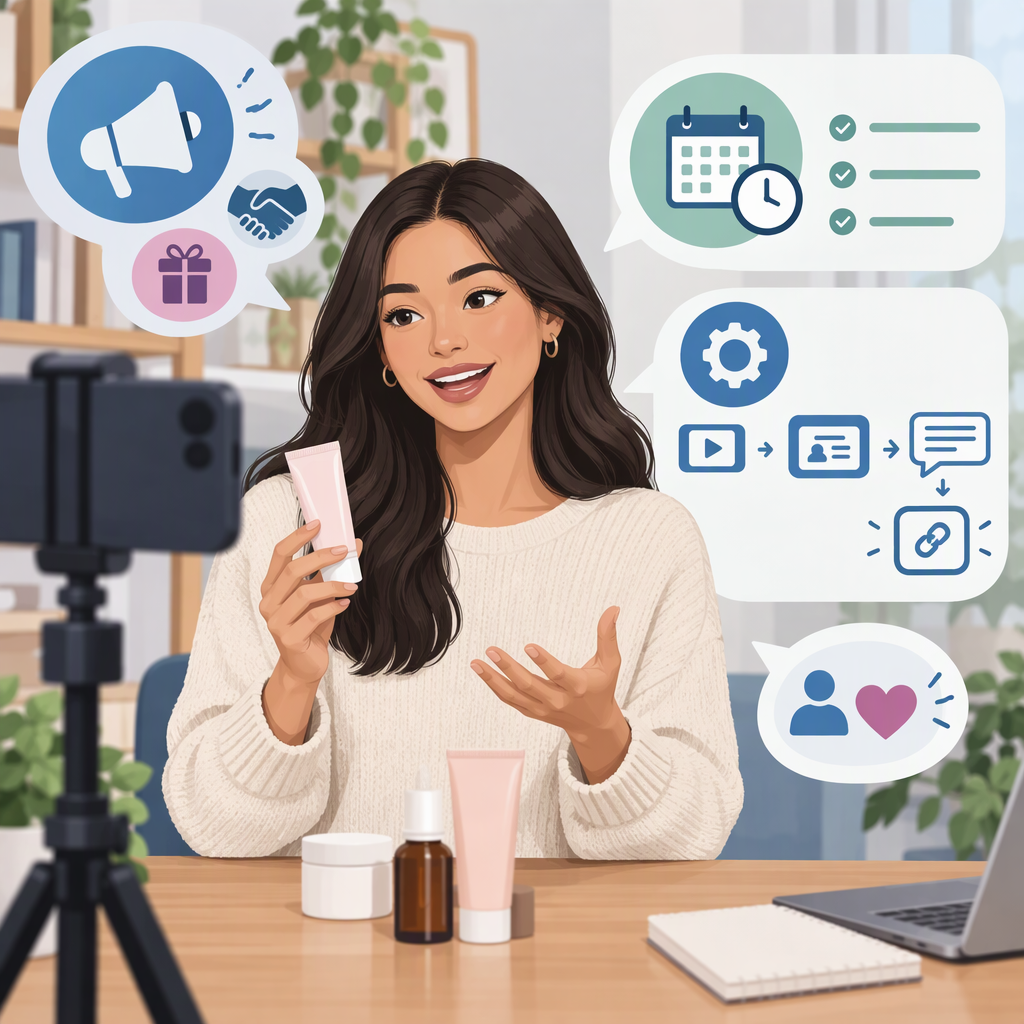
Disclosure 101 for Social Media Influencers: When and How to Disclose
The short answer: If you endorse a brand and have a connection that could matter to your audience—such as payment, a free or discounted product, an affiliate commission, or a personal or employment relationship—make that connection clear in the post itself. The disclosure should be easy to notice and understand. For U.S. audiences, the Federal Trade Commission (FTC) says creators are responsible for disclosing; don’t assume a brand or platform will do it for you. (ftc.gov)
This guide covers U.S. federal FTC guidance, not every country’s laws or every platform’s current interface. The FTC says U.S. law may apply to posts made abroad when it is reasonably foreseeable they will affect U.S. consumers; other countries’ laws may also apply. The FTC’s Disclosures 101 brochure was published in November 2019, and its Endorsement Guides were revised in 2023. This is general education, not legal advice. (ftc.gov)
1. First, Check Your Relationship with the Brand
Ask: Would a viewer evaluating my endorsement want to know about my connection to this brand? If the connection is unexpected and could affect how people weigh your recommendation, FTC guidance says it should be disclosed clearly and conspicuously. (consumer.ftc.gov)
| Your situation | Practical disclosure decision under FTC guidance |
|---|---|
| A brand pays you to recommend or feature something. | Disclose the paid relationship with the endorsement. Payment is a financial connection. (ftc.gov) |
| You receive a free or discounted product, service, or perk, then mention the brand’s product. | Disclose it—even if the brand did not ask you to post and you believe your opinion is unbiased. (ftc.gov) |
| You use an affiliate link or earn commission from a purchase. | Treat the commission as a financial connection and say so plainly. FTC guidance describes financial relationships broadly and says to disclose when you receive something of value to mention a product. (ftc.gov) |
| You have a personal, family, or employment relationship with the brand. | Disclose the relationship when it connects to your endorsement. These relationships are among the examples identified by the FTC. (ftc.gov) |
| You bought the product yourself and have no relationship with the brand. | The FTC says you do not need to announce that you have no brand relationship. (ftc.gov) |
Unsolicited gifts: The FTC’s influencer brochure says to disclose if a brand gives you a free or discounted product or another perk and you then mention one of its products, even if nobody asked you to post. So an unexpected gift is not automatically irrelevant. If you received something but do not mention or endorse the brand, the brochure’s example does not resolve every possible circumstance; consider the actual facts and applicable guidance rather than assuming the gift creates the same disclosure question in every situation. (ftc.gov)
If your review is mixed or negative: The FTC says to disclose a relevant relationship even if you think your evaluation is unbiased. A disclosure does not make an endorsement honest by itself: endorsements must reflect the endorser’s honest opinion. If you did not endorse the product at all, whether a disclosure is called for can depend on context. (ftc.gov)
2. Make the Disclosure Clear and Hard to Miss
The FTC advises placing the disclosure with the endorsement, where people will see and understand it. A profile-page statement, a disclosure at the end, text hidden behind “more,” or a disclosure buried among hashtags or links may be missed. (ftc.gov)
Use straightforward wording that accurately describes your connection. For example:
- Paid: “Ad — [Brand] paid me to share this.”
- Gifted: “ [Brand] gifted me this product.”
- Affiliate: “I may earn a commission if you buy through this link.”
These are illustrative examples, not FTC-approved formulas or guarantees of compliance. Adjust them to match what actually happened; don’t imply payment if you received a gift, or a gift if you earn a commission. The FTC’s central guidance is that people should be able to notice and understand the relationship. (ftc.gov)
3. Put It Where Viewers Encounter the Endorsement
- Photo or Story: Put the disclosure on the image or Story itself, and leave it visible long enough to read. (ftc.gov)
- Video: Include the disclosure in the video, not only in its description. The FTC brochure says viewers are more likely to notice disclosures made in both audio and video; using both can help reach people who watch without sound or miss on-screen text. (ftc.gov)
- Live stream: Repeat the disclosure periodically so viewers who join partway through still encounter it. (ftc.gov)
This is format guidance, not a checklist for every platform feature. The FTC materials cited here do not establish that any particular platform’s built-in partnership label is sufficient on its own. Check that the disclosure in your post is still easy to notice and understand; don’t assume a platform tool automatically settles that question. (ftc.gov)
4. Quick Pre-Publication Check
- Identify the connection: payment, gift, discount, affiliate commission, or personal, family, or employment relationship.
- Decide what the audience should know: describe the connection accurately and plainly.
- Place the disclosure with the endorsement: don’t hide it in a profile, collapsed text, or a hashtag cluster.
- Check the format: put it in the Story or video itself; repeat it during a live stream.
- Check the audience and location: U.S. rules may reach posts made abroad that foreseeably affect U.S. consumers, and other laws may apply too.
The FTC’s Endorsement Guides offer general principles, and whether a particular post is deceptive depends on its facts. Use this guide as a decision aid—not as a promise that a sample phrase or platform feature guarantees compliance. (ecfr.gov)