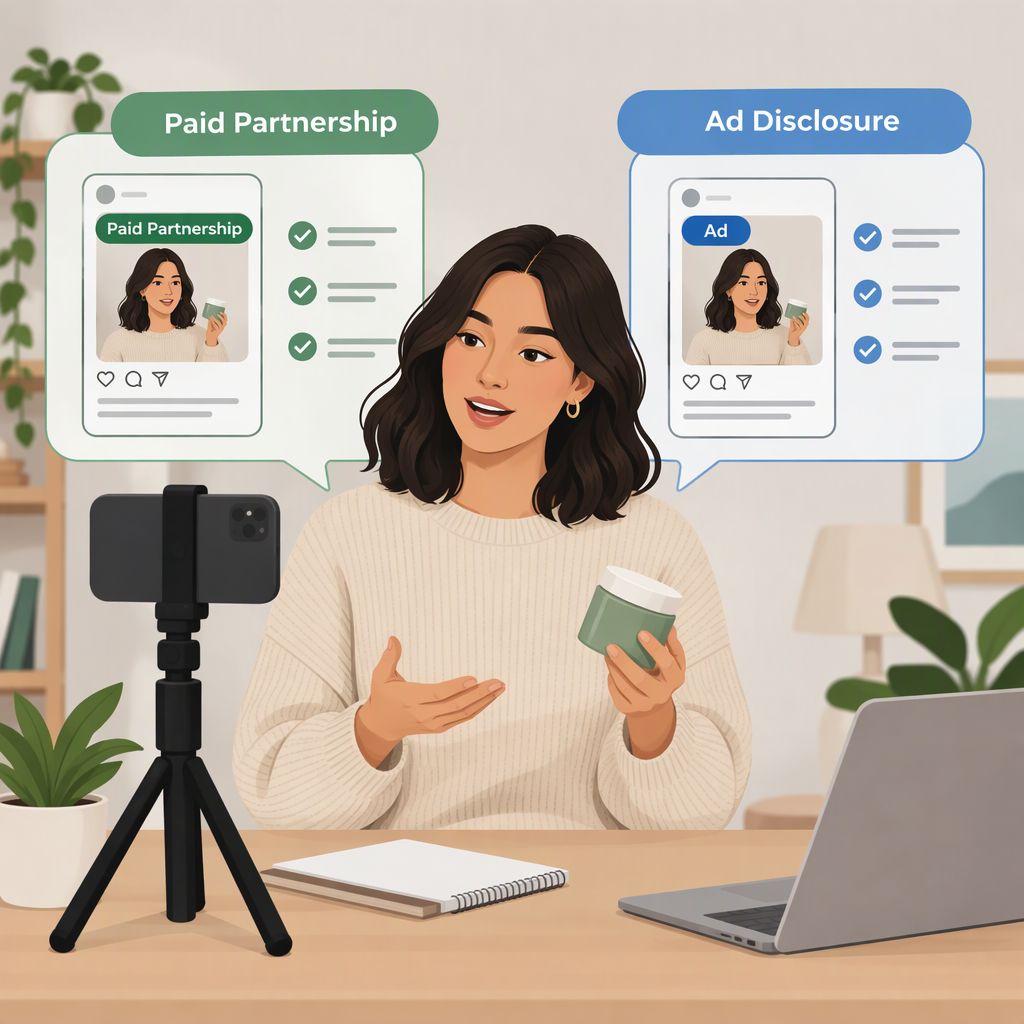
Paid Partnership Label Vs. Ad Disclosure: What Creators Should Know
A platform’s “Paid partnership” label and an ad disclosure are related, but they are not automatically interchangeable. The platform label is a tool the platform provides; an ad disclosure is information viewers need to understand your relationship with a brand. For U.S. creators, the practical approach is to use any label the platform requires and make sure viewers can clearly notice and understand the relationship. The FTC advises creators not to assume a platform’s disclosure tool is good enough on its own. Whether a disclosure is adequate depends on the context. FTC guidance FTC Endorsement Guides Q&A
Paid Partnership Label Vs. Ad Disclosure: What’s the Difference?
A paid partnership label is a platform-provided notice attached to content through the platform’s settings or publishing tools. Its name and behavior vary by platform. For example, TikTok says its content disclosure setting can label third-party branded content as “Paid partnership.” YouTube says its paid-promotion declaration adds a disclosure label to the video itself. TikTok YouTube
An ad disclosure is the clear, viewer-facing explanation of a relationship that could affect how people evaluate an endorsement. The FTC says a material connection can include payment, free or discounted products, other perks, or personal, family, or employment relationships. The disclosure’s purpose is to help viewers understand that connection—not merely to mark content as commercial. FTC: Disclosures 101
In short: the label is a platform mechanism; the disclosure is the information viewers should receive. A platform label can help communicate that information, but its presence alone does not establish that every viewer will see and understand the relevant relationship.
Is the Platform Label Enough?
Not necessarily. The FTC’s influencer guidance says not to assume a platform’s disclosure tool is good enough; it recommends considering the tool in addition to your own good disclosure. Separately, platforms may require their own tools. YouTube, for example, requires creators to declare branded content in Studio and says creators remain responsible for making disclosure clear and prominent. TikTok requires its content disclosure setting for content promoting a brand, product, or service. These are platform requirements, distinct from the question of what applicable law requires in a particular context. FTC guide YouTube policy TikTok instructions
A useful publishing rule is: turn on the required platform label, then assess whether the relationship is also plainly disclosed where viewers encounter the endorsement. Don’t treat this as a guarantee of legal compliance; the FTC says whether a disclosure is needed and sufficient depends on the specific endorsement and its context. FTC Endorsement Guides Q&A
How to Decide What to Disclose and Where
- Identify the relationship. Ask whether you received money, a free or discounted product, another perk, or have a personal, family, or employment connection to the brand. The FTC says a connection may need disclosure when consumers would not expect it and it could affect how they evaluate an endorsement. FTC guidance FTC: Disclosures 101
- Check the platform rule for your content. Use the platform’s current official instructions. TikTok says to enable its disclosure setting for content promoting a brand, product, or service; its label distinguishes “Promotional content” for your own business from “Paid partnership” for branded content on behalf of another business. YouTube’s branded-content policy covers videos, Shorts, live streams, and other YouTube features, and requires its paid-promotion declaration. TikTok YouTube
- Put the disclosure where viewers can notice it. FTC guidance says to place it with the endorsement, where it is hard to miss—not only on a profile page, at the end of a post or video, or behind a “more” click. For video endorsements, the FTC says the disclosure should be in the video, not only in its description. FTC: Disclosures 101
- Check that viewers can understand it. The FTC advises using clear language and matching the disclosure’s language to the endorsement. An extra plain-language disclosure alongside a platform label can make the relationship more explicit; for example, “Paid partnership with [Brand]” is an illustrative phrase, not a universal formula or compliance guarantee. FTC: Disclosures 101
What to Verify Before Publishing
- The relationship: What did you receive, or what connection do you have, and would viewers reasonably expect it?
- The platform setting: Does the platform require a branded-content, paid-promotion, or commercial-content setting for this post, video, or live stream?
- The viewer-facing disclosure: Is the relationship explained clearly and placed with the endorsement so viewers do not have to find it elsewhere?
- The applicable rules: Platform policies and U.S. disclosure guidance are separate checks. If your audience or publishing context involves another country, U.S. guidance may not be the only applicable law. FTC guidance
Bottom line: Use the platform’s required paid-partnership or paid-promotion tool, but don’t assume that a platform label alone is always sufficient. Make the relationship understandable to viewers and check the current official rules for the platform and format you’re publishing.