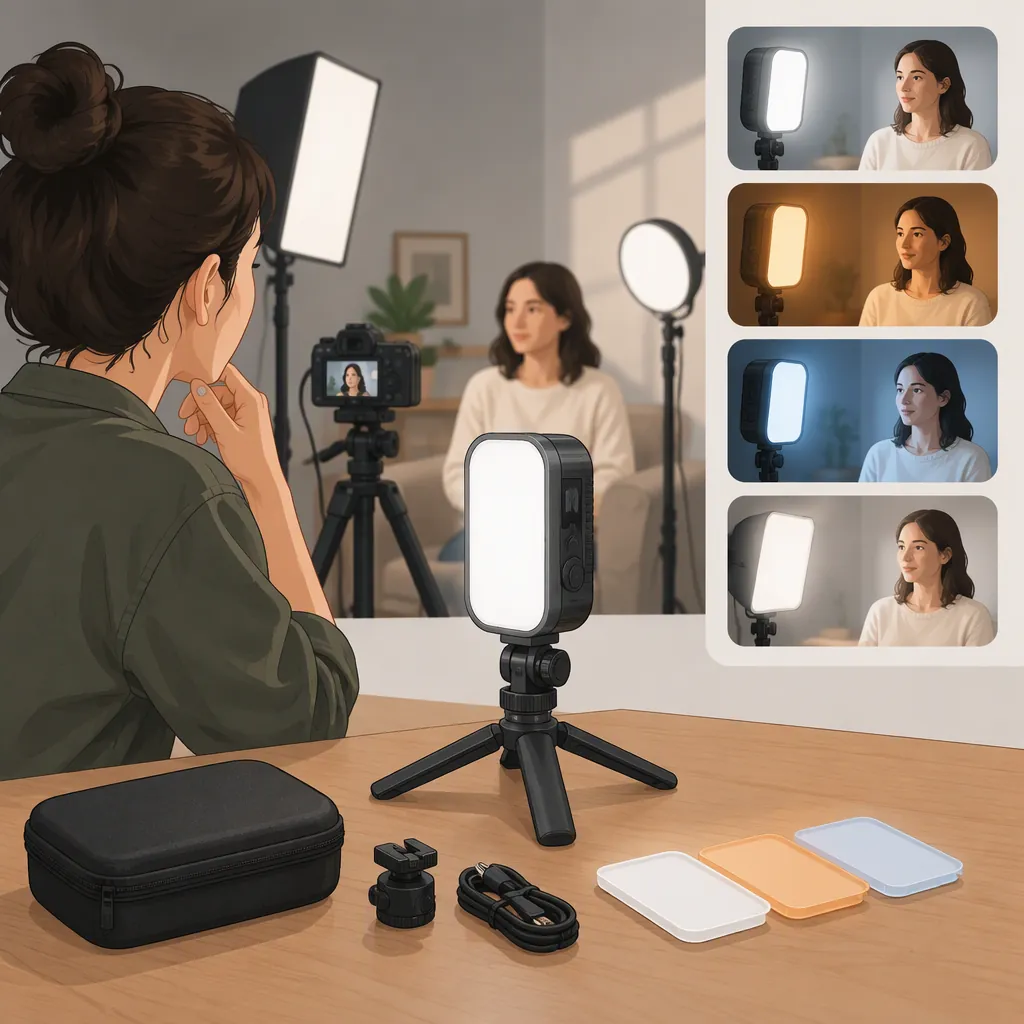
Ulanzi R66: How to Evaluate a Light for Your Filming Setup
Evaluate the Ulanzi R66 against a specific lighting role rather than assuming it can light an entire scene. The supplied retailer pages describe an R66 RGB light, but they do not establish independently tested performance. One listing also includes VL66 in its title, so confirm the exact model before comparing specifications. Base your decision on exposure, skin-tone appearance, flicker, mounting, and runtime tests at your intended settings. [r1] [r2]
What the Available Sources Establish
The Rakuten listing identifies the item as a Ulanzi R66 RGB portable light, while also including VL66 in the title. Its description supplies specifications and feature claims, but these are retailer statements rather than independent measurements. The mixed model naming leaves the exact product identity insufficiently clear for a confident specification comparison. [r1]
The Lazada page names an R66 RGB mini video light for cameras and smartphones. The supplied text does not include detailed performance measurements or a usable specification table. That title alone does not establish mounting compatibility with a particular camera or phone rig. [r2]
The supplied Bilibili extract is unreadable and is not used as evidence. No manufacturer manual or independent test results were provided. This guide therefore offers an evaluation method, not a product review or a verified performance ranking.
Define the Lighting Role First
Start with the problem your footage needs to solve. Use these as evaluation categories, not confirmed R66 capabilities:
| Intended Role | Question to Answer in a Test |
|---|---|
| Main light for a face | Can the light produce your target exposure at the planned distance without an unacceptable shadow pattern? |
| Supplemental fill | Can it reduce the shadow enough without making the scene look flat? |
| Background color accent | Is the desired color visible while keeping unwanted spill off the subject? |
| Tabletop detail light | Can it illuminate the relevant area without distracting reflections? |
For a talking-head setup, prioritize the face test. For a background accent, prioritize color placement and spill. If one light cannot satisfy both jobs in your test, evaluate the roles separately rather than treating RGB functionality as proof of all-purpose suitability.
Compare Setup Results, Not Listing Numbers Alone
The Rakuten description lists a 500-lux brightness figure and a two-to-eight-hour operating-time range. The supplied text does not state a measurement distance for the lux figure or the settings behind the runtime range. Neither number should be treated as a guaranteed result for your filming setup. [r1]
When comparing the R66 with another candidate light, use the same subject position, light-to-subject distance, camera exposure, and intended lighting role. Record any modifiers and power settings. If you cannot obtain comparable measurements, mark output and runtime as unresolved rather than declaring a winner.
Use a practical acceptance checklist:
- Exposure: Does the setup reach the intended exposure without camera settings you consider unacceptable?
- Appearance: Are skin tones, shadows, and reflections acceptable in recorded footage?
- Flicker: Does the footage show bands or pulsing at the frame rates, shutter settings, and brightness levels you plan to use?
- Power: Does a runtime test cover the planned recording period with your chosen reserve?
- Mounting: Is the exact attachment secure, and does it leave the screen, controls, and cables accessible?
The retailer describes magnetic attachment, but that is not evidence that a particular surface or rig provides secure support. Treat mounting security as a separate check. [r1]
Use a Repeatable Filming Test
If a test unit is available, record a baseline with the light off, then repeat the same shot with it on. Keep exposure and white balance fixed for each comparison. Review the recorded files rather than relying only on how the scene looks by eye.
Use the worksheet below for each candidate. Unknown entries should remain unknown. A useful outcome is a role-specific decision—such as acceptable for a background accent but unresolved as a main light—not a universal recommendation.
Lighting Evaluation Worksheet
Exact model and identifying label:
Intended role:
Subject and room conditions:
Light-to-subject distance:
Camera, lens, and exposure settings:
Frame rate and shutter setting:
White balance:
Light mode, brightness, and color setting:
Modifier and mounting arrangement:
Baseline clip filename:
Test clip filename:
Exposure and shadow observations:
Skin-tone or object-color observations:
Visible flicker or banding:
Runtime at tested settings:
Mounting and cable-clearance observations:
Unresolved information:
Decision for this specific role: acceptable / unacceptable / unresolved.
FAQ
Can the Ulanzi R66 Be My Only Filming Light?
The supplied sources do not establish that it can serve as the only light for your setup. Test it at the intended distance and camera settings, checking exposure, shadows, and background coverage. Do not infer main-light suitability from the retailer's RGB or portable-light descriptions. [r1]
Are R66 and Vl66 the Same Model?
The supplied evidence does not resolve that question. The Rakuten title includes both names, so do not assume they are interchangeable. Confirm the identifying label and matching documentation before using specifications in a comparison. [r1]
How Long Will the Battery Last During Filming?
The Rakuten listing states a two-to-eight-hour range, but the supplied text does not identify the settings used. Your required runtime remains unverified until it is tested at the brightness and mode planned for the shoot. [r1]