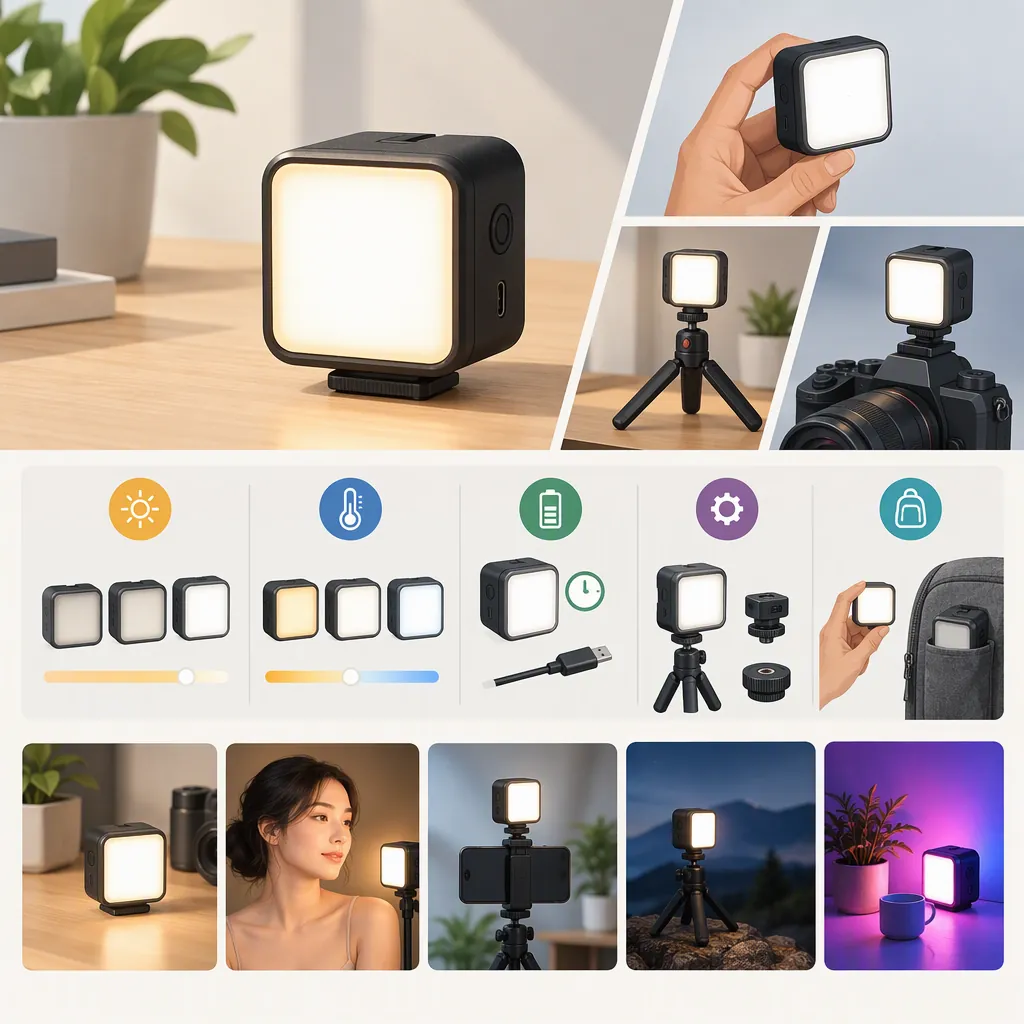
Ulanzi Cl15 Mini Cube Light: A Filming-Light Selection Guide
When researching the Ulanzi CL15 mini cube light, start with the lighting job you need it to perform, then verify the exact model and evaluate it under your planned recording conditions. The referenced Ulanzi lighting collection page provides general selection guidance, but the available page text does not identify the CL15 or establish its specifications. It therefore cannot support a model-specific recommendation. [source_1]
The practical decision is whether a documented candidate meets your required exposure, light appearance, recording duration, and mounting needs—not whether its name or compact format sounds suitable.
What Is—And Is Not—Verified
The referenced source is a Ulanzi lighting collection page, not a CL15 product page or manual. Its FAQ recommends considering brightness, light quality, power options, portability, color features, mounting, modifiers, and the intended lighting role. [source_1]
This guide does not assign the CL15 a wattage, brightness rating, color range, battery runtime, mounting interface, or accessory compatibility. The exact model name also remains unconfirmed by the available source. Do not transfer specifications from another Ulanzi mini light to this candidate.
Define the Lighting Job First
Ulanzi's collection FAQ distinguishes lighting needs such as key, fill, backlight, and accent lighting. [source_1] Use that distinction to define a requirement before comparing models.
| Intended role | Requirement to define before testing |
|---|---|
| Main subject light | The subject must have your intended exposure and light appearance at the planned distance, framing, and camera settings. |
| Fill light | The light must provide the shadow adjustment you need without changing the scene in an unwanted way. |
| Backlight or background accent | The intended area must receive the desired coverage and appearance without unwanted spill or reflections. |
| Portable filming setup | The complete light, mount, power supply, and accessory arrangement must fit your carrying and setup constraints. |
These are evaluation criteria, not verified CL15 capabilities.
Separate necessary conditions from preferences. For example, completing a planned recording session and mounting securely may be necessary; a particular color effect may be optional. A candidate should not pass because it offers an optional feature while failing a necessary condition.
Compare Candidates Using the Same Evidence
Apply the following checklist to the CL15 candidate and any alternative. The selection categories reflect the collection page's general guidance; the evidence requirements below are a proposed comparison method. [source_1]
| Criterion | Evidence to verify | Question for your decision |
|---|---|---|
| Model identity | Exact model name and matching product documentation | Are you evaluating the intended model? |
| Output | Brightness information with stated measurement conditions, plus a recording at your working distance | Does it meet your exposure requirement in the planned setup? |
| Light quality | A sample of your subject using the intended camera settings | Are shadows, color appearance, and reflections acceptable? |
| Color controls | Documented adjustment options | Can it produce the appearance your scene requires? |
| Power and duration | Supported power sources and runtime conditions | Can the documented power arrangement support your required recording time? |
| Mounting | Exact interface and a compatible support arrangement | Can you position the light securely where it is needed? |
| Modifiers | Explicit compatibility for the exact model | Can you use any modifier that is necessary for the intended result? |
| Portability | Dimensions, weight, and the complete accessory load | Does the whole setup meet your carrying and setup constraints? |
Collection-level descriptions of mounts and accessories are not proof of CL15 compatibility. Verify the exact interface and supported accessories for the model being evaluated. [source_1]
Turn the Evidence into a Decision
Use these rules after defining your necessary conditions:
- More evidence needed: A critical specification, model identity, power arrangement, or compatibility detail remains unconfirmed, or a necessary test has not been completed.
- Unsuitable for the planned setup: A completed evaluation shows that the candidate cannot meet a necessary condition—for example, the required subject exposure, continuous recording duration, or stable placement.
- Suitable for the tested use: Every predefined necessary condition is verified and passes under the recorded test conditions.
If a necessary condition demonstrably fails, additional optional features do not make the candidate suitable for that setup. Conversely, a successful test supports only the specific use evaluated; it is not a recommendation of the model's overall performance.
Run a Controlled Recording Test
If the candidate is available for evaluation, use this proposed procedure. It is not a report of firsthand testing.
- Write down the requirements. Specify the lighting role, subject distance, framing, required recording duration, and acceptable exposure and appearance.
- Build the intended setup. Use the planned subject, background, mount, power arrangement, and any verified compatible modifier. Stay within documented operating limits.
- Fix comparison settings where possible. Keep exposure and white balance consistent between clips. Record frame rate, shutter speed, aperture and ISO where applicable, and white-balance settings. If an automatic setting cannot be disabled, note it as a comparison limitation.
- Record a baseline. Film the scene without the candidate light.
- Test the intended placement and settings. Add the light, record its distance from the subject, and note each brightness or color setting used. Keep other conditions unchanged where practical.
- Review separate outcomes. Assess exposure, shadows, color appearance, reflections, and visible flicker or banding. Mark each required outcome as Pass, Fail, or Pending.
- Evaluate duration and placement. Check whether the planned power and mounting arrangement meet the required session length and positioning needs within documented limits. Record interruptions, movement, or unresolved issues.
- Apply the decision rules. Do not count missing information as a pass.
Automatic exposure or white balance may obscure differences between clips, so note any changes rather than attributing every visible difference to the light. Observations—including the absence of visible flicker—apply only to the recorded conditions. If you plan to use a different frame rate, shutter speed, distance, or brightness setting, evaluate that setup separately.
Lighting Comparison Worksheet
Complete one copy for each candidate.
| Setup detail | Your record |
|---|---|
| Exact model and documentation checked | ______ |
| Intended lighting role | ______ |
| Necessary conditions | ______ |
| Optional preferences | ______ |
| Subject, background, and framing | ______ |
| Light-to-subject distance and position | ______ |
| Frame rate and shutter speed | ______ |
| Aperture, ISO, and white balance | ______ |
| Automatic settings or other comparison limitations | ______ |
| Light brightness and color settings | ______ |
| Required recording duration | ______ |
| Verified power arrangement | ______ |
| Verified mount and modifier compatibility | ______ |
Record results separately:
| Evaluation | Pass / Fail / Pending | Observation or unresolved issue |
|---|---|---|
| Required subject exposure | ______ | ______ |
| Shadow appearance | ______ | ______ |
| Color appearance | ______ | ______ |
| Reflections and unwanted spill | ______ | ______ |
| Visible flicker or banding | ______ | ______ |
| Required continuous recording duration | ______ | ______ |
| Stable mounting and placement | ______ | ______ |
| Complete setup portability, if required | ______ | ______ |
Decision: Suitable for the tested use / Unsuitable for the planned setup / More evidence needed
Reason: ______
Conditions covered by this decision: ______
FAQ
What Are the Ulanzi Cl15 Mini Cube Light's Specifications?
The available collection-page text does not identify the CL15 or provide its model-specific specifications. Use documentation matching the exact model rather than specifications for another mini light. [source_1]
Can the Cl15 Serve as My Main Filming Light?
The available evidence cannot establish that. The referenced page recommends considering lighting role and brightness, among other factors. [source_1] For a main light, verify the model and test whether it achieves your required subject exposure and appearance at the intended distance and camera settings.
Can I Assume It Works with Accessories on the Ulanzi Collection Page?
No. The collection page discusses accessories generally but does not establish CL15-specific compatibility. [source_1] Confirm the exact mounting interface and compatibility of any required modifier before treating the setup as suitable.
When Should I Mark a Candidate “More Evidence Needed” Instead of “Unsuitable”?
Use More evidence needed when a necessary specification or test result is missing. Use Unsuitable for the planned setup when a verified limitation or completed test demonstrates that a necessary condition cannot be met. This distinction is part of the proposed decision method, not a CL15 performance claim.
Does Passing One Recording Test Prove the Light Will Work for Every Shoot?
No. Treat a pass as evidence for the recorded setup only. The referenced collection page identifies multiple selection factors, including lighting role, brightness, power, and mounting. [source_1] Reassess the candidate when your required distance, camera settings, recording duration, placement, or accessories change.