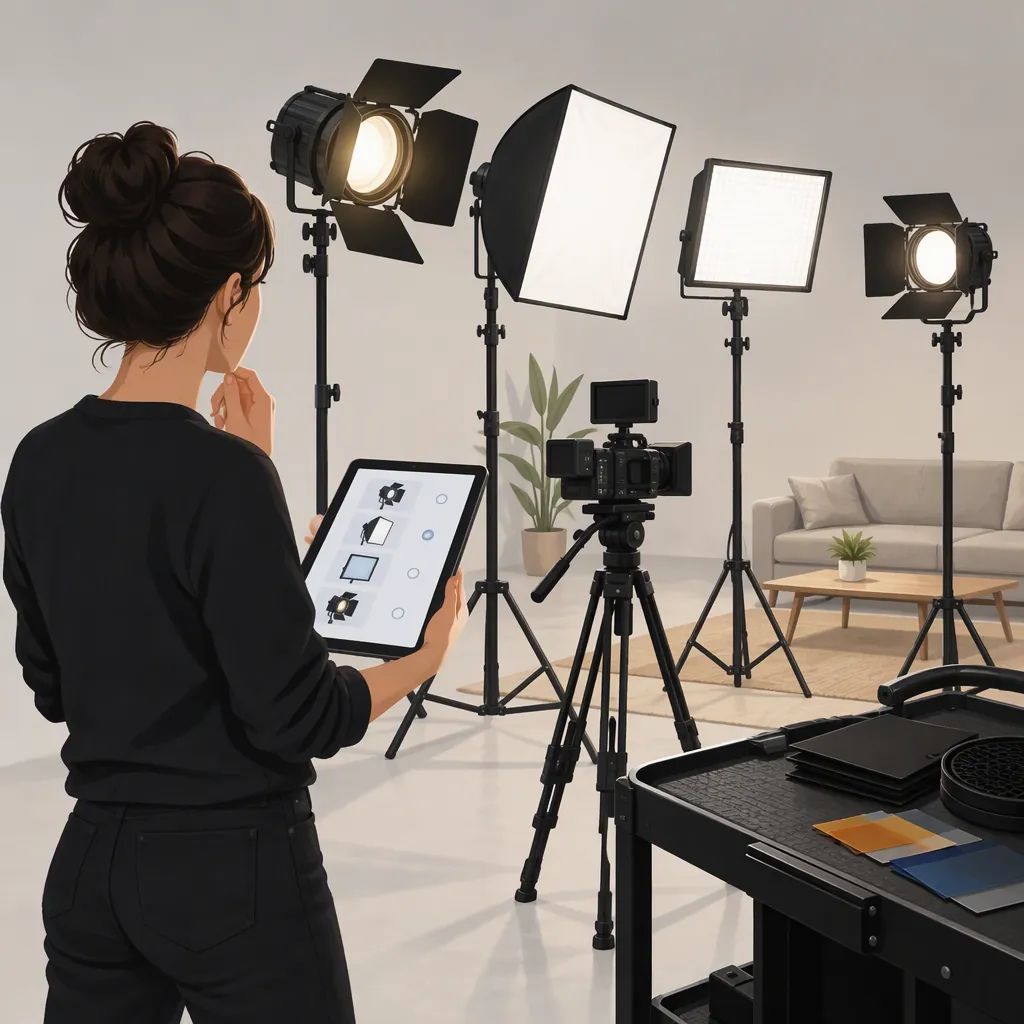
How to Evaluate a Sutefoto Light for Your Filming Setup
To evaluate a Sutefoto light, start with the scene you need to film, then check the exact model’s suitability for white-light work, colored lighting, mounting, power, and sound recording. The provided retailer references identify P100 Bi Color and P100 RGB listings, but they do not establish which is better for your setup. Treat those listings as starting points for verification, not comparative test results.
Define the Shot Before Comparing Lights
A useful selection process begins with a filming brief rather than a brand name. Describe the subject, framing, location, available space, and whether you need white light, colored accents, or both.
For an interview or talking-head recording, prioritize questions about the appearance of faces, the intended light position, and sound recording. For a tabletop scene, focus on the area you need to illuminate and how you will evaluate reflections. For a colored background, decide whether color is essential to the scene or simply optional.
Use these as evaluation priorities, not promises about any Sutefoto model. A light should be assessed in the intended setup before you conclude that it meets the brief.
Filming Requirements Worksheet
- Scene and subject: __________
- Camera position and framing: __________
- Intended light position and available clearance: __________
- Required look: white light / colored accents / both
- Modifier or diffusion planned: __________
- Available power source: __________
- Microphone position: __________
- Setup time and transport constraints: __________
- Conditions that would rule out a light: __________
Separate Listing Names from Verified Performance
The supplied Dumotech references identify two listings: SuteFoto P100 Bi Color LED Video Light and Sutefoto P100 RGB Continuous Video Lighting. These are retailer descriptions, not an independent comparison. [ref_bicolor] [ref_rgb]
Use the Bi Color and RGB labels to organize your questions. For the Bi Color listing, investigate whether its white-light controls meet your scene requirements. For the RGB listing, investigate both the white-light behavior you need and the specific colored-light functions you intend to use. Do not infer that either option is brighter, quieter, more accurate, or easier to operate from its name alone.
The supplied references do not establish comparative performance under a shared test setup. This guide therefore does not rank the models or repeat advertised output figures as verified results.
Check the Complete Setup
Before treating a listing as a suitable option, verify the exact model and the equipment needed to use it. The provided references should not be treated as complete compatibility documentation. [ref_bicolor] [ref_rgb]
Create a separate check for each of these requirements:
- Mounting: Confirm the light’s mounting arrangement, stand requirements, and compatibility with the intended modifier. Do not assume accessories fit because they look similar.
- Power: Confirm the required supply, included cables, and any battery support for the exact version. Leave unverified items marked as unknown.
- Space: Sketch the light, stand, modifier, subject, and camera positions before deciding whether the setup fits.
- Controls: Check whether the controls you need are available and practical in your intended workflow. Treat remote operation as unconfirmed until documented or demonstrated.
- Sound: Include microphone placement and operating noise in the evaluation rather than assuming suitability for dialogue recording.
- Package Contents: Distinguish the light itself from any stand, modifier, case, or power accessory you would need.
An unresolved requirement is a reason to pause the comparison, not a reason to fill the gap with an assumption.
Compatibility Verification Log
| Requirement | Exact Model or Accessory | Evidence or Check | Status |
|---|---|---|---|
| Mount and stand | To record | To verify | Unknown |
| Modifier compatibility | To record | To verify | Unknown |
| Power supply and cables | To record | To verify | Unknown |
| Battery operation, if needed | To record | To verify | Unknown |
| Required controls | To record | To verify | Unknown |
| Included accessories | To record | To verify | Unknown |
Use a Consistent Evaluation Procedure
If a demonstration or test is available, define the procedure before comparing results. Keep the camera settings, subject position, light distance, and modifier arrangement consistent wherever possible. Record any differences that prevent a like-for-like comparison.
Evaluate the actual shot: the subject’s appearance, shadow pattern, background, reflections, and usable adjustment range. Include a recording with the intended microphone placement to assess whether operating noise is acceptable for that scene. Check footage at the frame rate and shutter settings you plan to use rather than relying only on how the light looks in the room.
These are proposed checks, not reported tests of either Sutefoto listing. If a check cannot be completed, record it as untested. A defensible decision can remain conditional: suitable only if the unresolved mounting, power, image, or sound requirements are confirmed.
Scene Evaluation Checklist
1. Record the exact model, accessories, and power source.
2. Set the intended camera frame rate, shutter, exposure, and white balance.
3. Record light distance, position, and modifier configuration.
4. Capture the intended subject and background.
5. Review appearance, shadows, reflections, and adjustment range.
6. Record sound with the intended microphone placement.
7. Note any visible flicker or other image issues in the recorded footage.
8. Mark each requirement as acceptable, unacceptable, or untested.
9. Document differences before comparing another setup.
FAQ
Which Sutefoto Light Is Better for Filming?
The supplied references do not support an overall winner. They identify P100 Bi Color and P100 RGB listings, but not a controlled comparison. Choose evaluation criteria from your scene, then verify the exact model’s image, sound, mounting, and power requirements.
Should I Prioritize RGB for a Talking-Head Setup?
Prioritize the look you need. If colored lighting is not part of the brief, evaluate white-light suitability first. If colored backgrounds or accents are essential, add those functions to the test checklist without assuming that an RGB label establishes better overall performance.
What Remains Uncertain from the Supplied Listings?
The supplied descriptions do not establish comparative output under matched conditions, operating noise in a dialogue setup, or complete compatibility with your intended equipment. Those points require further verification; this article does not present them as tested product capabilities.
Sources
-
[ref_bicolor] SuteFoto P100 Bi Color LED Video Light