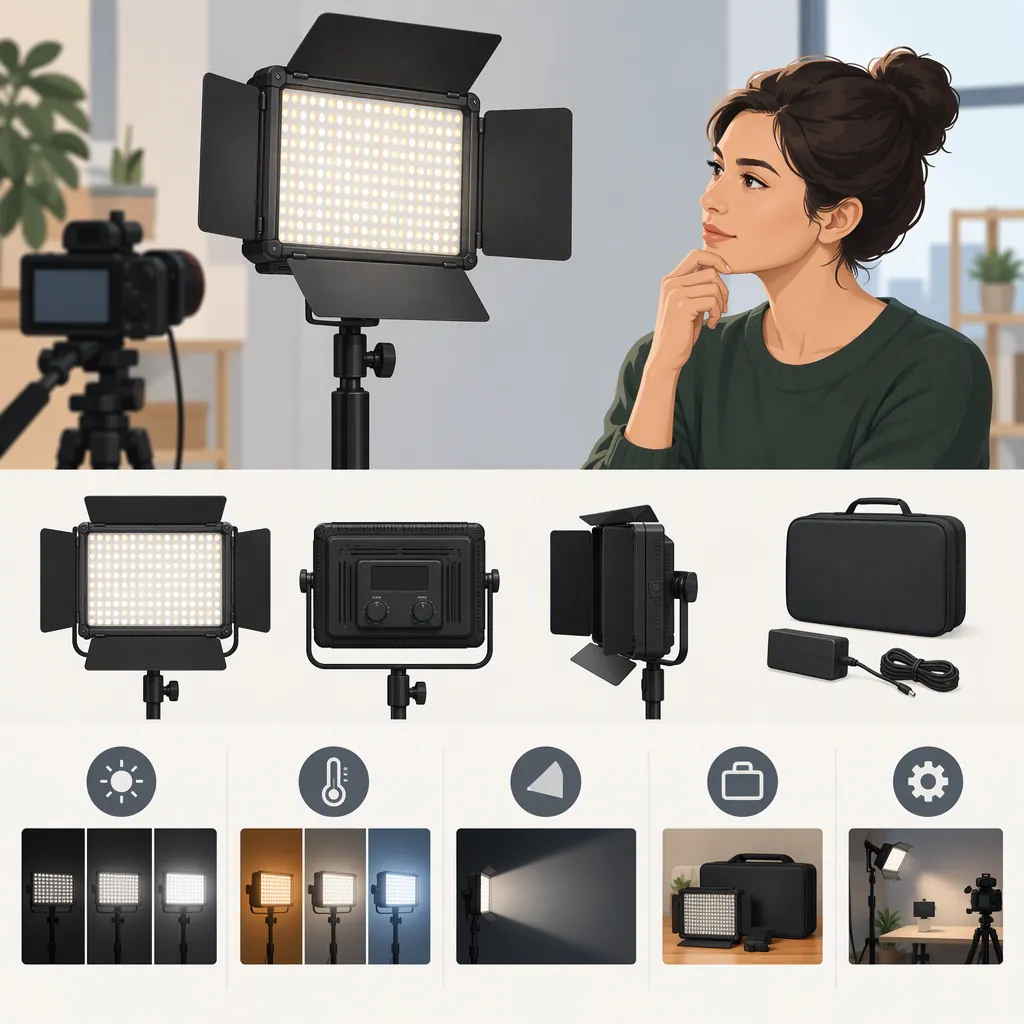
How to Evaluate the Raleno 192 Video Light for Filming
Evaluate the RaLeno 192 video light by confirming the exact model, then checking exposure, color, mounting, and power against your filming needs. The supplied sources identify the PLV-S192, but their specifications differ. They do not provide enough controlled test evidence to establish whether it will suit your setup. [c1] [c2]
Confirm the Exact Model
Start with the model number rather than the phrase “raleno 192 video light.” The Amazon reference identifies its item as PLV-S192, and the idealo product page uses the same model name. [c1] [c2]
However, idealo’s product details give a 3200–5600 K color-temperature range, while some offer titles on that same page advertise 2500–6500 K. This mismatch does not establish which specification applies to a particular unit. [c2]
For a selection decision, record the model number, stated color-temperature range, included accessories, and power requirements from documentation for the exact unit. Treat an unresolved mismatch as a verification gap rather than assuming all “192” listings describe identical equipment.
Separate Listed Specifications from Verified Performance
The references are a retailer listing and a price-comparison page, not controlled test reports. Their figures should be treated as reported specifications, not measurements verified by this article. [c1] [c2]
| Selection Question | What the References Report | Remaining Limitation |
|---|---|---|
| Is the weight suitable for the planned mount? | Amazon lists 190 g; idealo lists 600 g. [c1] [c2] | The supplied information does not resolve the difference. |
| Is there enough light at the subject? | idealo lists 650 lux. [c2] | Its supplied text does not state the measurement distance or test conditions. |
| Will battery power cover the recording? | Amazon lists 110 minutes of battery life. [c1] | Its supplied text does not specify the brightness setting or test conditions. |
| Is color reproduction adequate? | Both descriptions report a CRI around or above 95. [c1] [c2] | Neither supplied reference includes a controlled camera color test. |
Do not use these figures alone to rank the light against another fixture. Leave unresolved values marked as unknown until comparable documentation or a practical test is available.
Evaluate the Intended Filming Setup
Use the following as a proposed evaluation procedure, not a report of firsthand testing:
- Define the shot. Record whether the light must illuminate a face, a tabletop object, or a wider scene. Note the available placement distance and ambient lighting.
- Check exposure. Keep camera settings fixed while evaluating the intended light position. Decide whether the subject reaches your chosen exposure without exceeding your acceptable camera settings.
- Inspect the image. Review skin tones or representative object colors, shadows, glare, and reflections in the recorded footage—not only the live preview.
- Check recording artifacts. Record at each frame rate, shutter setting, and brightness level you expect to use. Inspect for bands or brightness fluctuations; the supplied references do not establish flicker performance. [c1] [c2]
- Test the required duration. Evaluate the planned power arrangement over the full recording period. Follow the unit’s instructions for charging and external power rather than assuming either listing confirms every operating mode.
If the intended setup cannot be tested, keep suitability provisional. A listing is not enough to promise a particular filming result.
Filming Evaluation Worksheet
- Exact model and documentation: ____
- Intended shot and subject distance: ____
- Ambient lighting: ____
- Camera settings: ____
- Acceptable exposure achieved: Pass / Fail / Untested
- Color and reflections acceptable: Pass / Fail / Untested
- Recording artifacts checked: Pass / Fail / Untested
- Required recording duration: ____
- Power arrangement verified: Yes / No
- Mount and accessory compatibility verified: Yes / No
- Unresolved limitations: ____
Make a Conditional Selection Decision
For a desk recording, prioritize placement space, reflections, and access to controls. For an interview, prioritize the intended framing, mounting arrangement, and uninterrupted recording duration. For a wider scene, require evidence at the actual subject positions rather than relying on the listed lux figure.
When comparing alternatives, use the same shot, camera settings, light position, and acceptance criteria. Compare the complete setup—including necessary supports and power accessories—without assuming that the PLV-S192 listing includes everything required.
The supplied evidence supports identifying the model and highlighting specification gaps. It does not support declaring this light the best choice, guaranteeing runtime, or promising a particular image quality. [c1] [c2]
FAQ
Does “Raleno 192” Identify the Exact Model?
The supplied sources identify the PLV-S192. Confirm that model number on the unit and its documentation, especially because offer titles within the idealo page show different color-temperature ranges. [c1] [c2]
Can the Raleno Plv-S192 Serve as a Key Light?
The supplied references do not establish that for your shot. Treat it as a candidate and evaluate exposure, shadows, color, and reflections at the intended placement. The listed 650-lux figure lacks stated measurement conditions in the supplied text. [c2]
Can I Rely on 110 Minutes of Battery Life?
Amazon reports 110 minutes, but the supplied text does not identify the test conditions. Treat that as a listing figure rather than a guaranteed recording duration, and verify the required duration with the intended settings and power arrangement. [c1]