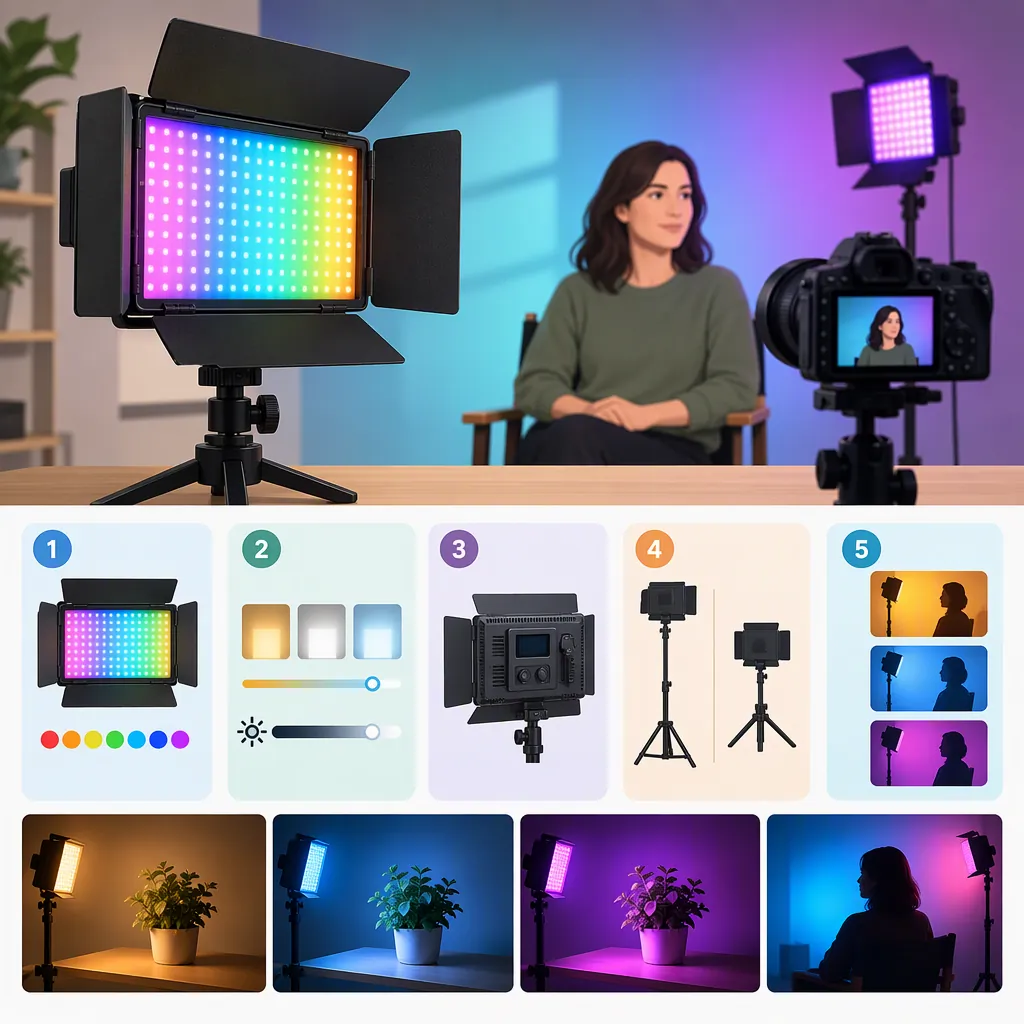
Neewer Rgb61: How to Evaluate It for Your Filming Setup
For a NEEWER RGB61 lighting decision, start with the job the light must perform: lighting a face, filling a shadow, or adding background color. Then evaluate it at your actual shooting distance and camera settings. The provided evidence is limited to a 2022 RGB61 review and a manufacturer page for the different RGB62 model; it does not establish verified RGB61 performance for your setup. [ref_rgb61_review] [ref_rgb62_page]
Check the Model Before Comparing Specifications
The supplied review explicitly discusses the NEEWER RGB61 and is dated July 20, 2022. The supplied manufacturer page identifies its product as the RGB62. These sources should not be treated as interchangeable documentation. [ref_rgb61_review] [ref_rgb62_page]
Do not transfer output, runtime, control, mounting, or accessory specifications from the RGB62 page to the RGB61. The provided references do not establish that those details are shared. This guide therefore offers a selection method rather than a verified RGB61 specification sheet.
Define the Lighting Role
Write down the intended use before evaluating a light:
- Main subject light: Determine whether it can give the face or object the intended exposure at the required distance.
- Fill light: Decide how much shadow detail you want to retain without flattening the image.
- Background or accent light: Identify the surface, color, and area that must be visible in the frame.
- Effects light: Decide whether an effect is essential to the shot or simply optional.
The RGB61 reviewer gives a subjective assessment that favors ordinary indoor use over use against brighter studio lighting or outdoors. Treat that as a reason to test your scene, not as a measured performance boundary. [ref_rgb61_review]
Lighting Requirement Worksheet
Complete before testing:
- Intended role: ______
- Subject or surface: ______
- Light-to-subject distance: ______
- Existing room or daylight conditions: ______
- Required frame coverage: ______
- Required recording duration: ______
- Acceptable camera exposure settings: ______
Use a Repeatable Camera Test
Evaluate the light in the scene you intend to film rather than relying on a feature list. Use a fixed camera position and record the settings so comparisons remain meaningful.
- Set the intended frame rate, shutter setting, aperture, ISO, and white balance.
- Record a short baseline with the candidate light off.
- Position the light at the planned distance and angle, then record again.
- Inspect subject exposure, shadow shape, reflections, color appearance, and background coverage.
- Check recorded footage for visible flicker or banding at the settings you expect to use.
- Repeat at any other essential distance, brightness setting, or ambient-light condition.
These are proposed evaluation steps, not reported test results. Neither supplied reference establishes how an RGB61 will perform with your particular camera and scene.
Shot Test Log
For each test, record:
- Camera settings: ______
- Ambient lighting: ______
- Light position and distance: ______
- Light settings: ______
- Subject exposure acceptable: Yes / No
- Shadows and reflections acceptable: Yes / No
- Color appearance acceptable: Yes / No
- Visible flicker or banding: Yes / No
- Decision and reason: ______
Check Practical Fit and Remaining Unknowns
Before treating the RGB61 as suitable for a shoot, verify the exact unit's documentation, included accessories, mounting requirements, charging arrangements, and usable operating time. Rehearse the controls and any setting changes required during recording.
Make the decision conditional: the light is a candidate for the defined role only if it meets your exposure, appearance, placement, and duration requirements in a repeatable test. If it does not, revise the placement or evaluate a different lighting arrangement.
The supplied sources do not provide a controlled RGB61-versus-RGB62 comparison. They also do not establish current RGB61 availability or independently measured output, runtime, or color performance. Keep those gaps separate from the reviewer's impressions and the RGB62 manufacturer's specifications. [ref_rgb61_review] [ref_rgb62_page]
FAQ
Can I Use Rgb62 Specifications to Evaluate the Rgb61?
Not as verified RGB61 specifications. The manufacturer reference identifies the RGB62, while the review identifies the RGB61. The provided evidence does not establish specification equivalence between them. [ref_rgb61_review] [ref_rgb62_page]
Is the Neewer Rgb61 Suitable as a Main Filming Light?
The supplied evidence cannot establish that for your scene. The reviewer favors indoor use and expresses reservations about brighter studio lighting and outdoors. Evaluate subject exposure and image appearance at your intended distance before assigning it the main-light role. [ref_rgb61_review]
What Does the Rgb61 Review Establish?
It establishes what one reviewer reported in July 2022, including personal impressions of operation and usefulness. It should not be treated as independent laboratory testing, current product documentation, or a guarantee of results in another filming setup. [ref_rgb61_review]
Sources
-
[ref_rgb61_review] Neewer RGB61 - Is it worth it?
-
[ref_rgb62_page] NEEWER RGB62 Magnetic RGB LED Light | Small Video Light