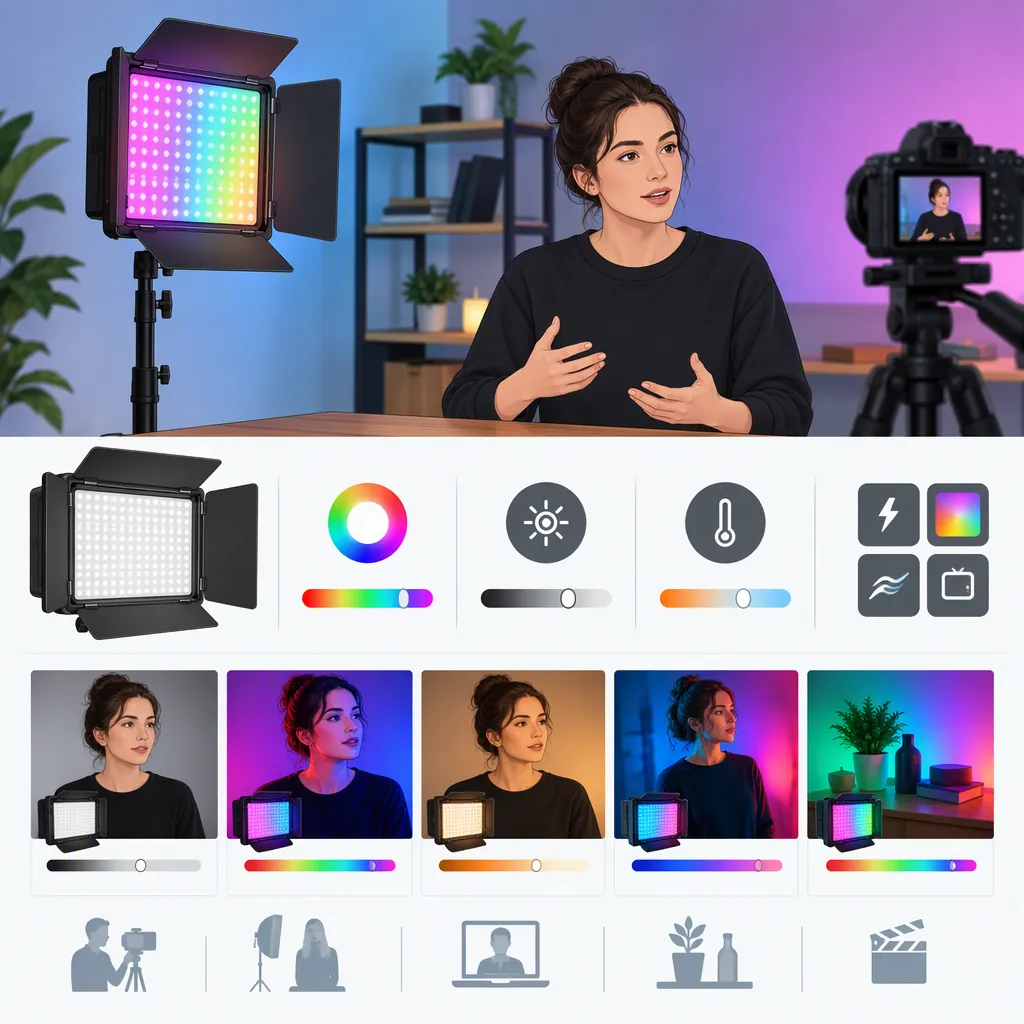
Neewer Rgb168: How to Evaluate It for Your Filming Setup
Evaluate the NEEWER RGB168 against your actual shot: required exposure, subject appearance, light placement, power access, and control workflow. First distinguish the two-light kit from the single-panel listing without a tripod. The provided retailer pages describe different packages, but they do not establish independently tested performance or suitability for your production. [c1] [c2]
Identify the Exact Package
The supplied Berger Brothers page identifies an RGB168 two-light kit and describes two supplied stands, power supplies, and a carry bag. The supplied Amazon page identifies its selected model as “RGB168 without Tripod” and describes a single-panel package. Treat these as separate configurations rather than interchangeable offers. [c1] [c2]
Before comparing cost or setup effort, make an itemized list of panels, stands, mounting brackets, adapters, batteries, chargers, and transport equipment. Mark each item as included, separately required, or unresolved. Do not assume that accessories pictured elsewhere on a retail page belong to the selected package.
These references are retail descriptions, not a manufacturer manual or an independent test report. This guide therefore distinguishes listing information from performance you would need to verify.
Package Verification Worksheet
Selected model and package: ____
Number of panels: ____
Stands and mounting hardware included: ____
Power adapters included: ____
Batteries and chargers included or separately required: ____
Transport equipment included: ____
Unresolved package details: ____
Define the Lighting Job Before Comparing Features
Start with the image you need rather than a feature count. For a talking-head shot, specify the desired face exposure, shadow pattern, and background separation. For a tabletop scene, specify the objects, framing, and reflections you need to control. For a colored background, specify the intended color and whether it must stay off the subject.
Both supplied listings advertise adjustable white-light color temperature, RGB color controls, dimming, app control, and scene effects. Those descriptions establish what the listings offer, not how well the light will perform in your scene. [c1] [c2]
Use a simple decision rule: require the functions your shot needs, then test the result. If your work needs only steady white light, compare that workflow separately from RGB and effects. If colored lighting matters, evaluate the particular colors you intend to record rather than assuming a white-light specification answers that question.
Shot Requirements Checklist
- Intended shot: ____
- Light role—key, fill, background, or effect: ____
- Subject-to-light distance available: ____
- Desired shadow pattern and reflections: ____
- Required white-light or colored-light settings: ____
- Camera frame rate, shutter setting, aperture, and ISO: ____
- Power access and planned recording duration: ____
Keep Specification Limits Visible
The Berger Brothers listing reports 1,500 lux at 3.3 feet, while Amazon reports a maximum of 5,000 lux at 0.5 meter. These are measurements stated at different distances; they are not a like-for-like brightness comparison. The supplied descriptions do not give enough matching test conditions to reconcile them confidently. [c1] [c2]
Do not use either number alone to decide whether your intended camera exposure is achievable. Test at your planned placement, with the lighting mode and brightness setting you expect to use.
Likewise, treat advertised color-quality and flicker statements as listing claims rather than verified outcomes. Berger Brothers describes flicker-free operation, but the provided references contain no independent camera test covering your frame rates and shutter settings. [c1]
For power planning, both listings describe adapter power or two separately supplied NP-style/NP-F batteries. They do not establish runtime for a particular battery pair, brightness setting, or recording session. [c1] [c2]
Use a Repeatable Camera Test
If a test unit is available, evaluate it with the camera, lens, and recording settings intended for production. This is a proposed evaluation procedure, not a report of firsthand experience.
- Record the room lighting, panel position, distance, power source, and light settings.
- Keep camera exposure and white balance fixed while comparing settings.
- Record the subject, a neutral reference, and representative wardrobe or objects. Review exposure, color, shadows, and reflections.
- Record short clips at every planned frame rate and shutter setting. Inspect for visible bands or brightness changes, including at reduced brightness.
- Run a representative take. Check recorded audio, control access, mounting stability, and cable placement.
- If battery operation matters, test the intended battery pair for the required session length.
A useful conclusion is specific: acceptable for this shot and these settings, unacceptable for a stated requirement, or unresolved pending further testing. Avoid turning a successful test of one setup into a universal recommendation.
Test Result Record
Camera and recording settings: ____
Light mode, brightness, distance, and power source: ____
Exposure and subject appearance: Pass / Fail / Unresolved
Visible banding or brightness changes: Pass / Fail / Unresolved
Recorded audio and controls: Pass / Fail / Unresolved
Mounting and cable placement: Pass / Fail / Unresolved
Required operating duration: Pass / Fail / Unresolved
Conclusion and limitations: ____
FAQ
Is Every Neewer Rgb168 Listing a Two-Light Kit?
No. The provided Berger Brothers reference describes a two-light kit, while the selected Amazon configuration is a single-panel RGB168 without Tripod. Verify the selected package rather than relying on the model name alone. [c1] [c2]
Is the Rgb168 Bright Enough for Filming?
The supplied references do not establish that for your setup. Their advertised lux figures use different distances. Evaluate exposure at your planned light position, camera settings, and lighting mode. [c1] [c2]
Can Battery Runtime Be Determined from These References?
No specific runtime is established. Both listings describe a two-battery power option with batteries not included. Runtime for your intended batteries and settings remains a test requirement. [c1] [c2]