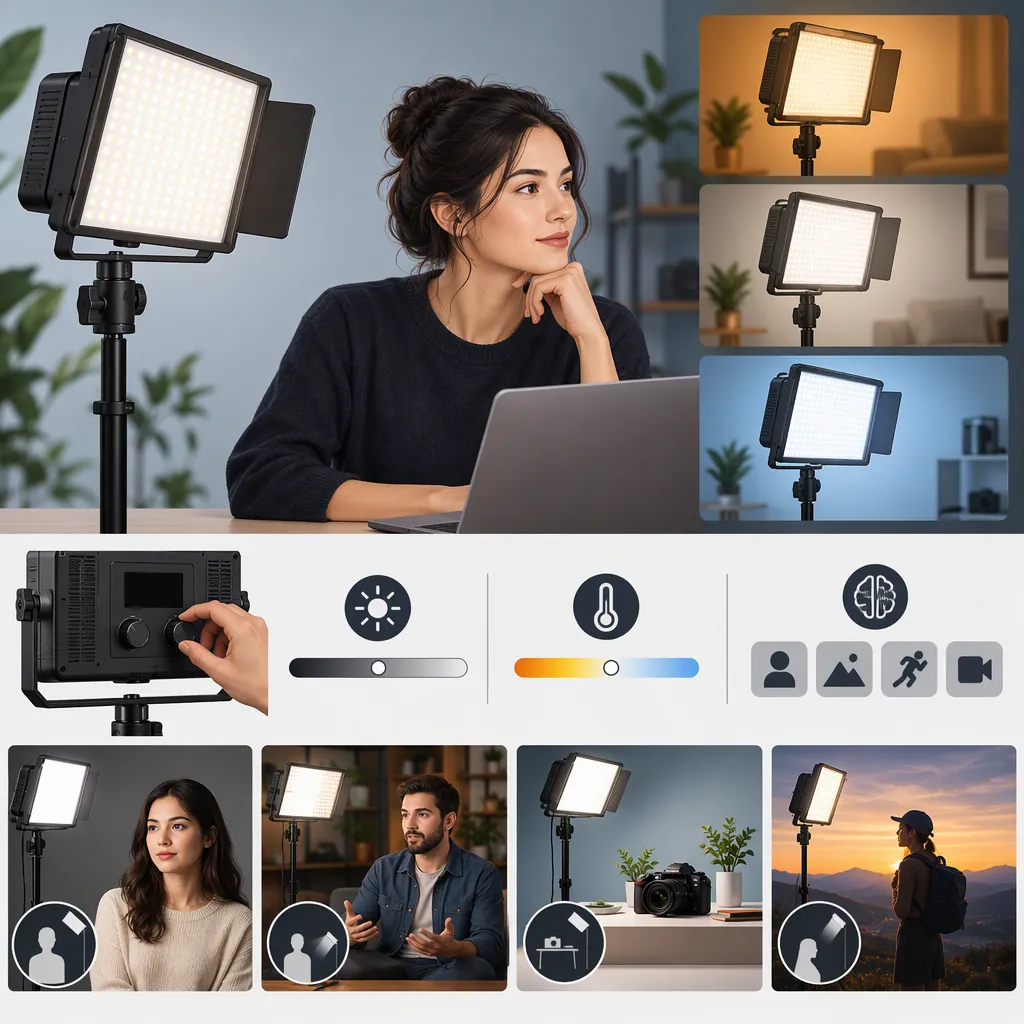
How to Evaluate the Neewer Nl-192ai for Filming
Evaluate the NEEWER NL-192AI against your intended shot, working distance, camera settings, and recording duration. Treat it as a candidate until documentation and representative tests address your essential requirements—not as an automatic fit for filming.
Evidence boundary: The supplied marketplace reference identifies the NL-192AI and includes retail descriptions and customer-review summaries, not controlled filming tests. This guide does not verify output, color accuracy, runtime, flicker behavior, reliability, or accessory compatibility. It provides a selection framework, not a product recommendation. [ref_1]
What the Available Reference Establishes
The Amazon listing referencing NEEWER NL-192AI supports model identification and retail-material context only. Its descriptions and review summaries do not establish performance with your camera, room, or subject. [ref_1]
Before evaluating a unit or kit, confirm its exact model label and configuration. Consult documentation that applies to that unit; do not transfer specifications or compatibility information from a similarly named light.
Keep three kinds of evidence separate:
- Your requirements: What the filming setup must accomplish.
- Documented information: What applicable equipment documentation confirms about configuration, mounting, and permitted power use.
- Observed results: What a recorded test demonstrates under stated conditions.
A listed feature is not an observed filming result.
Define the Shot and Acceptance Conditions
Start with a written shooting requirement. Evaluate a seated interview, tabletop demonstration, or moving presenter in its intended framing rather than through a generic brightness judgment.
Record the subject and camera positions, existing room light, intended light placement, and space for stands and cables. Identify the entire area that must remain usable as the subject moves.
Then define what counts as passing before testing. Choose conditions based on your production needs, not assumed NL-192AI capabilities.
Filming Requirements Worksheet
- Shot type and framing: ____
- Number of subjects and required movement area: ____
- Camera, lens, resolution, and frame rate: ____
- Shutter settings to test: ____
- Permitted aperture and ISO range: ____
- White-balance settings or procedure: ____
- Intended light position and working distance: ____
- Existing window and room lighting: ____
- Shadows and reflections that would be unacceptable: ____
- Longest uninterrupted recording session: ____
- Required power arrangement: ____
- Available stand footprint and cable route: ____
- Transport and setup-time limits: ____
- Final viewing conditions, including screen size and playback resolution: ____
- Essential requirements versus optional preferences: ____
For example, an acceptance condition might be: “The presenter must remain acceptably exposed throughout the marked movement area without exceeding our chosen ISO limit.” That is a project requirement, not a claim about this light.
If You Cannot Test the Light Yet
Use a documentation-first review to decide whether the NL-192AI remains a candidate. Do not treat this review as proof of filmed-image quality.
- Confirm identity and configuration. Record the exact model and which lights, stands, cables, adapters, or other accessories are included or separately required.
- Check mounting requirements. Use applicable documentation to confirm the mounting arrangement and any stated equipment limits. Compare them with your planned placement and available space.
- Check permitted power use. Confirm the specified supply, connections, and operating arrangements needed for your session. Do not assume a connector's appearance establishes compatibility or that charging during operation is permitted.
- Identify unresolved filming requirements. Mark exposure at your working distance, color appearance, temporal artifacts, recorded sound, and session continuity as unknown unless relevant evidence addresses your intended conditions.
- Assign a provisional status. A confirmed conflict with an essential requirement rules out the proposed setup. An unknown essential requirement means “candidate pending verification,” not “suitable.”
Documentation Review Record
| Requirement | Applicable document or evidence | Status | Unresolved question |
|---|---|---|---|
| Exact model and configuration | ____ | Confirmed / Conflict / Unknown | ____ |
| Mounting arrangement | ____ | Confirmed / Conflict / Unknown | ____ |
| Permitted power arrangement | ____ | Confirmed / Conflict / Unknown | ____ |
| Required accessories | ____ | Confirmed / Conflict / Unknown | ____ |
| Essential filming conditions | ____ | Confirmed / Conflict / Unknown | ____ |
If access to testing remains unavailable, retain the uncertainty in the final assessment. Retail descriptions cannot substitute for setup-specific verification.
Run a Repeatable Camera Test
If you can access the light, use the camera and settings intended for production. Keep framing, subject position, ambient lighting, and camera settings consistent when comparing candidates. Record each light's position and control settings.
The following is a suggested procedure, not reported NL-192AI test results.
| Check | Test procedure | Define the acceptance condition before recording |
|---|---|---|
| Exposure and coverage | Record the subject at the intended distance and at each required position. | Specify the permitted camera-setting range and which parts of the subject or work area must remain acceptably exposed. |
| Shadows and reflections | Record normal movements, including head turns or handling objects. Inspect glasses, faces, reflective items, and the background. | Name the shadow or reflection locations that would make the shot unusable. |
| Color appearance | Record a neutral target and the subject under the intended lighting arrangement. Keep white-balance settings consistent across comparisons. | Define the acceptable appearance for the deliverable. Do not treat visual inspection as a measured color-accuracy result. |
| Temporal artifacts | Record every planned frame-rate and shutter combination. Inspect clips for pulsing or bands. | Require no visible artifacts under your stated review conditions for each essential recording mode. |
| Session continuity and audio | Run the longest planned uninterrupted session with a documented, permitted power arrangement and the intended microphone setup. | Specify the required duration and unacceptable interruptions, image changes, or captured equipment sound. |
| Setup practicality | Assemble and position the equipment according to its documentation. Check the footprint and cable route. | Define placement, movement clearance, transport, and setup-time requirements. |
Review clips at the intended delivery resolution and viewing size. If close inspection is also required for your workflow, include it in the acceptance conditions.
Camera Test Log
- Exact model and configuration: ____
- Camera and recording settings: ____
- Light position, distance, and control settings: ____
- Other lighting present: ____
- Power arrangement: ____
- Test duration: ____
- Playback and review conditions: ____
For each check, record:
- Requirement: ____
- Observed result and clip reference: ____
- Status: Pass / Fail / Unknown
- Conditions covered: ____
- Conditions not tested: ____
Use Pass when the check meets the written condition, Fail when it does not, and Unknown when evidence is missing or inconclusive. If you change camera settings, placement, or other conditions to resolve a failure, document the change and repeat the affected checks.
Make a Conditional Selection Decision
Compare alternatives using the same shot requirements and acceptance criteria. Include mounting, power, transport, and setup practicality—not just listed features. Follow the applicable documentation for mounting and power use, and keep stands and cables clear of movement routes.
Use this decision rule:
| Evidence state | Selection conclusion |
|---|---|
| Every essential requirement passes, and mounting and power requirements are confirmed | Acceptable for the tested setup |
| An essential requirement fails | Not acceptable for the tested setup |
| An essential requirement remains unknown | Insufficient evidence; retain only as a candidate |
Optional preferences can help distinguish candidates after essential requirements are satisfied. They should not override a failed essential condition.
Final Decision Record
- Candidate and exact configuration: ____
- Essential requirements passed: ____
- Essential requirements failed: ____
- Unknowns: ____
- Optional preferences met: ____
- Test conditions and evidence: ____
- Final assessment: Acceptable for tested setup / Not acceptable for tested setup / Insufficient evidence
- Changes that would require retesting: ____
Keep the conclusion narrow. A successful test supports the recorded setup and conditions, not every filming scenario or future session.
FAQ
Is the Neewer Nl-192ai Suitable for Filming?
It can be judged acceptable for a particular tested setup only when every essential requirement passes and the mounting and power arrangements are confirmed. If an essential requirement is unknown, keep it as a candidate rather than declaring it suitable. The supplied retail reference alone does not establish filming suitability. [ref_1]
Can I Rely on a Listed Runtime for a Full Recording Session?
This guide does not verify runtime. Confirm the exact unit's documentation and test the complete planned session using your intended settings and a permitted power arrangement. Record continuity and any changes as setup-specific results, not a general guarantee.
How Should I Compare the Nl-192ai with Another Light?
Use the same framing, subject positions, working distance, ambient lighting, camera settings, and acceptance criteria. Log exposure, appearance, temporal artifacts, session continuity, recorded sound, and setup practicality. Mark untested conditions as unknown.
What If I Cannot Access a Unit Before Choosing?
Complete the documentation review first. Confirm the exact configuration, mounting requirements, and permitted power arrangement, then list unresolved filming requirements. A confirmed conflict can rule out the proposed setup; missing evidence can only support a provisional shortlist, not a suitability conclusion.
Sources
- [ref_1] open prime modal