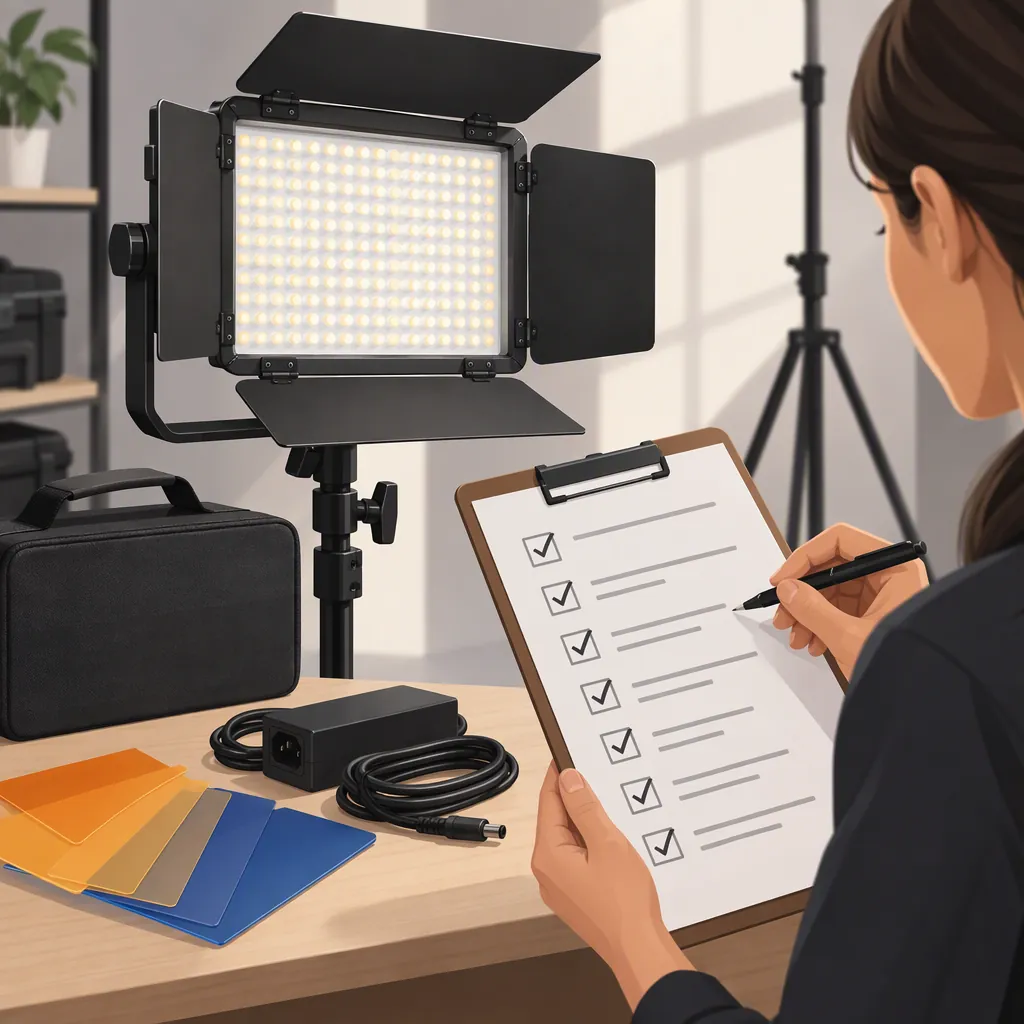
How to Evaluate a Neewer Cn 304 for Filming
For a Neewer CN 304 lighting decision, first verify the exact unit and its documentation, then test it at your intended shooting distance and camera settings. Do not assume its output, color controls, power compatibility, or mounting options from another Neewer model. The supplied reference discusses a 528 light; CN-304 appears in an embedded battery accessory listing, not in a dedicated CN 304 evaluation. It therefore does not establish whether this light suits your shoot. [ref1]
What the Available Source Establishes
The supplied Japanese-language blog post is about a Neewer 528 LED video light. Its embedded battery accessory listing includes the name CN-304. That mention is not a model-specific manual, controlled lighting test, or independent confirmation of compatibility. [ref1]
Accordingly, this guide does not assign the CN 304 a brightness rating, color-temperature range, battery type, runtime, or recommended shooting distance. Treat those details as unresolved until you have documentation for the exact unit. Do not transfer the blog's descriptions of the 528 light to the CN 304.
Define the Shoot Before Comparing Lights
Write down the filming conditions you need the light to handle. Use those conditions as the comparison target rather than relying on a model name.
- Lighting role: Will it be the main light on a face, a fill light, or a background accent?
- Framing and distance: Where will the subject, camera, and light actually sit?
- Ambient conditions: Will you film with windows, room lights, or a controlled background?
- Camera settings: Which frame rate, shutter setting, aperture, ISO, and white balance will you use?
- Session requirements: How long must the setup operate, and what power sources are available?
- Placement constraints: What support, floor space, cable routing, and subject clearance are available?
For an interview, evaluate the light on a face in the intended framing. For tabletop filming, evaluate it on the actual objects, including reflective surfaces. These are test scenarios, not claims that the CN 304 is suitable for either task.
Filming Requirements Worksheet
Complete before testing:
- Exact model label: ______
- Lighting role: ______
- Subject and framing: ______
- Light-to-subject distance: ______
- Ambient lighting: ______
- Camera settings: ______
- Required continuous session length: ______
- Available power and support: ______
- Must-pass conditions: ______
Run a Repeatable Footage Test
Use the following procedure to judge the exact unit rather than an assumed specification:
- Record a baseline. Film the subject with the candidate light off, using your intended camera settings.
- Test the planned position. Place the light where it would be used and record a second clip. Keep the framing and camera settings unchanged for this comparison.
- Inspect the result. Look for acceptable subject exposure, shadow shape, reflections, and background balance. Note any compromise that would be unacceptable in the finished footage.
- Check recording artifacts. Record at every frame rate and shutter setting you intend to use. Inspect the clips for visible pulsing or banding; do not infer performance from how the light looks to your eyes.
- Evaluate color consistently. Use a fixed white balance and the same subject or reference target across candidate lights. Record visible color differences without treating an informal camera test as a laboratory color-accuracy measurement.
- Test the intended setup duration. With documented power accessories and safe operating conditions, check whether the setup completes your planned session without interruption.
If comparing alternatives, repeat the same procedure under matching conditions. Label results as observations from that setup, not universal product specifications.
Comparison Record
| Check | CN 304 Unit Under Test | Alternative | Pass Condition |
| --- | --- | --- | --- |
| Exact model verified | Record result | Record result | Label and documentation agree |
| Exposure at planned distance | Record result | Record result | Meets the shoot's exposure target |
| Shadows and reflections | Record result | Record result | Acceptable in intended framing |
| Pulsing or banding | Record result | Record result | None visible in tested recording modes |
| Color appearance | Record result | Record result | Acceptable with fixed white balance |
| Session continuity | Record result | Record result | Completes the required session |
| Placement and support | Record result | Record result | Secure setup with clear access |
Make the Decision from Verified Requirements
Keep three categories separate: documented specifications, observed test results, and unknowns. A passing footage test does not establish an undocumented electrical or mechanical compatibility claim.
Before using a battery, adapter, mount, or modifier, confirm compatibility in documentation for the exact light and accessory. The CN-304 mention in the supplied accessory listing is not sufficient verification by itself. [ref1]
Consider the unit suitable only for the conditions it has demonstrably met. If it cannot provide the result you need at the planned position, compare a different setup or light using the same checklist. If documentation or testing is unavailable, leave suitability unresolved rather than declaring it a good or bad filming light.
FAQ
Is the Neewer Cn 304 Suitable as a Main Filming Light?
The supplied reference cannot establish that. Test the exact unit on your subject at the intended distance, with your planned camera settings and ambient lighting. Base the decision on whether that setup meets your exposure and appearance requirements.
Does the Reference Confirm Which Batteries the Cn 304 Accepts?
No. CN-304 appears in an embedded battery accessory listing, but the supplied article is about a 528 light. Confirm battery and power requirements using documentation for the exact CN 304 unit rather than treating the listing as definitive compatibility evidence. [ref1]
Can the 528 Light's Described Features Be Applied to the Cn 304?
No such equivalence is established by the supplied reference. The article discusses the 528 light, so its descriptions should not be used as CN 304 specifications. Compare exact models using their own documentation and matched footage tests. [ref1]