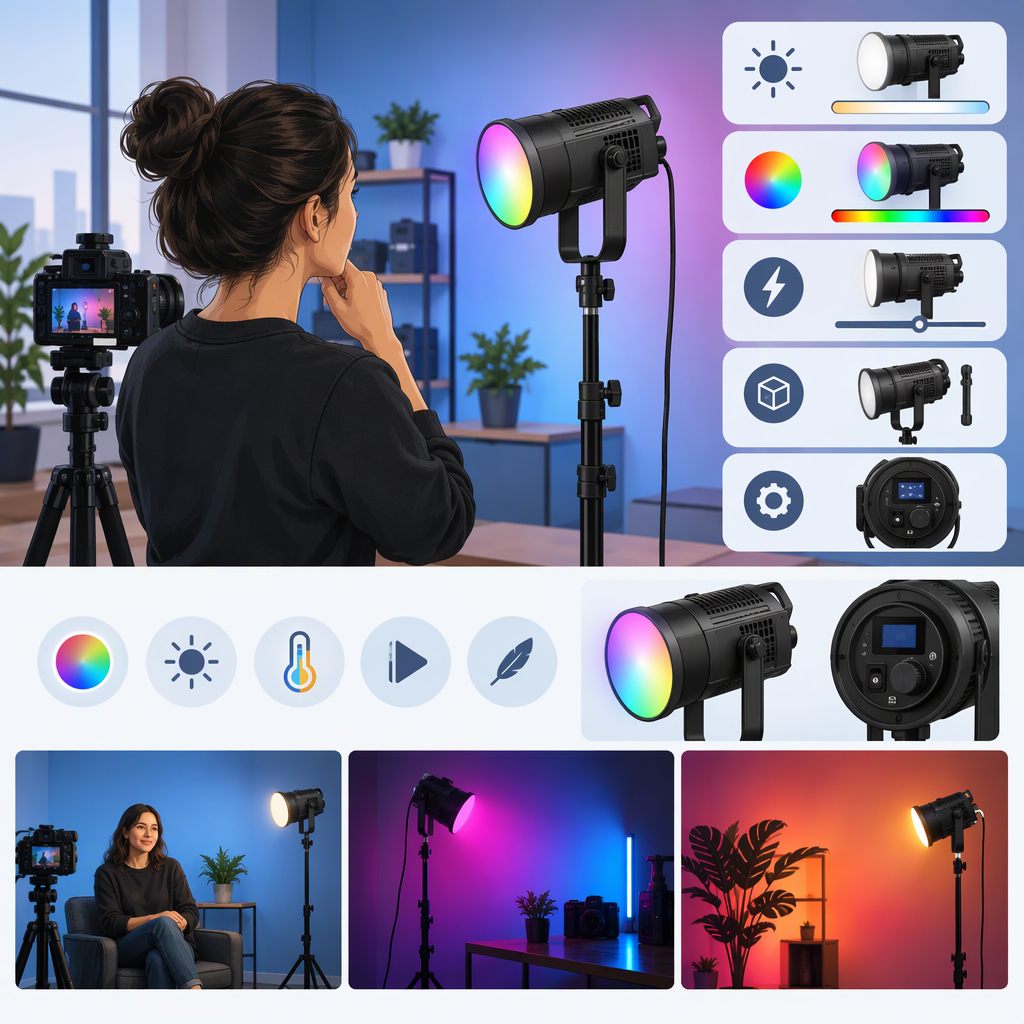
How to Choose a Neewer RGB Cb60 Light for Your Filming Setup
If you’re considering a light after searching “neewer rgb cb60,” start with the job you need it to do—not the model name. Identify what you’re lighting, whether the light would serve as a key, fill, or background/effects light, how far it will be from the subject, and what your space and setup allow. Then compare those needs with documentation for the exact model. The search phrase alone doesn’t establish whether a light will suit your setup.
NEEWER’s official US listing uses the name “NEEWER RGB CB60.” That helps clarify the naming, but it doesn’t establish whether the light meets your needs. Confirm that the listing and any manual you consult refer to the exact product you mean before relying on model-specific details. (neewer.com)
Start with the Filming Job
Write down four things before comparing lights:
- Subject or scene: What needs to be visible—one person, a product, a wider scene, or a background?
- Light’s role: Is it meant to be the main light (key), soften shadows as a fill, or add color or separation in the background?
- Approximate distance: Where would the light need to sit relative to the subject? Consider whether that position is practical in your room.
- Setup constraints: Note available space, placement options, and any other limits that matter to your filming routine.
Use that list to decide what information to check for the exact model. For instance, a creator planning a close-up talking-head shot in a small room may care most about whether the planned placement works for their framing and lighting role. Someone lighting a background may care more about whether their intended effect is possible. These are examples of how the job changes the questions to ask—not tests or claims about this particular light.
Decide Whether RGB Effects Matter to You
Treat RGB as a workflow question, not a reason by itself to choose a light. If colored effects are important to your videos, make that a requirement to confirm for the exact model. If your priority is simply lighting a person or object, focus on the criteria relevant to that job and verify them in matching documentation. The letters “RGB” in a search phrase do not, by themselves, confirm any specific capability or performance.
Match the Exact Model Before Relying on Details
The search wording “neewer rgb cb60” is close to the name on NEEWER’s official listing, but search wording is not a substitute for matching the exact product identity. Confirm the product name or SKU on the listing and in the manual you use. Don’t assume a product with a similar name is interchangeable, and don’t apply details from one model’s documentation to another.
Make a Setup-Specific Decision
You have a useful basis for a decision when you can describe the lighting job, name the criteria that matter for it, and find documentation for the exact model that addresses those criteria. If an important detail is missing or the product identity doesn’t match, treat that point as unresolved rather than assuming the light is a fit.
Bottom line: Decide from your filming role, distance, and setup constraints; treat RGB effects as optional unless your workflow needs them; and verify any model-specific detail against the exact product documentation. Without details about your setup and verified performance evidence, there’s no supported basis for a product-specific fit verdict.