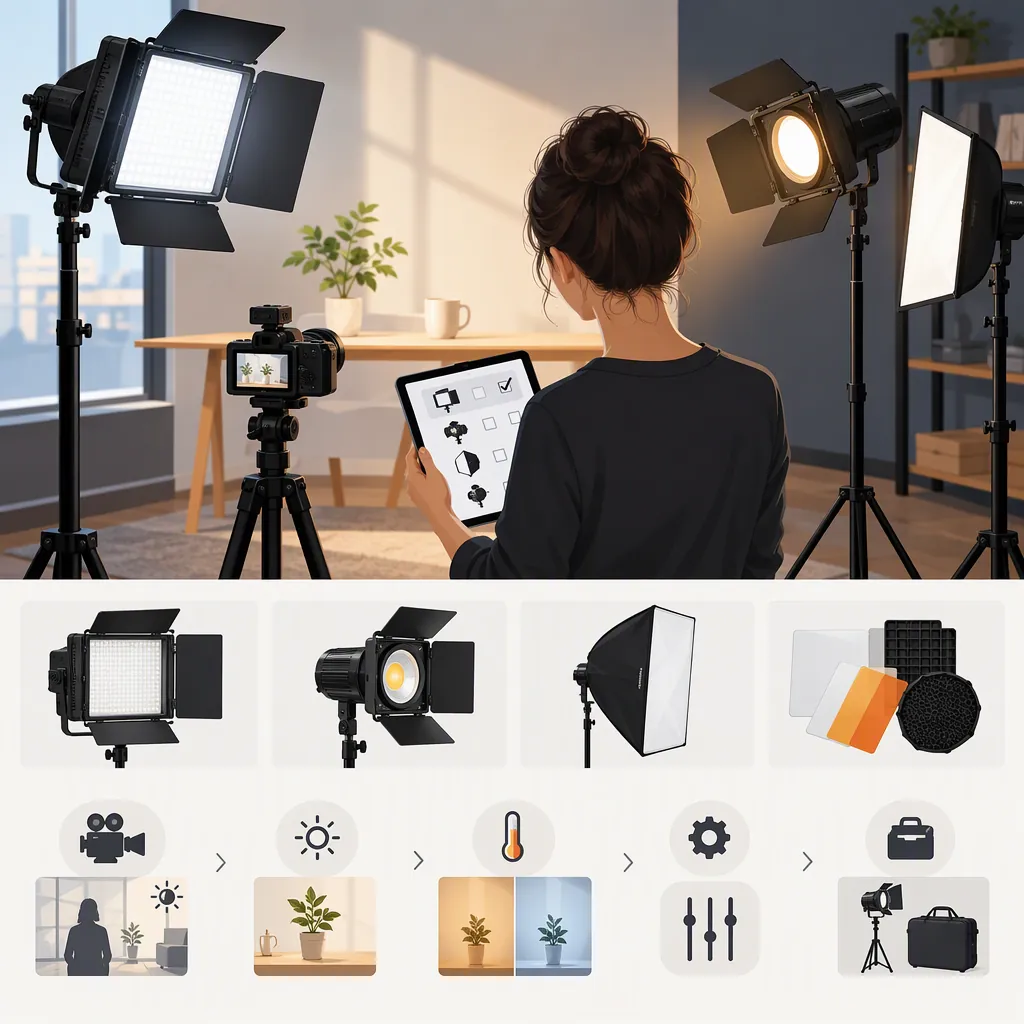
Choosing a Neewer 60W Light for Filming
For a NEEWER 60W lighting comparison, start with the exact model and your filming requirements—not wattage alone. NEEWER lists the FS60B as bi-color and the HS60C and HS60C Pro as RGB models. Use those published distinctions to shortlist candidates, then verify the complete setup: modifier compatibility, power supply, control workflow, exposure, and recorded fan noise. These sources are manufacturer listings, not independent filming tests. [c1] [c2] [c3]
Identify the Model Before Comparing
The supplied references cover three different NEEWER 60W models. Treat the model name as the starting point for comparison; do not assume that accessories or control features transfer between them.
| Model | Published Color Options | Published Controls | Selection Question |
|---|---|---|---|
| FS60B | Bi-color, 2700–6500K | App and onboard controls | Does the shoot require adjustable white light without RGB control? |
| HS60C | RGB with 2700–6500K white-light adjustment | App, 2.4G, and onboard controls | Are colored accents or the listed 2.4G workflow part of the setup? |
| HS60C Pro | RGB with 2700–6500K white-light adjustment | App DMX and onboard controls | Is the app-based DMX workflow relevant and verified? |
These are manufacturer-described features, not conclusions about image quality or reliability. [c1] [c2] [c3]
For an interview or product demonstration, first specify whether the light must illuminate the subject, add fill, or color the background. If colored lighting is not part of the shot plan, compare the white-light workflow first. If it is, investigate the RGB models without assuming they will produce the required exposure at every color setting.
Keep Output Figures in Context
The published maximum illuminance figures use different conditions:
- HS60C and HS60C Pro: 2,400 lux at 1 meter bare, or 8,700 lux at 1 meter with the mixing chamber and reflector, at 5600K. [c1] [c3]
- FS60B: 34,300 lux at 1 meter with a reflector, at 6500K. [c2]
These figures do not establish a like-for-like filming comparison. The listings specify different color temperatures and accessory configurations, and the supplied material does not provide a matched test using the same modifier and measurement method. Do not use the figures to declare one model better for a broad, softened interview setup.
A practical evaluation should hold the shooting conditions constant. Use the intended modifier, subject distance, camera settings, and white balance. Check the subject's exposure and the useful coverage across the frame, rather than relying only on the listing's maximum figure. If no test is available, leave suitability for the planned shot unresolved.
Matched Exposure Test Sheet
Record for each candidate:
- Exact model and power source:
- Modifier and adapter:
- Light-to-subject distance and angle:
- Color temperature or RGB setting:
- Brightness setting:
- Camera, ISO, aperture, shutter speed, and white balance:
- Subject exposure and background exposure:
- Coverage across the required frame:
- Result: acceptable / unacceptable / not tested.
Keep the setup consistent when comparing candidates.
Check Modifiers and the Complete Power Setup
NEEWER explicitly describes the FS60B as compatible with NEEWER Mini Mount accessories and Bowens-mount modifiers through a CHB1 adapter. That statement is model-specific; it should not be extended to the HS60C models without separate confirmation. [c2]
The HS60C and HS60C Pro listings include a mixing chamber, reflector, silicone diffuser, and power adapter. The FS60B listing includes a reflector, diffuser, power adapter, and power cable. None of these package lists includes a light stand. [c1] [c2] [c3]
All three listings describe DC and USB-C PD power options. The HS60C pages identify additional battery arrangements and a PD adapter as separately supplied; the FS60B page likewise describes separately purchased USB-C cables and battery grips. Do not assume a USB-C connector alone confirms compatibility with your planned power setup. [c1] [c2] [c3]
For location filming, document the exact battery, cable, adapter, and mounting arrangement. Confirm compatibility for that model and test the intended brightness for the required take length. The supplied sources do not establish battery runtime for your combination.
Complete Setup Checklist
- Confirm the exact light model.
- Identify the modifier and any required adapter.
- Confirm the support arrangement for the light and modifier.
- Separate included items from additional equipment.
- Record the power source and cable specifications.
- Verify compatibility against the model's requirements.
- Test the setup for the planned recording duration.
- Mark unresolved compatibility or runtime questions as unverified.
Verify Sound and Controls During a Test Take
All three manufacturer pages describe auto and silent fan modes. Those descriptions do not establish whether fan sound will be audible in your recording. Evaluate the light with the actual microphone position, recording gain, brightness setting, and take duration. [c1] [c2] [c3]
For remote operation, verify the specific functions needed rather than treating app support as interchangeable. The HS60C Pro page describes DMX through an interface in the app; the supplied text does not establish a physical DMX connector or compatibility with a particular console. [c3]
A final test take should include spoken dialogue, a quiet pause, and any planned lighting changes. Review the footage for unwanted exposure or color changes and listen for fan noise. Keep a record of tested settings. This guide does not supply firsthand results, independent color measurements, flicker testing, or long-duration thermal testing.
FAQ
Which Neewer 60W Model Should I Consider for Interviews?
Start with the required lighting role and color workflow. The FS60B is listed as bi-color, while the HS60C and HS60C Pro are listed as RGB models. That distinction helps organize a comparison, but it does not establish which will meet your interview exposure, modifier, or sound requirements. Verify those conditions in the intended setup. [c1] [c2] [c3]
Does the Hs60c Pro Have Higher Published Output than the Hs60c?
The supplied manufacturer pages list the same illuminance figures for both: 2,400 lux at 1 meter bare and 8,700 lux at 1 meter with the mixing chamber and reflector, at 5600K. These listings do not support describing the Pro as brighter. Their listed control methods differ. [c1] [c3]
Can I Determine Battery Runtime from the 60W Label?
No runtime for a specific battery-and-light combination is established by the supplied sources. The listings describe power options, but do not provide a runtime test for your planned battery, cable, brightness, and operating conditions. Treat runtime as unverified until that combination is confirmed and tested. [c1] [c2] [c3]