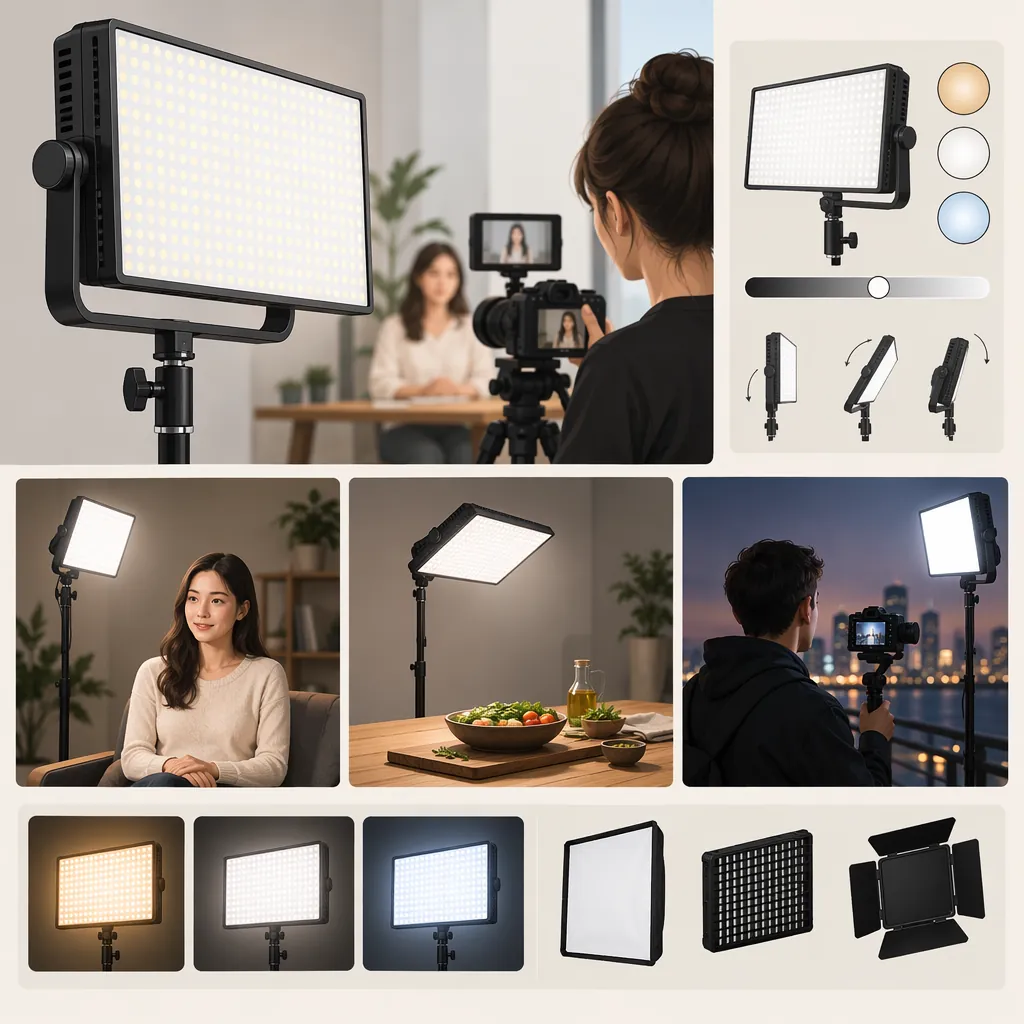
Choosing a Luxceo P120 for Your Filming Setup
Treat the Luxceo P120 as a candidate to evaluate, not a confirmed fit for your shoot. Decide whether you need a main light, fill light, or background accent, then verify output, camera compatibility, mounting, power, and safety documentation. The supplied evidence is a retailer listing, not an independent performance test, so it does not establish suitability for a particular filming setup. [source_1]
What the Available Source Establishes
The supplied Lazada page identifies a listing for the Luxceo P120. Its title includes feature descriptions, but the supplied extract does not include measurement methods, an independent review, or a detailed technical manual. Treat those descriptions as listing language rather than verified performance evidence. [source_1]
This guide does not confirm brightness, color accuracy, flicker behavior, runtime, dimensions, mounting compatibility, or environmental protection. It also does not establish what accessories are included. Those details need model-specific documentation or a controlled test before they can support a filming decision.
Define the Lighting Job First
Start with the shot rather than the product name. Describe the subject, framing, location, and intended look, then assign the candidate light a specific role.
- Main light: Require a test at the actual subject distance and with any planned diffusion. Judge whether the exposure and shadow pattern meet your needs.
- Fill light: Check whether you can adjust the result without making the image flatter than intended.
- Background or accent light: Evaluate placement, unwanted spill, reflections, and how the effect appears in the final frame.
- Visible practical light: Check both the fixture's appearance in the shot and the exposure of nearby subjects.
For interviews, prioritize the face and consistency between takes. For product shots, inspect reflections and important surface details. For moving shots, include the subject's full movement range in the test. These are evaluation priorities, not claims about what the P120 can deliver.
Shot Requirements Worksheet
Record before comparing lights:
- Shot and subject:
- Intended lighting role:
- Subject movement and framing:
- Available placement space:
- Planned light-to-subject distance:
- Camera, frame rate, and shutter setting:
- Required continuous operating time:
- Available power:
- Mounting and cable constraints:
- Acceptable exposure and visual result:
Test with Your Actual Camera Settings
If a demonstration or evaluation unit is available, use a repeatable test rather than judging only by eye. Fix exposure and white balance where practical, document the setup, and compare recorded clips.
Test the settings you intend to use, including any slow-motion configuration. Inspect footage for visible bands, pulsing, unwanted color shifts, and uneven illumination. Include the planned modifiers and placement: a bare-light demonstration is not a substitute for testing your finished setup.
Keep the conclusion narrow. A satisfactory result at one distance, brightness setting, or recording mode should not be treated as confirmation for every setup. No such test results are supplied for the P120 here.
Repeatable Filming Test
1. Record the camera settings, room lighting, light placement, and control settings.
2. Film the intended subject with exposure and white balance held consistent.
3. Repeat at each brightness or color setting you expect to use, if available.
4. Repeat for each planned frame rate and shutter setting.
5. Review recorded clips for exposure, skin or product appearance, bands, pulsing, spill, and reflections.
6. Run the intended operating configuration for the required take duration, within documented operating limits.
7. Mark each requirement as pass, fail, or unverified. Keep the clips and setup notes together.
Verify Practical Fit and Safety
Before relying on the light for a shoot, obtain documentation for the exact model and package. Check the mounting interface, permitted orientations, power requirements, charging instructions, operating limits, and included accessories. Do not infer compatibility from a similar-looking fixture.
Do not treat the environmental wording in a retailer title as permission to use a light in rain, near water, or while charging in wet conditions. Establish the documented limits for the fixture, connections, and power equipment separately. The supplied listing extract is insufficient for that safety decision. [source_1]
Use a conditional conclusion: suitable for the tested role, unsuitable for a stated requirement, or not yet verified. If a critical requirement remains unverified, leave the decision open rather than replacing missing evidence with a product assumption.
Selection Decision Record
Candidate: Luxceo P120
Intended role:
Exact model and package checked:
Documentation available:
Camera test result:
Mounting verification:
Power and operating-duration verification:
Environmental limits verified:
Unresolved requirements:
Decision: Suitable for the tested role / Unsuitable / Not yet verified
Reason and supporting documentation:
FAQ
Can the Luxceo P120 Be My Main Filming Light?
That is not established by the supplied evidence. Evaluate it at your planned subject distance, with the intended modifiers and camera settings. Require an acceptable recorded exposure and lighting pattern before assigning it the main-light role. The supplied retailer extract does not include measured output data. [source_1]
Is the Luxceo P120 Flicker-Free for Video?
The supplied evidence does not establish flicker-free performance. Test recorded footage at each frame rate, shutter setting, and light setting you plan to use. Keep any conclusion limited to the configurations actually tested. [source_1]
How Should I Compare It with Other Filming Lights?
Compare candidates against the same shot requirements and test conditions. Include exposure, visual quality, placement, mounting, operating duration, and documented safety limits. Mark missing information as unverified; do not rank a candidate above another solely because its listing uses more feature terms.