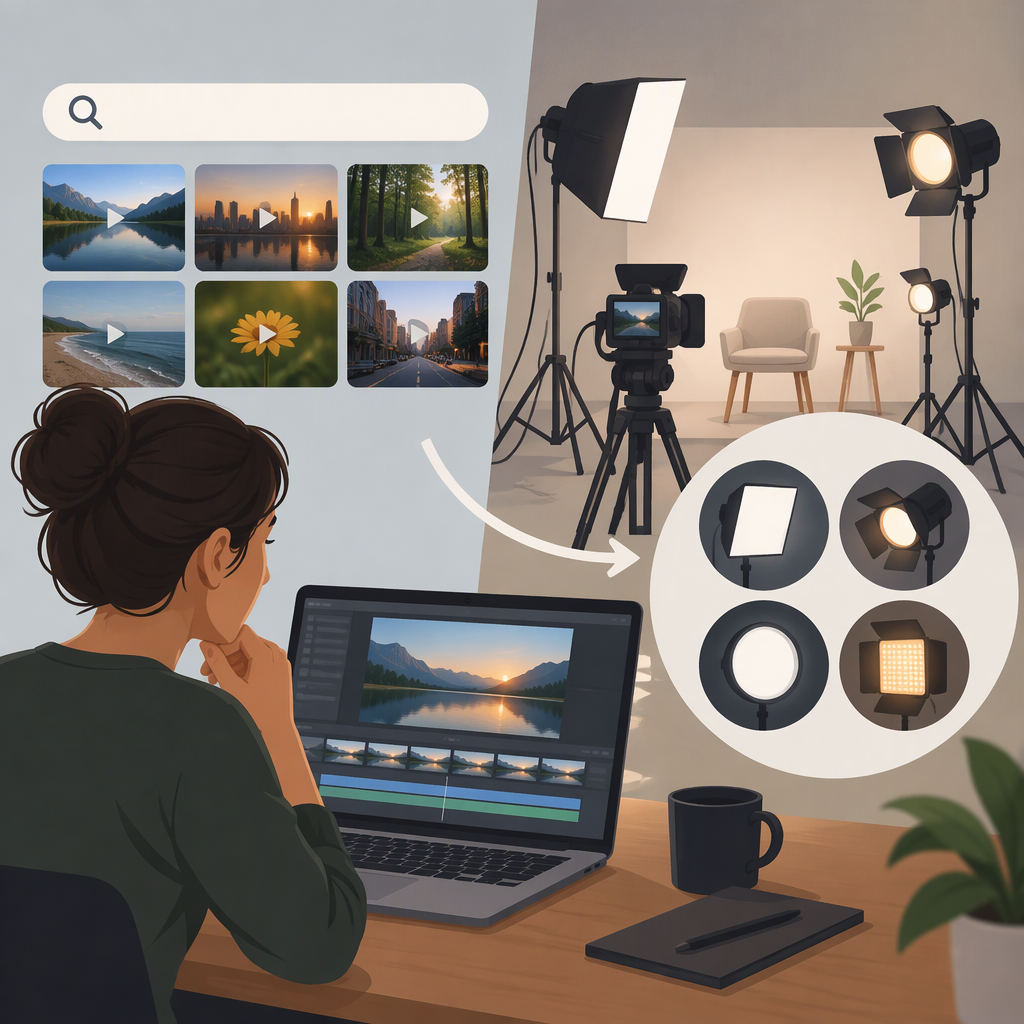
Video of Light: Find Footage or Choose Lighting for Filming
What Do You Mean by “Video of Light”?
The phrase can point to different things: footage that shows light, lights used to film a video, stage lighting, household lights, or a film or video about light. These are related by wording, but they call for different results.
A look at current English-language search results turned up both stock-footage pages for “light” videos and guides about lighting video shoots. That suggests the phrase can lead to more than one kind of result; it does not establish how often people intend each meaning. If you mean footage to watch or use, try a more specific phrase such as “video showing light” or “light stock footage.” If you mean equipment or technique, “lighting for filming video” or “video lighting setup” is clearer. (pixabay.com)
Choose the Path That Matches Your Goal
- Find clips of light: Search for “video showing light,” “light stock footage,” or name what you want to see—for example, sunlight through trees or glowing neon. These are suggested searches, not claims about search popularity.
- Light a video shoot: Continue to the practical guide below.
- See stage or home lighting: Add the setting to your search, such as “stage lighting video” or “household lighting video.”
- Watch a film about light: Search for “film about light” and add a subject, title, or audience if you have one in mind.
If You Mean Lighting for Filming
There is no single setup that suits every video. Start with the subject and scene, then consider the available space, the look you want, and practical limits such as power and portability. These questions help narrow the approach before you choose equipment.
1. Look at the Scene Before Adding Lights
Notice where the existing light comes from, what parts of the scene fall into shadow, and whether the subject separates clearly from the background. A location scout can reveal what natural light is already doing and what may need to change. (bhphotovideo.com)
2. Decide What the Light Needs to Do
Ask whether your priority is to make the subject easier to see, soften or deepen shadows, separate the subject from the background, or create a particular mood. Lighting can shape how a scene looks; the goal is not necessarily to illuminate every part of it equally. (bhphotovideo.com)
3. Start Simply, Then Add Control If Needed
For a straightforward shot, first see whether available light gives you the result you want. If it does not, consider adding or repositioning a light. A common vocabulary for a multi-light setup is key (the main light on the subject), fill (used to control shadows), and backlight (placed behind the subject to help distinguish them from the background). Three-point lighting is one possible starting arrangement, not a requirement: a B&H lighting guide describes it as a traditional starting point and notes that it is not mandatory. (helpx.adobe.com)
4. Match the Setup to the Trade-Off
- Available light: Uses what is already there and keeps the setup simple; the result depends on the location and changing conditions.
- One added light: Gives you a way to adjust the subject’s illumination while keeping the setup relatively simple; it may not give you separate control over shadows and background separation.
- Several lights: Can provide more independent control over the subject and scene, but takes more space and setup. More fixtures are not automatically better—the arrangement should serve the shot.
Hypothetical example: For a seated interview in a small room, first check the existing light and the background. If the face needs more illumination, try a key light. Add fill only if the shadows are stronger than the intended look; consider a backlight only if separating the person from the background would help. This is a decision example, not a tested result or a prescription for every interview.
Quick Distinction
If you want images of light, search for footage. If you want to light a scene, search for video-lighting guidance. If you mean stage fixtures, household lamps, or an educational film about light, include that context in your search. A few extra words can turn “video of light” into a much clearer request.