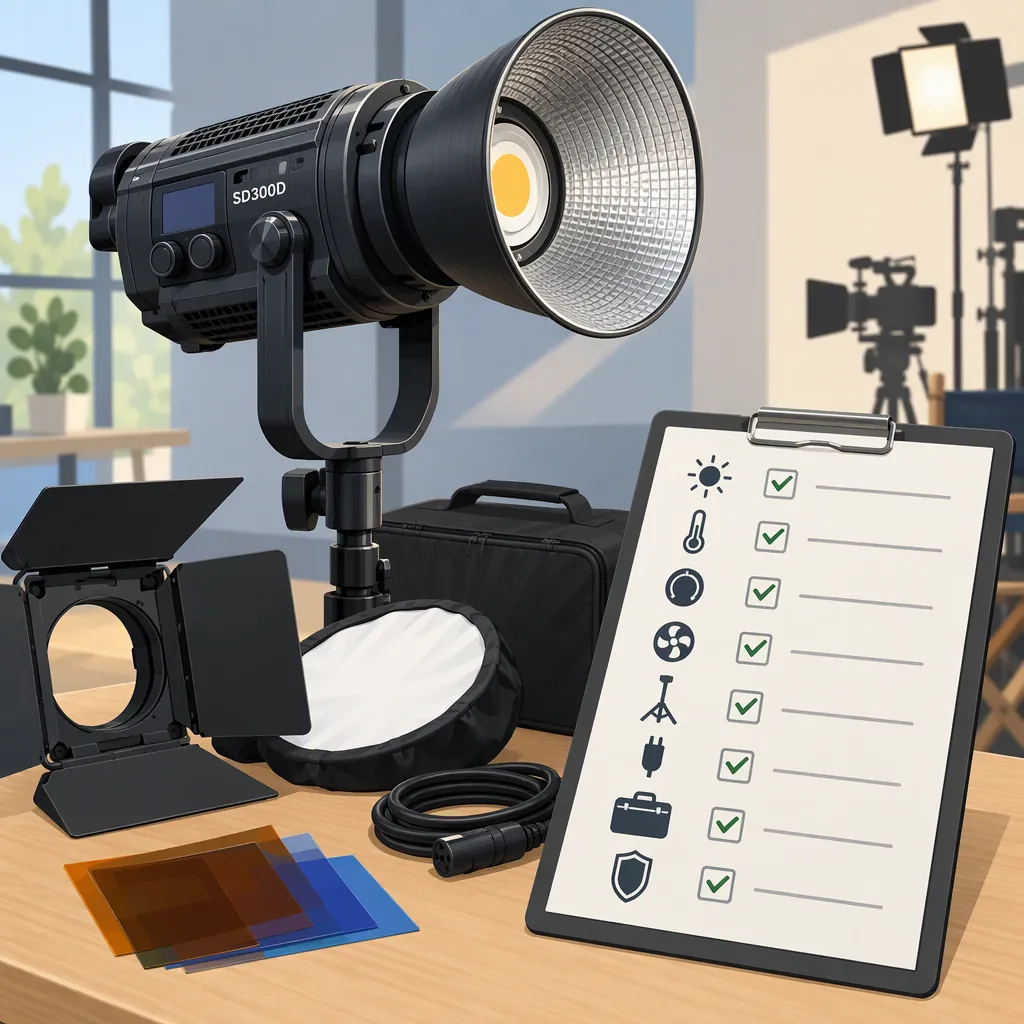
How to Evaluate GVM Sd300d for Your Filming Setup
Before choosing a light listed as GVM SD300D, verify its exact model and documentation. The supplied manufacturer reference covers GVM PRO SD300C, not SD300D, so it cannot establish SD300D specifications or suitability. Base your decision on documented compatibility and a test using your camera, intended modifier, working distance, and audio setup. [src_1]
Verify the Model Before Comparing Specifications
The available reference is titled GVM PRO SD300C 300W High Power RGB&Bi-Color Monolight and identifies the product as PRO SD300C. It does not provide an SD300D specification sheet. Treat that model-name difference as a documentation gap, not as evidence that the products are interchangeable. [src_1]
For a listing labeled GVM SD300D, request a photograph of the fixture's model label and documentation that matches it. Check the light, power supply, packaging, and manual for consistent identification. If the names differ, resolve the discrepancy before relying on a specification comparison.
This article does not verify SD300D output, power draw, color range, color accuracy, fan noise, control options, modifier mount, or battery compatibility.
Model Verification Worksheet
- Listing model name: ______
- Model printed on the fixture: ______
- Model named in the manual: ______
- Power supply identification: ______
- Included accessories: ______
- Unresolved differences: ______
- Decision: documentation matches / clarification needed
Define the Filming Job First
Build a short brief before evaluating any fixture. Describe the subject, framing, room, available power, and desired lighting appearance. Then use those requirements to guide testing rather than choosing from a model name alone.
- Seated interviews: Plan a test with the intended diffusion, subject distance, and microphone placement.
- Product filming: Evaluate reflections, shadow placement, and whether the setup leaves room for camera movement.
- Small-room recording: Check the complete footprint of the stand, modifier, cables, and light.
- Location filming: Confirm the documented power requirements and rehearse setup, transport, and safe cable routing.
- Colored backgrounds or effects: Require documentation for the exact model's color and control capabilities; do not infer them from the SD300C reference.
Write down what counts as acceptable before testing: your intended camera settings, lighting position, sound-recording arrangement, and setup-time limit.
Test the Complete Setup, Not Just the Bare Light
If a demonstration or evaluation unit is available, test the configuration you would actually film with. Keep your camera settings and subject position consistent when comparing candidates.
Record a short clip at the intended frame rate and shutter setting. Review it for exposure, visible banding, color appearance, and unwanted changes during dimming. Repeat at the brightness settings you expect to use.
For dialogue, record room tone with the light off and then on, using the intended microphone position. Listen to the recordings rather than judging noise only from beside the fixture.
Fit the intended modifier only after confirming compatibility in matching documentation. Check framing clearance, adjustment access, and the support arrangement. Follow the fixture, modifier, and stand instructions; do not assume an accessory shown for another model is approved for this one.
Repeatable Filming Test
1. Record the exact fixture model and accessory configuration.
2. Set the camera to the intended resolution, frame rate, shutter, ISO, aperture, and white balance.
3. Mark the subject, camera, and light positions.
4. Record at the planned brightness settings with the intended modifier.
5. Review exposure, banding, color appearance, and dimming behavior.
6. Record room tone with the light off and on.
7. Check mounting instructions, clearance, cables, and control access.
8. Log each result as acceptable, unacceptable, or not tested.
Make a Conditional Selection
Use three decision gates:
- Identity: Does the fixture label match the documentation?
- Compatibility: Are the intended power arrangement, modifier, controls, and support documented for that exact model?
- Filming results: Does the tested setup meet your exposure, appearance, audio, and handling requirements?
If any gate remains unresolved, mark the candidate as not yet verified rather than suitable or unsuitable. Compare alternatives using the same setup and criteria.
The supplied SD300C page can identify what that reference discusses, but it cannot settle an SD300D selection. A model-specific recommendation would require matching documentation and evidence relevant to your filming configuration. [src_1]
FAQ
Is GVM Sd300d the Same as GVM Pro Sd300c?
The supplied evidence does not establish that. It identifies PRO SD300C, so do not treat the two names as interchangeable without documentation confirming the exact product identity. [src_1]
Is GVM Sd300d Bright Enough for an Interview?
That cannot be verified from the supplied reference, which covers SD300C rather than SD300D. Test the exact candidate at your intended camera settings, subject distance, and modifier configuration before judging whether it meets your exposure requirements. [src_1]
What Should I Request Before Evaluating a Listing?
Request the exact model-label photograph, matching manual, power requirements, modifier compatibility information, included-accessory list, and any available model-specific test documentation. Keep missing information marked as unverified rather than filling gaps with specifications from another model.