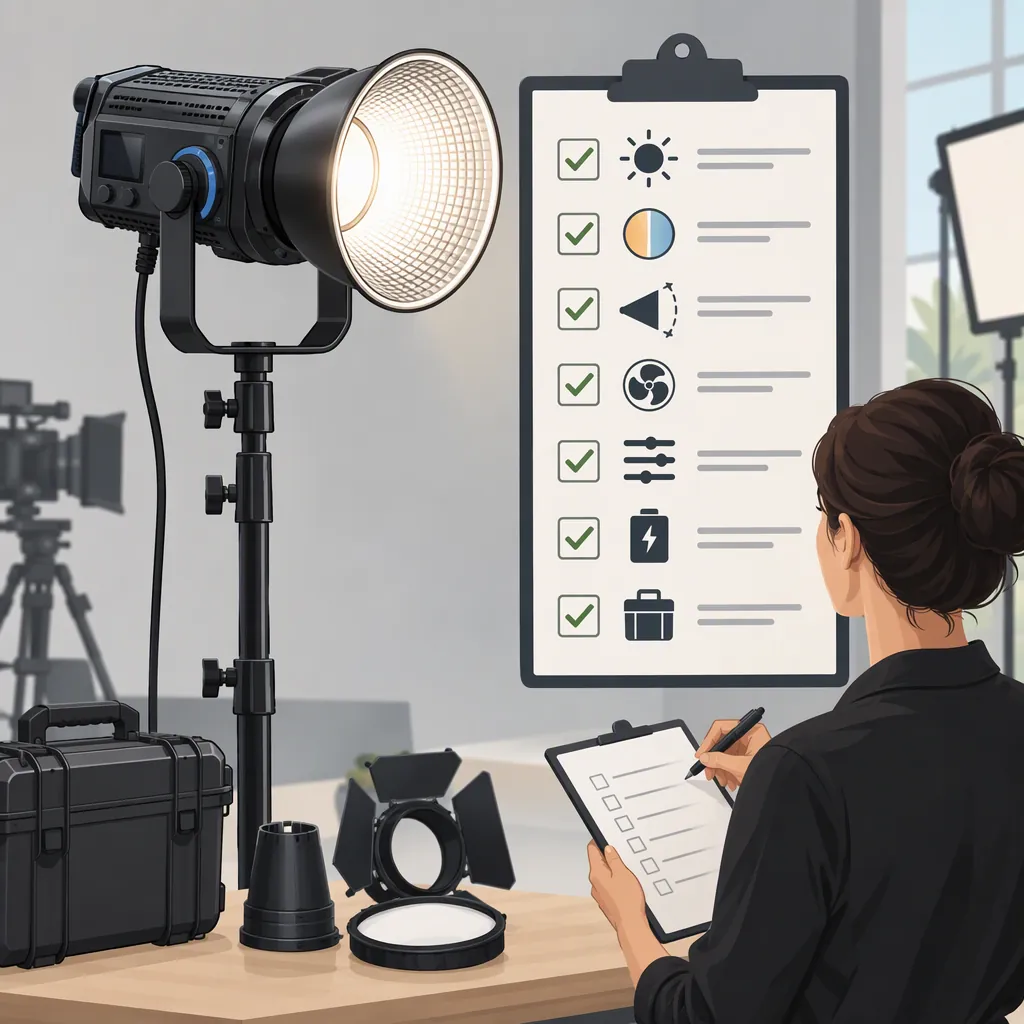
GVM Sd200r: How to Evaluate It for Your Filming Setup
Treat the GVM SD200R as a candidate to evaluate against your actual filming setup, not as a confirmed fit based on a listing alone. The supplied reference is a retailer listing titled as an SD200R-SET2 kit with a stand and softbox; it is not an independent performance test. Before choosing, verify the exact package and assess exposure, color, recorded noise, mounting, and power requirements under your intended shooting conditions. [source_1]
What the Available Reference Establishes
The supplied retailer page names the product as GVM SD200R-SET2 and describes it in its title as an RGB and bi-color studio video spotlight kit with a stand and softbox. Use that wording to identify the listing—not as independent confirmation of performance or the contents of every SD200R package. [source_1]
The supplied material does not establish how the light performs in your room, at your subject distance, through your chosen modifier, or with your camera settings. It also does not provide an independent evaluation of recorded noise or flicker. Those remain verification tasks rather than reasons to assume suitability. [source_1]
This guide therefore offers a selection process, not a product endorsement, hands-on review, or verified specification sheet.
Define the Shot Before Comparing Lights
Start with a shooting brief rather than a model name. Record the subject, framing, camera settings, available placement space, and intended look.
For an interview, prioritize a trial that includes the subject's face, the final microphone position, and the planned background. For tabletop work, include the actual objects and surfaces. For a colored background, define the desired color and whether any spill onto the subject is acceptable.
Set pass/fail criteria before testing. Examples include achieving your chosen exposure without changing aperture, keeping equipment outside the frame, and meeting your production's recorded-audio requirements. These are proposed evaluation criteria, not claims that the SD200R will meet them.
Filming Light Evaluation Brief
Complete before a trial:
- Shot type and subject:
- Camera, lens, frame rate, shutter setting, aperture, and ISO:
- Intended light position and subject distance:
- Modifier to be used:
- Desired exposure and appearance:
- White-balance setting:
- Microphone position and audio acceptance criteria:
- Available floor space and mounting constraints:
- Power arrangement to verify:
- Conditions that would rule out the light:
- Evidence still needed:
Use a Repeatable Camera and Audio Trial
If access to a demonstration or test unit is available, use the same procedure for the SD200R and any alternative:
- Recreate the intended setup. Place the subject, camera, microphone, and modifier where they would be during filming.
- Fix camera settings. Keep exposure and white balance consistent for comparison. Record any changes needed to obtain the intended image.
- Evaluate the finished frame. Inspect exposure, shadow shape, reflections, background illumination, and unwanted spill—not just the appearance of the illuminated room.
- Check relevant operating settings. Record footage at each frame rate, shutter setting, and dimming level you intend to use. Inspect for visible flicker or banding rather than assuming compatibility.
- Record an audio sample. Include room tone and speech with the light operating at the settings required for the shot. Listen using the production's normal review method.
- Document the result. Note the complete configuration alongside each clip so another person can repeat the comparison.
Without a trial, mark these checks as unresolved. Do not substitute listing language for observed results.
Verify the Package and Make a Conditional Decision
Keep the model name and package identifier separate. The provided reference concerns SD200R-SET2; it should not be used to infer the contents of a differently named offer. [source_1]
For the exact package under consideration, request documentation of included items, modifier compatibility, mounting requirements, electrical requirements, dimensions, weight, and operating guidance. Check the planned stand and modifier combination against the relevant documented limits. Leave any unresolved compatibility or safety question open rather than improvising a solution.
Compare candidates using a simple record: requirement → evidence → result → unresolved issue. Assess total setup needs, not merely the light itself. Include any separately required support, modifier, power, or transport items without assuming they are supplied.
A reasonable selection outcome is conditional: suitable for the tested configuration, unsuitable for a stated requirement, or not yet verified. The supplied reference alone does not support ranking the SD200R above competing lights.
FAQ
Is the GVM Sd200r Suitable for Interview Filming?
Suitability is not established by the supplied listing. Evaluate it with your intended framing, subject distance, modifier, camera settings, and microphone placement. Treat exposure, appearance, and recorded noise as separate acceptance checks. [source_1]
Does the Referenced Package Include a Stand and Softbox?
The retailer listing's title names a stand and softbox for SD200R-SET2. That wording identifies the listed kit, but it should not be generalized to other packages. Verify the exact itemized contents of the package being evaluated. [source_1]
Can This Reference Establish That the Sd200r Is Better than Another Light?
No. The supplied material is a retailer listing, not a controlled comparison. A defensible comparison would require equivalent shooting conditions, documented configurations, and results assessed against the same requirements. [source_1]