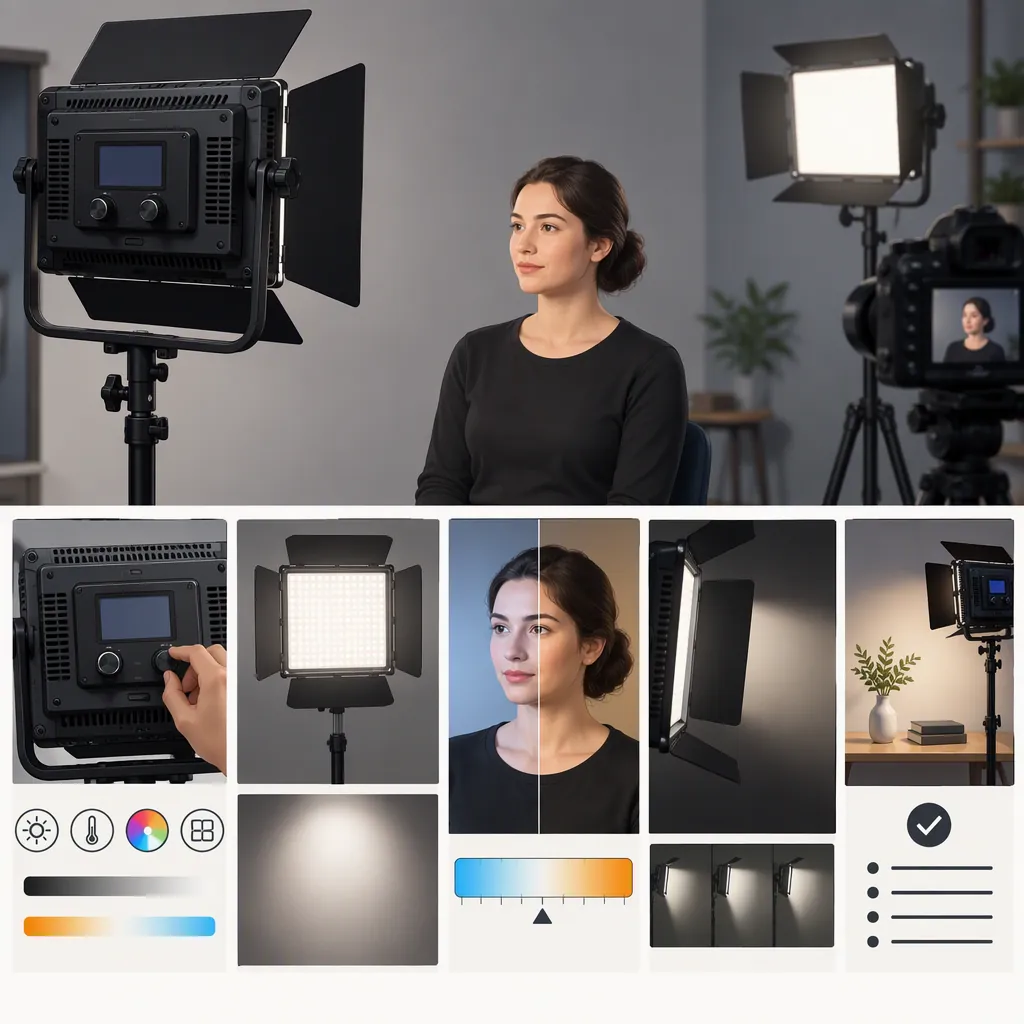
GVM 880Rs: How to Evaluate It for Your Filming Setup
To evaluate the GVM 880RS for filming, define the shot first, then check whether the exact light-and-accessory configuration meets your exposure, image-quality, control, and power requirements. Choose kit size by the lighting roles your scene needs—not by panel count alone. The available sources identify commercial listings and configurations; they do not establish a performance verdict. [c1] [c2]
Define the Shot Before Comparing Lights
Write a short lighting brief before evaluating the GVM 880RS or another candidate. Describe the subject, framing, intended look, and practical limits of the location.
Use these questions to make the comparison specific:
- Subject and framing: Are you lighting one seated speaker, a tabletop object, or several people?
- Placement: Where can each light stand without entering the frame or blocking movement? Record the planned light-to-subject distance.
- Camera settings: Which frame rate, shutter setting, aperture, ISO, and white balance will the shot require?
- Lighting roles: Do you need a main subject light, shadow fill, background illumination, or separation from the background?
- Location constraints: What power outlets, setup time, transport space, and sound-recording requirements must the setup accommodate?
- Acceptance criteria: What exposure, shadow appearance, color rendering, and recording behavior would make the setup acceptable?
Translate the brief into a provisional configuration. For a talking-head shot, start with the main subject light and evaluate whether the shadows need additional fill. For a product shot, prioritize reflections and surface detail. If the background must change independently of the subject, include a separate background-lighting role.
Connect Shot Requirements to Configuration Decisions
These are hypothetical, general selection examples—not findings about the GVM 880RS.
| Filming Need | Key Check | Adjustment if the Setup Falls Short | Unresolved Item to Record |
|---|---|---|---|
| One seated speaker with controlled shadows | Test the main light and, if available, a reflector at the intended framing. | Adjust placement or fill. If the main light plus reflector meets the shadow requirement, do not add a light solely because a larger kit exists. | Does the setup remain acceptable when the speaker moves? |
| A tabletop product with reflective surfaces | Review highlights, reflections, and visible surface detail using the intended modifier. | Change light angle or modifier, then retest exposure and reflections. | Can the required modifier fit securely within the available space? |
| A colored background with neutral subject lighting | Test background color separately, then inspect the combined scene for unwanted spill on the subject. | Allocate a separate background light position and adjust placement or spill control. | Can background adjustments leave subject lighting acceptably unchanged? |
| Several people in one frame | Check exposure and shadow appearance at every required subject position. | Revise coverage or allocate additional lighting roles, then retest all positions. | Is there enough stand space and power for the revised setup? |
Any adjustment creates a new configuration to evaluate. A successful test of one arrangement does not establish that a different distance, modifier, or scene will also work.
Separate Listing Information from Tested Results
GVM's RGB collection includes GVM 880RS entries described as two-pack and three-pack kits. The Impulse listing identifies a two-light kit under SKU GVM-880RS-2L. Record the exact listing and configuration rather than treating every 880RS kit as equivalent. [c1] [c2]
Neither cited page is an independent test report. Their descriptions do not establish measured brightness, color accuracy, flicker behavior, wireless reliability, battery runtime, or suitability for your room. Specifications repeated in a listing remain seller-stated information in this guide. [c1] [c2]
Keep evidence status visible when comparing candidates:
| Evidence Status | How to Use It |
|---|---|
| Stated in a listing | Record it as a seller's description, with the exact model or SKU. |
| Confirmed in applicable documentation | Check that the documentation covers the unit and revision being evaluated. |
| Observed in a controlled test | Record camera settings, placement, light settings, power, and accessories. |
| Not established | Leave it unresolved rather than assuming equivalence. |
The available evidence supports identifying configurations and verification questions, not ranking the GVM 880RS against other lights on filming performance.
Use a Repeatable Camera Test
If a candidate unit is available, evaluate it in the planned scene. The following is a proposed procedure, not a report of firsthand testing.
Choose the Comparison Method First
For a requirements-first selection, compare candidates at the target subject exposure. Keep the scene, camera settings, placement, and intended modifier configuration fixed; adjust each light's dimming level to reach the predefined exposure criterion. Record the setting required. If a candidate cannot reach that exposure under those conditions, record the shortfall rather than changing the camera settings to conceal it.
A separate test can compare exposure at a specified dimming setting, such as each unit's maximum setting, with other conditions held fixed. Label that test separately. The same displayed dimming percentage on different lights should not be assumed to represent equal physical output.
Do not mix results from target-exposure and fixed-setting tests as though they answer the same question.
Run the Test
- Fix the scene. Mark the camera, subject, and light positions. Record ambient light and keep it as consistent as practical.
- Lock the camera. Use manual exposure; disable automatic ISO, automatic exposure, and automatic white balance. Fix frame rate, shutter setting, aperture, ISO, and white balance. Keep the recording profile and image-processing settings consistent.
- Record the light settings. Note dimming value and the selected mode. For white-light testing, record the selected color temperature. For color testing, record hue and saturation or RGB values, as applicable to the candidate's controls. Test white and colored-light roles separately.
- Check usable exposure. Use the intended working distance and modifier. Apply the comparison method selected above and record whether the exposure criterion is met.
- Inspect the image. Review skin tones or product colors, shadow edges, highlights, and unwanted reflections at the target exposure.
- Check recording behavior. Record at every required frame rate and shutter combination, and at the dimming and color settings planned for use. Inspect clips for banding or brightness variation. When changing recording settings, label each test clearly.
- Check the workflow. Try the controls you intend to use. Note whether you can repeat adjustments and operate the complete setup from the required position.
- Check the full session. Run the planned power arrangement for the intended recording duration. Note interruptions, audible noise in the recorded audio, and changes in operation.
Define pass/fail criteria before testing. For example, require the planned subject exposure, acceptable reflections and shadows, and no visible banding in the required test clips. Keep conclusions limited to the conditions tested.
Filming Light Evaluation Record
Use a separate record for each candidate and configuration:
- Candidate model and exact SKU: __________
- Listing or documentation reviewed: __________
- Subject and lighting role: __________
- Comparison method: Target exposure / Fixed dimming setting
- Camera and recording profile: __________
- Frame rate and shutter setting: __________
- Aperture and ISO; automatic exposure disabled: __________
- Fixed white balance; automatic white balance disabled: __________
- Ambient-light conditions: __________
- Light-to-subject distance and placement: __________
- Modifier and mounting arrangement: __________
- Light operating mode: __________
- Dimming value: __________
- White-light color temperature, if applicable: __________
- Hue/saturation or RGB settings, if applicable: __________
- Power arrangement and test duration: __________
- Exposure acceptance criterion: __________
- Image, recording, and workflow acceptance criteria: __________
- Observed results and required adjustments: __________
- Untested conditions or unresolved questions: __________
- Decision: Meets requirements / Does not meet requirements / Insufficient evidence
Evaluate the Complete Setup
Compare complete setups rather than model names alone. Record kit contents, required accessories, support equipment, power arrangements, and transport needs. Assign every proposed light a purpose, then check whether those roles must operate simultaneously.
The GVM accessories collection includes a softbox listing whose name references the 880RS alongside other models. This is a listing-level compatibility description, not verification of fit, mounting security, or its effect on the filmed image. [c3]
For each required accessory:
- Check applicable mounting information for the exact unit.
- Verify power requirements against applicable documentation rather than assuming same-brand equipment is interchangeable.
- Distinguish included items from separately required equipment.
- Test the actual modifier and power arrangement planned for filming.
- Include the revised configuration in the space, transport, and budget comparison.
Use the results to make one of three decisions:
- Meets requirements: The documented configuration passes the required shot, recording, workflow, and duration checks.
- Does not meet requirements: A required condition fails, and no acceptable tested adjustment resolves it.
- Insufficient evidence: A critical detail or required operating condition remains unverified.
Prefer a configuration that fulfills the brief without unnecessary equipment. More lights are useful only when they serve required roles that the simpler tested setup does not cover.
FAQ
Is the GVM 880Rs Suitable for Talking-Head Videos?
The commercial listings alone do not establish suitability for your shot. [c1] [c2] Test the main subject light at your intended distance and locked camera settings. If exposure and shadows meet the brief with that light and any planned reflector, additional fill lighting may not be necessary. Check recording artifacts and audio during the intended session as well.
Should I Evaluate a Two-Light or Three-Light Kit?
GVM's collection contains two-pack and three-pack 880RS listings. [c1] Assign roles before choosing between them. If subject, fill, and background lighting must each be controlled separately and simultaneously, evaluate a configuration that accommodates those roles. If a simpler setup passes the brief, panel count alone is not a reason to add equipment.
Does an 880Rs-Named Softbox Listing Settle Compatibility?
No. The accessories collection includes a softbox listing naming the 880RS, but the listing does not independently verify fit or performance. [c3] Check applicable mounting information, verify secure installation, and repeat the exposure and image checks with the actual modifier in place.
Should Competing Lights Be Tested at the Same Brightness Percentage?
Not as the sole basis for a filming decision. The cited listings do not establish equal output across candidates at matching dimming percentages. [c1] [c2] For shot selection, use locked camera settings and adjust each candidate to the same predefined subject-exposure target. Record its dimming value and any inability to reach the target. Keep fixed-setting output checks separate from that comparison.