Choosing a Filming Light When Searching for GVM 560
Treat “GVM 560” as a starting point, not a complete specification. The supplied reference identifies a used listing titled “GVM 560AS LED Panel Light Used Good,” but does not establish whether that light meets your filming needs. Confirm the exact model, then evaluate a candidate against your framing, exposure, color, recording settings, power needs, and included equipment. [c1]
Separate Model Identity from Performance Evidence
The available reference is a retailer’s used-equipment listing titled “GVM 560AS LED Panel Light Used Good.” That title is more specific than the search term “gvm 560”; do not assume that every similarly named listing describes the same model or package. [c1]
The supplied listing text is not a technical specification sheet or an independent performance test. It does not establish measured output at a stated distance, color accuracy, flicker behavior, power compatibility, or suitability for a particular production. This article therefore offers an evaluation process rather than a product endorsement or a verified model comparison.
Define the Shot Before Comparing Lights
Start with a short brief for the shot you need to make. Specify whether the candidate will serve as a main light, fill light, or background light. Record the framing, available placement space, intended subject distance, and whether daylight or other fixtures will remain in the scene.
Set acceptance criteria before evaluating a model. For example, require that the planned setup achieves your chosen exposure without exceeding your preferred camera gain or ISO. Decide what shadow appearance and background brightness you want, rather than treating an unspecified brightness claim as sufficient evidence.
Keep the scope narrow: acceptance for one seated interview setup should not be treated as acceptance for a larger room, a moving subject, or a different recording mode.
Filming Requirements Worksheet
- Shot and framing: __________
- Light’s intended role: __________
- Available placement space and subject distance: __________
- Ambient light to retain or exclude: __________
- Camera, frame rate, and shutter setting: __________
- Aperture and acceptable gain or ISO: __________
- Desired shadow appearance: __________
- Power source and cable-routing constraints: __________
- Required support equipment: __________
- Conditions that would make the candidate unsuitable: __________
Evaluate the Candidate in Your Recording Setup
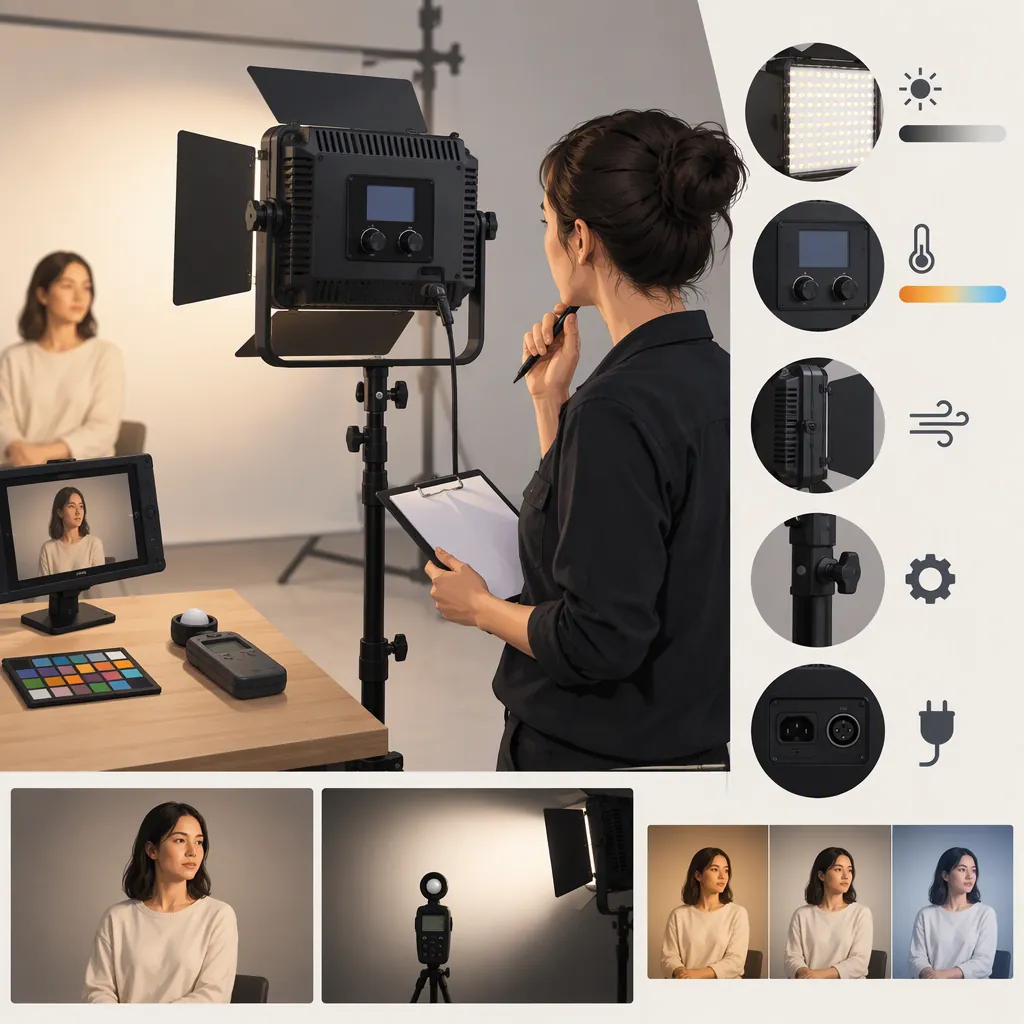
If a demonstration or test is available, use the camera settings and placement from your brief. Record a short sample rather than relying only on how the illuminated scene looks to your eyes.
- Exposure: Check whether the subject reaches your target exposure at the planned distance and acceptable camera settings.
- Light placement: Evaluate shadows, reflections, and spill in the actual framing. Include any modifier you intend to use in the evaluation.
- Color: Lock white balance for the comparison. Inspect skin tones and a neutral reference, while recognizing that a visual check is not a laboratory color measurement.
- Recording artifacts: Inspect footage for visible banding or brightness variation at each frame rate, shutter setting, and dimming level you intend to use. A clean sample does not establish compatibility with untested settings.
- Audio and operation: Record room audio while the light operates. Check whether any audible noise is acceptable for your microphone placement.
Document the conditions alongside the result. Without those conditions, a simple “passed” label is too broad to support a filming decision.
Check the Specific Unit and Included Equipment
For the referenced used listing, the retailer states that an item includes what it is photographed with. Do not assume that a power adapter, battery, stand, case, or other accessory is included merely because it appears in another listing for a similar model. [c1]
The listing’s “Good” label is the retailer’s condition description, not independent evidence of lighting performance. [c1] For any candidate unit, request confirmation of the exact model label, working controls, power requirements, mounting hardware, and included parts. Treat unanswered compatibility questions as unresolved rather than filling the gaps with specifications from a similarly named light.
A practical decision is conditional: accept the candidate only when its identity, package, and observed results meet your written requirements. If testing or documentation is unavailable, retain that uncertainty in the comparison.
Candidate Evaluation Record
Exact model label: __________
Evidence source or document: __________
Included parts confirmed: __________
Power and mounting compatibility: confirmed / unresolved
Test conditions: __________
Exposure result: acceptable / unacceptable / untested
Shadow and spill result: acceptable / unacceptable / untested
Color appearance: acceptable / unacceptable / untested
Recording artifacts: observed / not observed in tested settings / untested
Audio result: acceptable / unacceptable / untested
Remaining uncertainties: __________
Decision for this specific setup: suitable / unsuitable / insufficient evidence
FAQ
Does “GVM 560” Identify the Exact Model in the Reference?
The supplied reference uses the fuller name “GVM 560AS LED Panel Light Used Good.” Confirm the model label on the candidate unit rather than assuming the shorter search term identifies the same equipment. [c1]
Is the Referenced Light Suitable for Interviews?
The supplied evidence does not establish interview suitability. Evaluate a candidate at your intended subject distance, framing, camera settings, and microphone placement. Keep any conclusion specific to the setup actually tested.
Can I Assume a Used Listing Includes Everything Needed?
No. The referenced retailer states that items include what they are photographed with. Confirm the actual package and check power, mounting, and support requirements separately before treating the setup as complete. [c1]