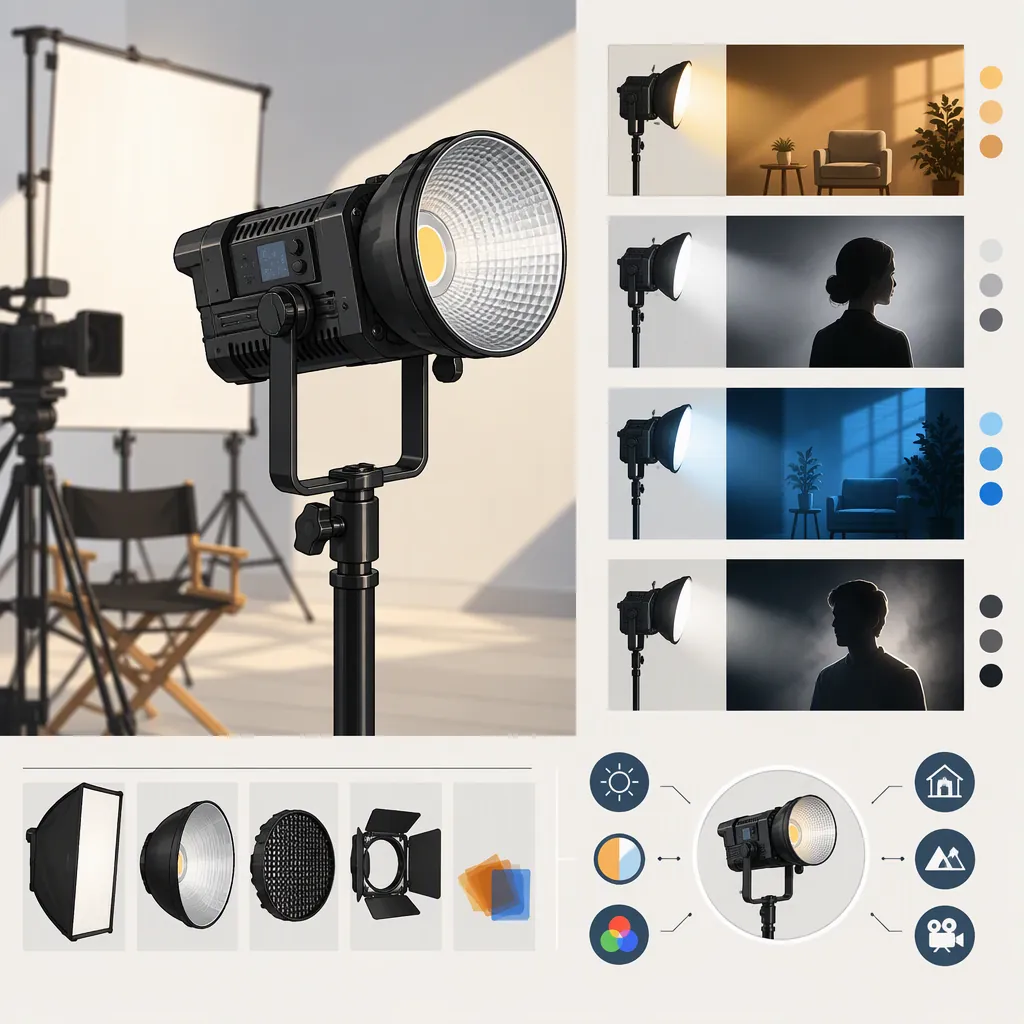
GVM 150S: How to Evaluate a Filming Light
Start by confirming the exact model: the supplied references identify the GVM LS-150D spotlight and GVM-PRO-YU150R panel, but do not establish a model called “GVM 150S.” Do not transfer either light’s specifications to that search term. For filming, build a shortlist around required color control, modifier compatibility, power availability, and an exposure and sound test in the intended setup. These references are manufacturer listings, not independent performance tests. [c1] [c2]
Confirm the Model Before Comparing Features
The name “gvm 150s” is not enough to identify a fixture from the supplied evidence. One reference is titled GVM LS-150D 150W High Power LED Spotlight Daylight Kit. The other identifies its product model as GVM-PRO-YU150R, a panel light. Neither establishes that these names are aliases for “150S.” [c1] [c2]
For a useful comparison, record the full model designation from the fixture label, its matching documentation, and the specific kit contents. Keep unresolved details marked as unknown rather than filling them in from a similarly named light.
This guide uses the two listings to illustrate selection questions. It does not identify an undocumented 150S model or rank the listed lights by tested performance.
Model Identification Worksheet
- Search term: gvm 150s
- Model printed on fixture: ______
- Model in matching documentation: ______
- Exact kit or configuration: ______
- Included power equipment and modifiers: ______
- Unresolved naming differences: ______
- Identity confirmed before comparing specifications: Yes / No
Compare Requirements, Not Just Model Numbers
Treat the following as documented specifications to verify, not guarantees of results on camera.
| Selection Question | LS-150D Listing | GVM-PRO-YU150R Listing |
|---|---|---|
| What color control is documented? | A daylight color temperature of 5600K. [c1] | A 2000K–10,000K range and RGB-related modes. [c2] |
| What light-shaping interface is documented? | A Bowens front accessory mount and an included reflector. [c1] | A panel format; the supplied text does not establish Bowens compatibility. [c2] |
| What power arrangement is documented? | AC operation using an included adapter. [c1] | AC/DC options; two V-mount batteries are required for battery operation. [c2] |
| What remote control is documented? | Wireless remote and DMX. [c1] | App, Bluetooth Mesh, and DMX control. [c2] |
Use these differences to define your requirements. If adjustable white light or colored lighting is essential, require explicit documentation of that capability. If a particular softbox or optical attachment is essential, verify the exact attachment’s fit and operating limits rather than assuming a shared brand ensures compatibility.
For location work, list the complete power arrangement and required runtime. For a fixed filming space, prioritize the intended fixture position, modifier clearance, cable routing, and control access. A model number or wattage label alone should not decide the shortlist.
Filming Requirements Checklist
- Required white-light settings: ______
- Colored light required: Yes / No
- Intended modifier and verified attachment: ______
- Subject-to-light distance: ______
- Available room clearance: ______
- Power source and required runtime: ______
- Required control method: ______
- Requirements still unsupported by documentation: ______
Test the Intended Filming Setup
The panel listing publishes illuminance figures at specified distances, while the supplied LS-150D text does not provide a corresponding illuminance measurement. These references therefore do not support a like-for-like brightness ranking. [c1] [c2]
Both listings describe fan cooling, but the supplied material contains no independent sound measurements. Treat descriptions of quiet operation as manufacturer statements, not evidence that a microphone will record no fan noise. [c1] [c2]
Use a repeatable test before making a selection decision:
- Set the intended camera exposure, frame rate, shutter setting, and white balance. Keep them fixed during the comparison.
- Place each candidate at the intended working position with the modifier you plan to use. Record the configuration rather than comparing undocumented setups.
- Check subject exposure, shadow edges, background spill, and reflections. Judge whether the resulting image meets your shot requirements.
- Record a neutral reference and representative subject colors. Evaluate the footage instead of relying only on a published color-rendering rating.
- Record room tone with the intended microphone placement at the brightness settings you expect to use.
- Check recorded footage for banding or flicker at the intended frame rate and shutter setting.
- Test the complete power arrangement for the planned recording duration.
These are proposed checks, not tests performed for this article. If testing is unavailable, retain uncertainty about exposure, sound, runtime, and camera-specific behavior.
Comparison Test Log
Candidate and exact model: ______
Camera, frame rate, shutter, ISO, aperture, white balance: ______
Light position, distance, modifier, brightness, color setting: ______
Subject exposure acceptable: Yes / No / Untested
Shadow shape and spill acceptable: Yes / No / Untested
Color appearance acceptable: Yes / No / Untested
Recorded fan noise acceptable: Yes / No / Untested
Banding or flicker observed: Yes / No / Untested
Power test duration and result: ______
Unresolved limitations: ______
FAQ
Is GVM 150S the Same as GVM Ls-150d?
The supplied references do not establish that equivalence. The spotlight listing names the LS-150D. Confirm the fixture’s full model designation before applying that listing’s specifications. [c1]
Can I Assume Battery Operation Is Supported?
No. The LS-150D reference documents AC operation with an included adapter. The GVM-PRO-YU150R reference documents battery operation requiring two V-mount batteries. Neither establishes battery support for an unidentified “150S” fixture. [c1] [c2]
Which Light Should I Choose for an Interview?
The supplied listings are not enough to name a universal winner. Confirm the model, then evaluate the required color settings, modifier, subject exposure, available power, and recorded fan noise. Both listings describe fan cooling, so a sound test in the intended microphone setup remains a useful selection check. [c1] [c2]