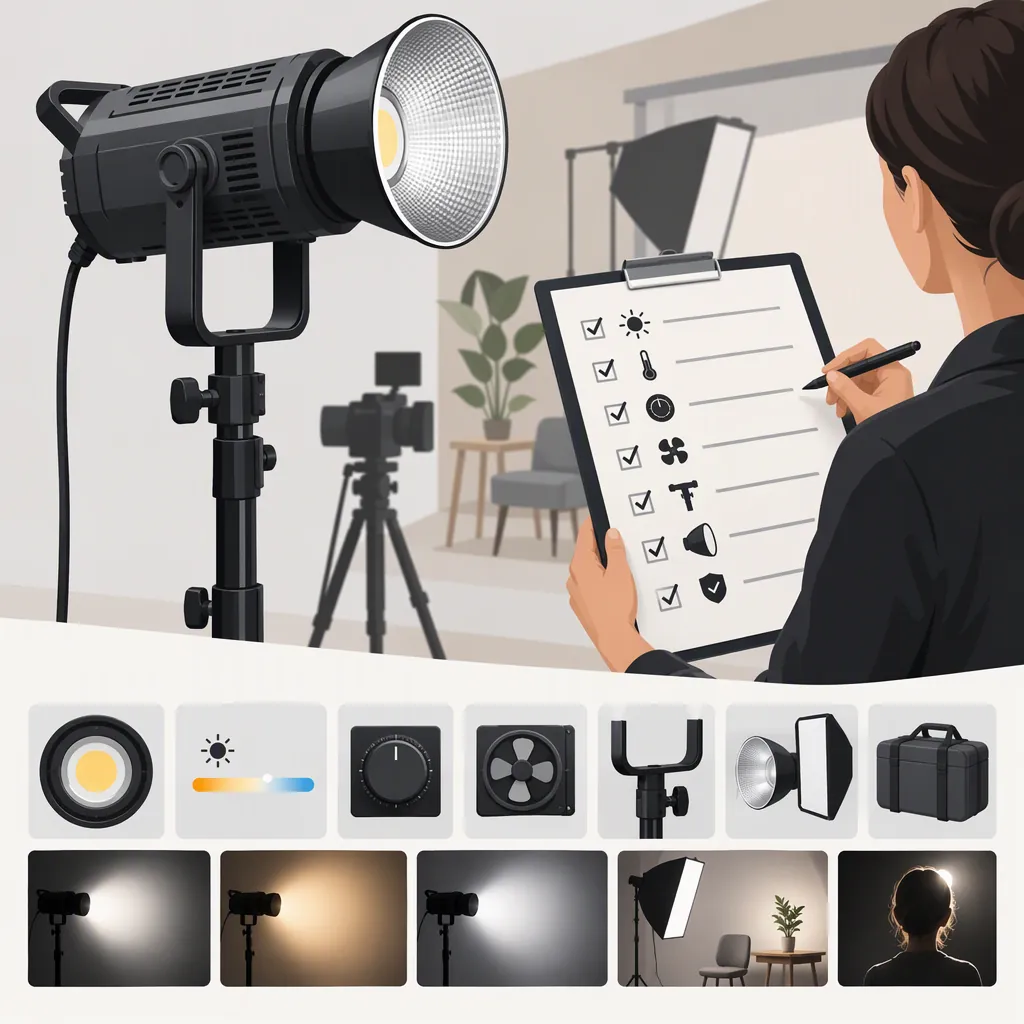
How to Evaluate the Godox Sl200ii for Filming
To decide whether the Godox SL200II fits your filming needs, define the shot, test candidates under consistent conditions, and verify the complete equipment setup. Set your pass criteria before testing, then keep the decision conditional wherever essential requirements remain unresolved.
This is a selection checklist, not a product recommendation or a report of SL200II testing.
What the Available Evidence Establishes
The supplied Amazon Live reference is titled as a comparison of the Godox SL-60W and SL-200 II. However, the provided page text contains navigation and footer material, not a transcript, specifications, test results, or comparison conclusions. [source_1]
That evidence does not verify output, power consumption, color accuracy, fan noise, modifier compatibility, dimensions, weight, price, or included accessories. It also does not establish which model performs better. The steps below are proposed evaluation methods, not confirmed characteristics of either light.
Define Your Filming Requirements
Start with the shot rather than the model name. For an interview, record the subject position, framing, microphone placement, and desired background appearance. For tabletop filming, identify the working area, objects, and surfaces that need to look acceptable on camera.
Specify the camera settings you intend to use: recording mode, frame rate, shutter setting, aperture, ISO, and white balance. Record the planned light position, working distance, and any diffusion or modifier.
Before testing, decide what would count as a pass. Use criteria tied to your project rather than a universal exposure, sound, or handling threshold.
Filming Requirements Worksheet
- Shot type and framing: ______
- Subject or working area: ______
- Camera and recording mode: ______
- Frame rate, shutter, aperture, and ISO: ______
- White balance: ______
- Planned light position and working distance: ______
- Planned diffusion or modifier: ______
- Microphone, placement, and recording settings: ______
- Available setup space: ______
- Maximum complete setup cost: ______
- Essential pass criteria: ______
- Conditions that would rule out a candidate: ______
For example, you might require a particular subject area to reach your chosen camera-monitoring target without changing aperture or ISO. For sound, you might require that equipment noise not be distracting in quiet pauses at your intended playback level. These are project-specific criteria—not SL200II performance claims.
Run a Repeatable Filming Test
If a demonstration or test unit is available, evaluate it in the arrangement you intend to use. Keep the camera, subject, microphone, and relevant room conditions consistent across candidates.
Record each light's position, working distance, control setting, and accessories. If you need to change the arrangement to make a candidate usable, document that change rather than treating the results as a like-for-like comparison.
Exposure
- Choose the subject area you will evaluate, such as a face or a tabletop surface.
- Fix the intended camera settings and identify your exposure target using the monitoring tools available on your camera.
- Record the target area's monitoring reading, light position, working distance, modifier, and light control setting.
- Mark a pass only if the target is reached within your allowed setup and camera settings.
If it fails, note what would need to change: distance, modifier, camera settings, or lighting arrangement. A light's control setting is a test condition, not a standardized output measurement.
Subject Appearance and Color
Record the actual subjects, materials, and background that matter to the project. Keep white balance fixed for comparison clips, and use the same viewing conditions when reviewing them.
Judge the footage against requirements established beforehand: acceptable skin or object appearance, highlight detail, shadow placement, and background balance. Record specific problems rather than simply writing “looks good” or “looks bad.”
This visual check does not establish a verified color-accuracy rating.
Recorded Sound
- Record an environmental baseline with the candidate light off, if practical and safe.
- With the light operating in the test configuration, record a quiet segment and a speech segment.
- Keep microphone position, recording gain, processing, and other relevant conditions unchanged.
- Compare the recordings at the same playback level, listening especially to pauses between words.
Use your project's audio criterion to decide whether the result passes. Note audible differences from the baseline and any conditions that could affect the comparison. Do not assume a difference is caused by the light if other room conditions changed.
Recording Artifacts
List every recording mode you expect to use, including slow motion if relevant. Test each actual frame-rate and shutter combination separately.
Inspect the recorded footage for unwanted brightness variation, bands, or other visible artifacts. Record the settings for each pass or failure; a successful clip supports only the tested configuration, not universal compatibility.
Setup and Handling
Rehearse positioning, adjustment, and packing within your available space. Check whether the complete arrangement meets your handling requirements.
Verify support and accessory suitability through applicable equipment documentation, and follow the relevant setup and safety instructions. Do not assume compatibility from appearance or model naming.
Candidate Test Record
Complete one table for the SL200II and a separate table for each alternative. Define the pass criteria before entering results.
| Test item | Preset pass criterion | Conditions used | Observation or reading | Pass / Fail / Unclear | Failure reason or unresolved item |
|---|---|---|---|---|---|
| Exposure | Target area and monitoring target | Camera settings, distance, modifier, light setting | ______ | ______ | ______ |
| Subject appearance | Required highlights, shadows, and background appearance | Subject, framing, light arrangement | ______ | ______ | ______ |
| Color appearance | Project-specific visual requirements | White balance and viewing conditions | ______ | ______ | ______ |
| Recorded sound | Acceptable noise during speech and pauses | Microphone position, gain, baseline, light setting | ______ | ______ | ______ |
| Recording artifacts | No unacceptable artifacts in required mode | Frame rate, shutter, recording mode | ______ | ______ | ______ |
| Setup and handling | Space and handling requirements | Support, accessories, complete arrangement | ______ | ______ | ______ |
Add a separate row for each recording mode or setup variation. Use Unclear when a test is incomplete or its conditions prevent a reliable judgment.
Verify the Complete Setup
Before selecting the SL200II or an alternative, check documentation for the exact model and configuration you are considering.
Verify:
- Exact model designation.
- Electrical requirements and any required power accessories.
- Compatibility of the intended modifier and other accessories.
- Support requirements for the complete arrangement.
- Included items versus equipment that must be obtained separately.
- Complete setup cost, including any required stand, modifier, power accessories, or transport equipment.
Keep three kinds of evidence separate:
| Evidence category | What to record |
|---|---|
| Documented specifications | The stated specification, its source, and the exact model it covers |
| Observed test results | What happened under your recorded test conditions |
| Unresolved questions | What remains unknown and whether it blocks selection |
Do not treat a documented specification as proof that your shot will work, or a successful test as confirmation of every specification.
Make a Conditional Selection Decision
Use the completed records to decide which candidates remain viable:
- Meets essential requirements: Retain the candidate if the tested arrangement passes and required setup details are verified.
- Fails an essential requirement: Record the failure and any acceptable change that could address it. If you retest, document the new conditions.
- Essential requirement remains unknown: Keep the candidate conditional rather than treating an untested item as a pass.
Compare complete setups, not just light names. If candidates pass only with different modifiers, distances, or camera settings, make those differences explicit.
The useful conclusion is “this configuration meets these filming requirements under these conditions,” not an unsupported claim that the SL200II is the best light overall.
FAQ
Is the Godox Sl200ii Suitable for Interviews?
The supplied evidence does not establish interview suitability. [source_1] Test it with your intended framing, subject position, camera settings, and microphone placement. Judge exposure, subject appearance, recorded sound, and setup against your preset requirements.
Is the Sl200ii Better than the Godox SL-60W?
The reference title names a comparison, but the supplied text does not provide its findings, so it cannot support a ranking. [source_1] Compare both against the same shot requirements and document any differences in accessories, placement, or camera settings.
How Should I Check Sound During a Light Test?
Record an environmental baseline, then quiet and speech segments with the light operating. Keep microphone placement, recording settings, and playback level consistent. Judge any audible difference against your project's requirements, and note changes in room conditions that could make the result inconclusive.
What Should I Verify Before Selecting the Sl200ii?
Verify the exact model, electrical requirements, accessory compatibility, support requirements, and included equipment. Account for the complete setup cost, then test the filming and audio conditions that matter to your project. These are verification steps, not confirmed SL200II characteristics.
What If I Cannot Test the Light Before Selecting It?
Separate what appropriate documentation establishes from what remains untested. If exposure, recorded sound, or another essential requirement is unresolved, keep the selection conditional. The supplied reference alone does not resolve those performance questions. [source_1]