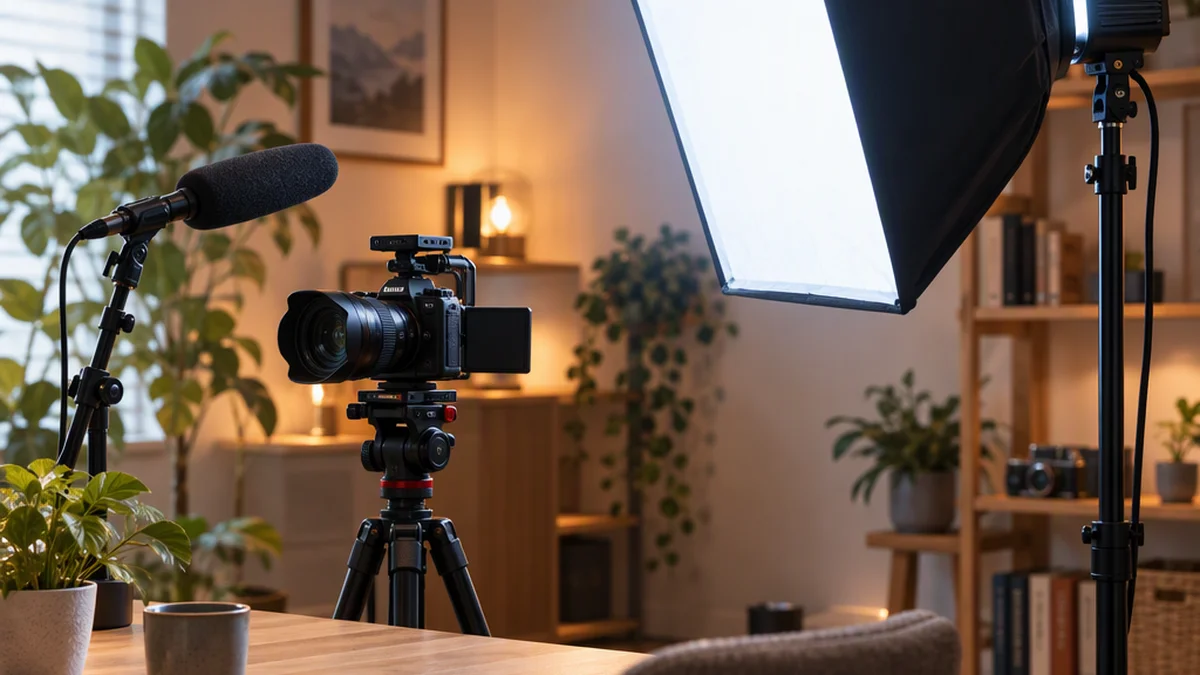
Godox SL100D: Is This Daylight Led Light Right for Your Setup?
The Godox SL100D is worth considering for controlled photography and video setups that suit a fixed 5,600K daylight light. The main buying questions are whether you need adjustable color temperature, whether the light delivers enough output through your chosen modifier, and whether its fan affects recorded speech.
For a fixed home studio, tabletop work, or daylight-balanced talking-head video, it is a candidate to evaluate. If you regularly need to match warm household lamps, a variable-color fixture may be more convenient.
Godox SL100D Features and Purchase Checks
Tuxoche’s “Godox SL100D video light” review, published October 3, 2024, supports the following features and observations. Its hands-on findings are not standardized measurements.
| Feature | What the cited review supports |
|---|---|
| Color temperature | Fixed 5,600K daylight output, rather than bi-color adjustment. |
| Smartphone control | The reviewer reports app control and mentions a Bluetooth indicator. The app name and supported versions are not established here. |
| Lighting effects | The review describes FX controls. |
| Softbox use | The reviewer discusses using a 90 cm softbox, which softens the light while reducing the output reaching the subject. |
| Fan noise | The reviewer heard fan noise around 60–70% output in that setup. |
| Older remote compatibility | The reviewer’s SL60W remote did not work with the SL100D in that setup. |
The available source does not establish rated power, the modifier mount, power requirements, or included equipment. Confirm these details for the exact SL100D unit before purchasing, along with the required app and any remote you intend to use. Do not assume accessories are compatible simply because they share the Godox brand.
Which Setups Suit the SL100D?
| Use case | Why it may fit | Main decision point |
|---|---|---|
| Talking-head video, interviews, or online teaching | A daylight key light can suit a controlled scene. | Sound performance at your working brightness and microphone position. |
| Tabletop photography and product video | A continuous light lets you assess shadows and reflections while arranging the scene. | Usable output after diffusion and the shape of reflections on glossy surfaces. |
| A fixed home studio | Remote adjustment may be useful when the fixture is elevated or difficult to reach. | Space for the stand and modifier, safe cable routing, and control compatibility. |
| Scenes with warm practical lamps | A daylight source can work if you deliberately manage the color difference. | Whether gels or other lighting adjustments create more work than a variable-color fixture would. |
A fixed daylight light is simplest when you can build the scene around it. It is less convenient when you frequently need the fixture itself to shift between warmer and cooler color temperatures.
Evaluate Brightness with Your Intended Modifier
Choose the light-shaping tool before deciding whether the SL100D is bright enough. A softbox, lantern, or diffusion frame changes both the character of the light and the amount reaching the subject.
The Tuxoche review discusses a 90 cm softbox that produces softer illumination while absorbing a substantial amount of light. It does not provide a quantified measurement of the remaining output at a stated distance and exposure setting. That observation therefore cannot establish whether the SL100D will meet every softbox setup’s requirements.
For portraits and talking-head video, a larger diffused source placed close to the subject generally produces softer shadow transitions than a small, distant source. For glossy products, modifier size and placement also determine the shape of visible reflections.
Test—or request a demonstration—with:
- Your intended modifier and diffusion layers.
- The planned light-to-subject distance.
- Your required aperture, shutter speed, and ISO.
- The ambient lighting you expect to use.
A bare-reflector demonstration is not a substitute for evaluating the finished lighting arrangement. Also confirm that the stand can safely support the fixture and modifier in the intended position.
Check Fan Noise at Working Brightness
For spoken video, evaluate sound alongside exposure. The Tuxoche review reports audible fan noise around 60–70% output and describes microphone orientation as affecting how much noise was captured.
That range is an observation from one setup, not a universal noise threshold. Room acoustics, microphone pickup pattern, recording gain, and distance can all change the result.
Before committing to a dialogue setup:
- Place the light and modifier in their working positions.
- Set the brightness needed for your exposure.
- Position the microphone close to the speaker.
- Record speech and a short section of room tone.
- Listen with headphones for fan noise, especially during pauses.
If the brightness you need compromises audio, reconsider the light’s placement, the lighting arrangement, or the fixture choice.
How Useful Are App Control and Lighting Effects?
App control can make adjustments easier when the SL100D is out of reach. It is a convenience rather than a reason to overlook exposure, color-temperature, or audio requirements.
The reported FX controls may be useful for stylized lighting. For straightforward interviews, teaching videos, or product photography, prioritize usable output and light quality over effects.
If you already own a Godox remote, verify its exact compatibility: the reviewer’s experience with an SL60W remote shows that cross-model operation should not be assumed.
Bottom Line
Consider the Godox SL100D if you want a fixed daylight light for a controlled photo or video setup. Its suitability rests on the finished arrangement—not just the fixture alone.
Choose a variable-color option when frequent warm-to-cool adjustment is essential. Before buying the SL100D, confirm its power and mounting requirements, then evaluate output through your intended modifier and sound performance if you record dialogue.