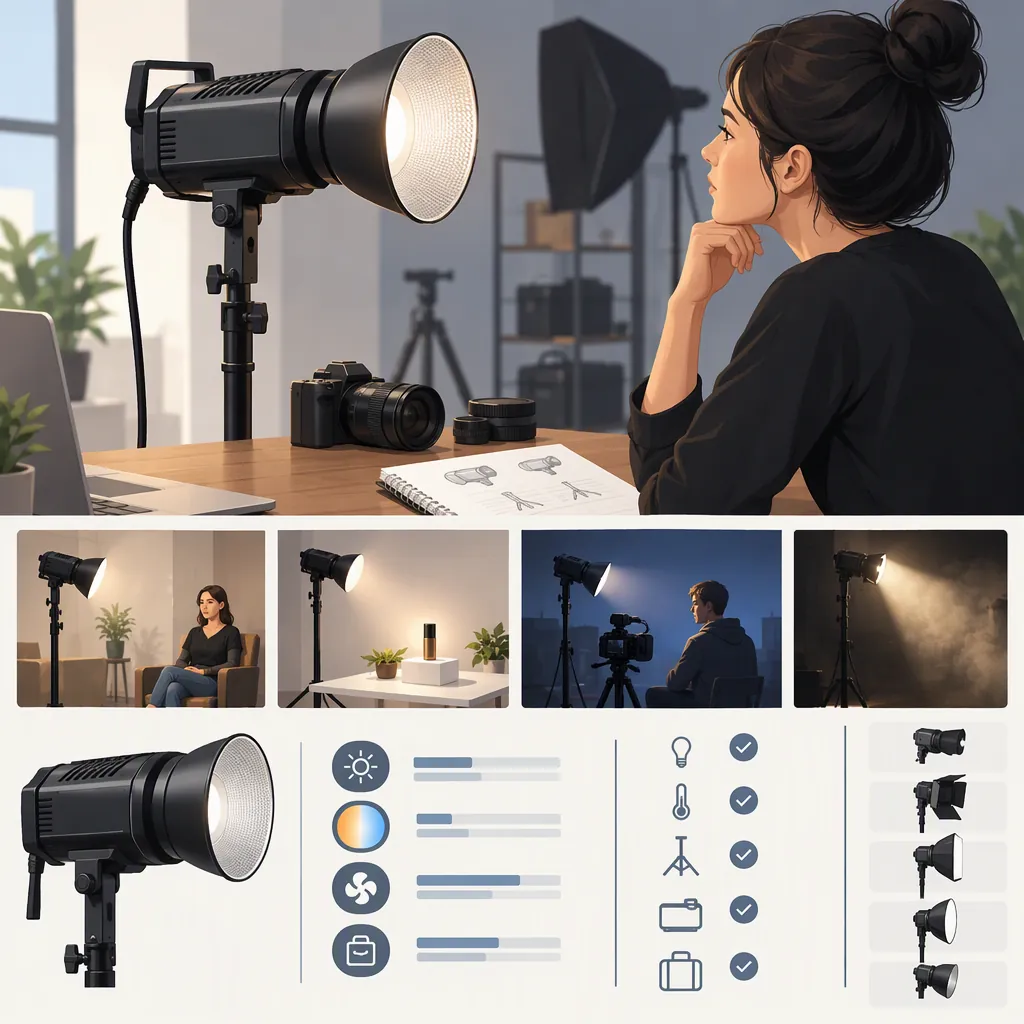
How to Evaluate a Godox 60W Light for Filming
Start with the exact model, not the phrase “Godox 60W light.” The supplied sources distinguish the original SL60W from an SL60IID listing labeled as a 70W upgrade. For filming, evaluate the complete setup: intended modifier, subject distance, camera exposure, microphone placement, and available power. These sources do not establish that either model will meet your particular filming needs. [c1] [c2]
Identify the Exact Model
A search for “godox 60w light” can lead to different model names. The supplied kit listing identifies the original SL60W and lists 60W power. The supplied Amazon listing identifies SL60IID / SL60II-D and lists maximum power as 70W, while also using “SL-60W Upgraded” in its title. Treat those as separate listings rather than interchangeable specifications. [c1] [c2]
Before comparing options, record the model designation and whether the page describes a light body or a kit. Keep specifications attached to that exact model. Do not transfer a review of the original SL60W to a later model simply because both appear in the same search.
Evidence limitation: The supplied materials are two retail listings and a review of the original SL60W. They are not a controlled, side-by-side filming comparison.
Model Identification Worksheet
Record for each candidate:
- Exact model designation:
- Source URL:
- Light body or kit:
- Listed power:
- Listed color-temperature setting or range:
- Included accessories:
- Details that remain unverified:

Keep each model's information in its own record.
Evaluate the Intended Lighting Setup
Use the intended filming setup as the basis for evaluation, rather than choosing from a wattage label alone. The supplied SL60W review demonstrates reflector and umbrella arrangements and reports softer shadows with reduced exposure when using the umbrella. Those examples are specific to the reviewer's setup, not a guaranteed result for every modifier or scene. [c3]
The retail figures also need context. The SL60IID listing specifies its illuminance at one meter with a standard reflector; the SL60W kit listing gives a one-meter illuminance figure without stating the modifier in its specification table. The supplied figures therefore do not establish a like-for-like comparison. [c1] [c2]
For a talking-head video, evaluate the light with the intended softbox or umbrella in the actual framing. For tabletop filming, assess shadows, reflections, and coverage on the objects you plan to record. Treat acceptable exposure and appearance as test criteria, not outcomes promised by the product name.
Exposure and Appearance Test
1. Set the intended frame rate, shutter setting, aperture, ISO, and white balance.
2. Position the subject and intended modifier.
3. Record the light-to-subject distance and brightness setting.
4. Capture a short clip and inspect exposure, shadows, reflections, and background balance.
5. Repeat at the widest framing and longest distance you expect to use.
6. Note whether the result meets your needs without changing your planned camera settings.
Check Audio, Power, and Accessories
Include sound in the evaluation. The original SL60W review describes an internal fan and discusses microphone placement as a way to minimize its contribution to a recording. It does not establish that the fan will be inaudible with your microphone, gain setting, or room. [c3]
Record speech and room tone with the actual microphone arrangement. If possible, repeat after the light has been running for the duration of a typical take. Listen at the level you would use when editing dialogue; do not judge recording noise only by standing beside the fixture.
Both supplied retail specification tables list AC power input. Confirm power requirements for the exact unit rather than assuming a portable battery arrangement. [c1] [c2]
For accessories, check the actual bundle contents and modifier compatibility. The SL60W review describes a Bowens S-type modifier mount, but that is not a blanket assurance about every accessory's clearance, weight, or installation. [c3]
Filming Readiness Checklist
- Confirm the exact unit's power requirements and intended power source.
- Verify which stand, modifier, remote, and cables are included.
- Check the modifier's fit and the stand's suitability using their documentation.
- Follow equipment instructions for mounting and cable routing.
- Record dialogue and room tone with the planned microphone position.
- Log any noise or handling issue that would interrupt a take.
Make a Conditional Decision
A useful selection conclusion is conditional: the exact model is suitable for your planned setup only if it meets your exposure, appearance, sound, power, and handling requirements.
If a setup falls short, identify the constraint before comparing another fixture. Is the problem exposure through the chosen modifier, coverage across the frame, recorded noise, or power access? This makes the comparison more useful than a general judgment that a “60W light” is sufficient or insufficient.
What remains unknown: The supplied sources do not establish a controlled comparison between the original SL60W and SL60IID, universal fan-noise performance, flicker behavior across your camera settings, or long-term reliability. The SL60W reviewer explicitly says the review cannot establish long-term reliability. [c3]
Decision Record
Exact model:
Intended filming scenario:
Exposure and appearance: pass / fail / untested
Recorded audio: pass / fail / untested
Power and mounting: pass / fail / unverified
Specific unresolved issue:

Conclusion: suitable for this tested setup / unsuitable for this tested setup / insufficient evidence.
FAQ
Are the Sl60w and SL60IID the Same Model?
The supplied sources identify them separately. The SL60W kit listing lists 60W power; the SL60IID / SL60II-D listing lists maximum power as 70W and uses upgrade wording. Do not treat their specifications as interchangeable. [c1] [c2]
Is a Godox 60W Light Enough for Talking-Head Video?
The supplied review includes an SL60W softbox setup used for video, but that example does not establish suitability for every room or camera configuration. Evaluate exposure and appearance with your intended modifier, subject distance, framing, and camera settings. [c3]
Can the Original Sl60w Be Assumed Silent?
No. The supplied review describes an internal fan and suggests that light and microphone placement can minimize its contribution. Verify the recorded result with your own microphone configuration rather than assuming silence. [c3]