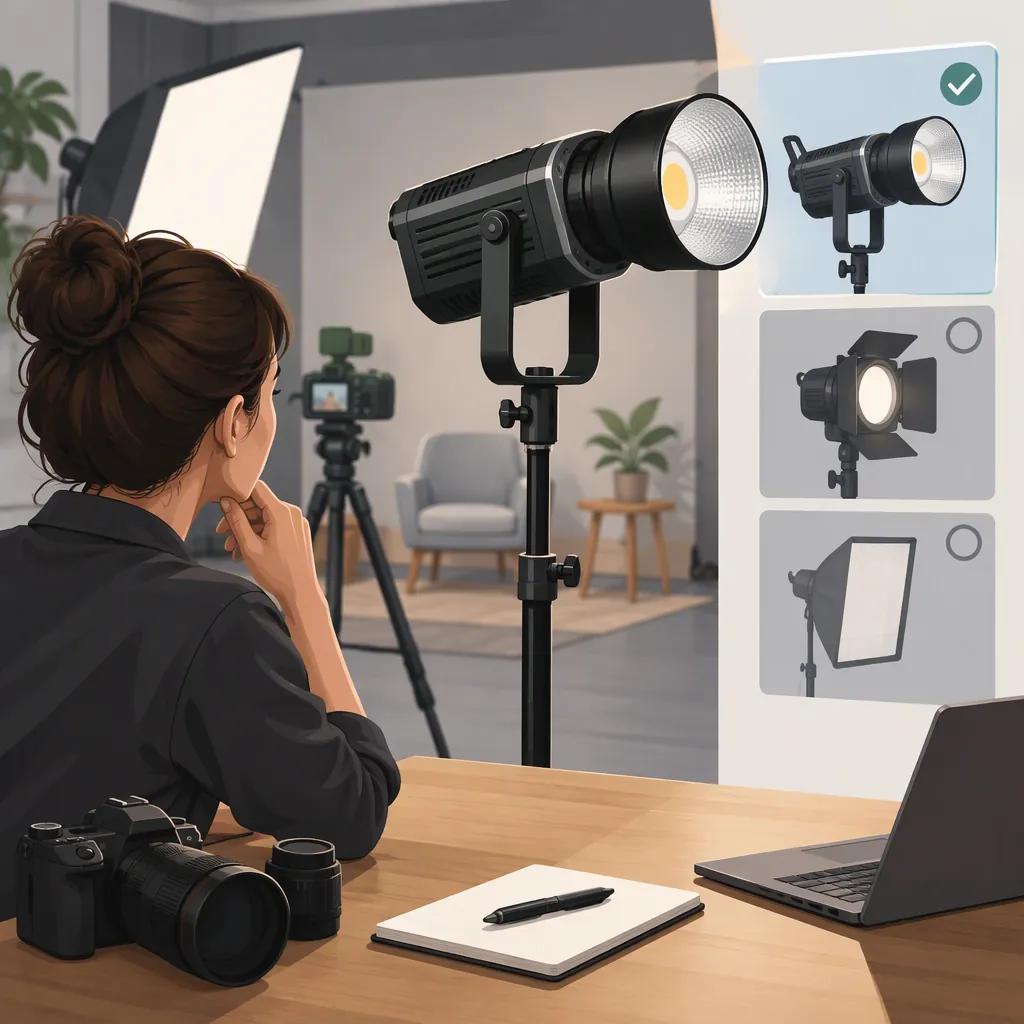
Godox 150W Ii: Choosing a Light for Filming
To choose a filming light described as “godox 150w ii,” confirm the complete model first, then evaluate it against your intended shot. The available references contain an SL150 II Bi-Color retailer listing, a VL200 II marketplace listing that also includes VL150II entries, and official SLIII-series documentation. These names help with identification, but they do not establish which fixture the shorthand means or support an exact-model performance recommendation. [c1] [c2] [c3]
The selection rule is simple: choose for the tested setup only when every essential requirement passes. A documented mounting or power match is useful, but it is not proof of suitable exposure, color, or recorded sound.
Resolve the Model Name First
Check the series, generation, and any color-version suffix separately. Do not treat “150,” “II,” or a wattage description as a complete identifier.
| Name in the reference | Where it appears | What to check |
|---|---|---|
| SL150 II Bi-Color | Mac Star’s product title. [c1] | Whether the fixture label matches the SL series, II generation, and Bi-Color designation. |
| VL200 II | The Amazon page’s main product title and product information. [c2] | Whether you are reading the main listing rather than a different model’s entry. |
| VL150II | A set-name option and a column in the Amazon comparison table. [c2] | Whether the fixture is actually labeled VL150II; its presence on this page does not identify your search object. |
| SLIII variants | Godox’s official SLIII page and its III-generation manual listings. [c3] | Whether the fixture is III generation rather than II generation. |
Use these names as a short identification path:
- Read the fixture label. Record the full name, not just the number.
- Locate that exact name in documentation. On a marketplace page, distinguish the main product from options and comparison entries.
- Match the manual. Confirm series, generation, suffix, and revision before using specifications or operating instructions.
- Leave discrepancies unresolved until clarified. Do not fill a missing specification with information from a similarly named model.
Model Identification Record
- Full name on fixture label: ______
- Series and generation: ______
- Color-version suffix, if present: ______
- Matching manual title and revision: ______
- Included power components: ______
- Included modifier and mounting parts: ______
- Differences between label, listing, and manual: ______
Evidence boundary: The supplied references do not include a matching manufacturer manual for a confirmed fixture identified by “godox 150w ii,” or a controlled filming comparison of the candidates. This article therefore provides a selection method—not a specification sheet, performance verdict, or model ranking. [c1] [c2] [c3]
Define What the Light Must Do
Write a production brief before comparing candidates. Separate fixed requirements from conditions you are willing to change.
For an interview, define the facial detail, background appearance, and dialogue quality you need. For a tabletop shot, identify the product texture, reflections, and highlights that must remain visible. For a wider shot, specify the full area that must receive usable illumination.
Shot Requirements Brief
- Scene, subject, and framing: ______
- Required illuminated area: ______
- Planned light position and distance: ______
- Ambient light to retain or exclude: ______
- Frame rate, shutter, aperture, and ISO: ______
- White balance and recording profile: ______
- Modifier: ______
- Microphone position and recording level: ______
- Required take length: ______
- Image details that must remain visible: ______
- Audio defects that would make the take unusable: ______
- Permitted mounting and power arrangements: ______
- Adjustments allowed during evaluation: ______
Avoid vague criteria such as “bright enough” or “good color.” Instead, identify something reviewable: visible texture on a product label, retained detail in a cheek highlight, or dialogue without distracting equipment noise at a fixed playback volume. These are shot-specific criteria, not universal thresholds.
Test and Record the Complete Setup
If an evaluation unit is available, use the planned modifier, subject position, ambient light, and microphone arrangement. Record the settings and keep them consistent between candidates. Follow the exact model’s manual for operating limits, clearances, and cooling controls.
Use one set of statuses for every individual check:
- Pass: The check was completed and met the stated requirement under recorded conditions.
- Fail: The check was completed and did not meet the stated requirement.
- Not verified: The check was not performed, or the available evidence was insufficient or inconclusive. Record which reason applies.
A documentation check can pass while a filming-performance check remains not verified.
Requirements, Methods, and Results
Copy this table for each candidate. Add the exact model, manual revision, test date, and setup description above it.
| Requirement | Check method | Record for later review | Result |
|---|---|---|---|
| Confirmed identity | Match fixture label to the exact manual. | Full name, manual revision, and discrepancies. | ______ |
| Required exposure and detail | Inspect recorded footage at the planned settings. If available, use a waveform to help identify clipping and compare exposure consistently. | Settings, modifier, distance, output setting, and whether named details remain visible. | ______ |
| Suitable shadows and coverage | Review the entire intended frame, including reflective surfaces and the edges of the required area. | Areas inspected, missing detail, unwanted reflections, or uneven coverage. | ______ |
| Acceptable color appearance | Include a neutral or familiar reference object; compare recordings with white balance and viewing conditions held consistent. | Reference used, other scene lights, and observed color differences. | ______ |
| No unacceptable pulsing or banding | Record and review each required frame-rate and shutter combination. | Combinations tested and any visible artifacts. | ______ |
| Usable dialogue | Record speech and room tone at normal levels; listen before noise reduction at a fixed playback volume. | Microphone placement, recording level, playback conditions, and audible defects. | ______ |
| Required take duration | Run a representative take within documented operating limits. | Duration, operating mode, and any changes in image, sound, or operation. | ______ |
| Documented mounting and power fit | Check exact fixture and accessory documentation for the complete assembly. | Mounting hardware, stand rating, power components, clearances, and unresolved conditions. | ______ |
Split a row if it contains several essential conditions. For example, a pass at one shutter setting should not conceal an untested setting required for another shot.
If a requirement fails, change only permitted conditions and record the adjustment. Retest affected checks: moving the light might alter exposure, shadows, reflections, or microphone proximity. A revised arrangement is a new setup, not an automatic pass.
Hypothetical Filled-In Test Record
Illustration only: The following is a fictional record for an unspecified candidate. It is not a test of a Godox model and does not establish product performance.
Brief: Seated interview; 24 fps, 1/48-second shutter, f/4, ISO 800, fixed 5600K white balance and recording profile. Softbox positioned 1.2 meters from the subject at approximately 45 degrees. Microphone initially 50 centimeters from the mouth. Required take: 10 minutes. Camera settings and framing are fixed; light output and microphone placement may change within documented limits.
| Check | Hypothetical observation | Status |
|---|---|---|
| Exposure and detail, first recording | At the recorded output setting, the cheek highlight loses the texture required by the brief; waveform review also indicates clipping there. | Fail |
| Exposure and detail, permitted adjustment | Output reduced and its new setting recorded. Cheek texture and required eye detail remain visible in the repeat recording. | Pass |
| Color appearance | A neutral card is included. With the same white balance and viewing conditions, its appearance meets the brief’s reference comparison. This is not a color-accuracy measurement. | Pass |
| Dialogue, first recording | Equipment noise is distracting during pauses at the fixed playback volume. | Fail |
| Dialogue, permitted adjustment | Microphone moved to 30 centimeters; normal recording level recorded again. Speech and room tone meet the brief’s noise requirement on repeat review. | Pass |
| Required take duration | No full 10-minute recording completed. | Not verified |
Candidate conclusion: Not yet verified. The adjusted image and dialogue checks pass in this hypothetical record, but duration and any other missing essential checks still require evidence.
If You Cannot Test a Unit
Use documentation to narrow the choice without turning a paper match into a performance verdict.
- Confirm the exact model and manual. If identity remains unresolved, do not assign specifications.
- Screen the complete assembly. Check modifier connections and adapters, stand rating, mounting hardware, operating clearances, power components, and cable arrangement.
- Check location constraints. Establish the permitted power arrangement and required duration. Do not treat a battery-related marketplace field alone as proof of usable runtime or compatibility.
- Separate documented facts from scene-dependent questions. Keep exposure, color appearance, artifacts, dialogue noise, and sustained filming performance marked not verified unless adequate evidence addresses the intended conditions.
Use these overall candidate statuses:
| Candidate status | Meaning |
|---|---|
| Documented fit; filming performance not verified | Relevant installation and power checks pass, but essential filming checks remain unresolved. |
| Documented mismatch | Documentation shows a conflict with an essential fixed requirement. |
| Identity or documentation unresolved | The exact model or necessary operating documentation cannot be confirmed. |
Include handling in the practical assessment: control access, working space, setup components, cables, and transport arrangements. These considerations can distinguish otherwise suitable candidates, but they should not override an essential installation, image, or audio failure.
Make the Final Selection
- Suitable for the tested setup: Every essential requirement passes under the recorded conditions.
- Unsuitable for the tested setup: An essential requirement fails and no permitted adjustment resolves it.
- Not yet verified: An essential check remains inconclusive or incomplete.
A failed setup does not prove that a fixture is unsuitable for every production. Likewise, a successful interview test does not establish suitability for a wider scene, different modifier, or different camera settings.
FAQ
Which Model Does “Godox 150W Ii” Mean?
The supplied evidence does not resolve the shorthand. The SL150 II Bi-Color retailer title and the VL150II entries within the primarily VL200 II marketplace page provide names to check against the fixture label—not a definitive identification. [c1] [c2]
Is It Enough for Interview Filming?
No exact-model interview verdict is established by these references. [c1] [c2] [c3] Evaluate the intended image and recorded dialogue through the required take length. Keep the choice conditional on that setup.
Does the Vl150ii Entry Confirm That the Amazon Page Documents My Light?
No. VL150II appears as an option and comparison entry, while the main product is VL200 II. Match the fixture label and exact manual before attributing any listing information to your unit. [c2]
Can Sliii Specifications Be Used for an Ii-Generation Light?
Not without matching documentation. The referenced official SLIII page lists III-generation manuals; it does not verify specifications for an II-generation fixture identified only by this search phrase. [c3]
Can I Narrow the Choice Without a Test?
Yes—screen exact-model documentation for mounting, power, and operating constraints. Keep filming performance separate. The supplied references do not offer a controlled same-setup comparison that establishes a winner for the unconfirmed model. [c1] [c2] [c3]