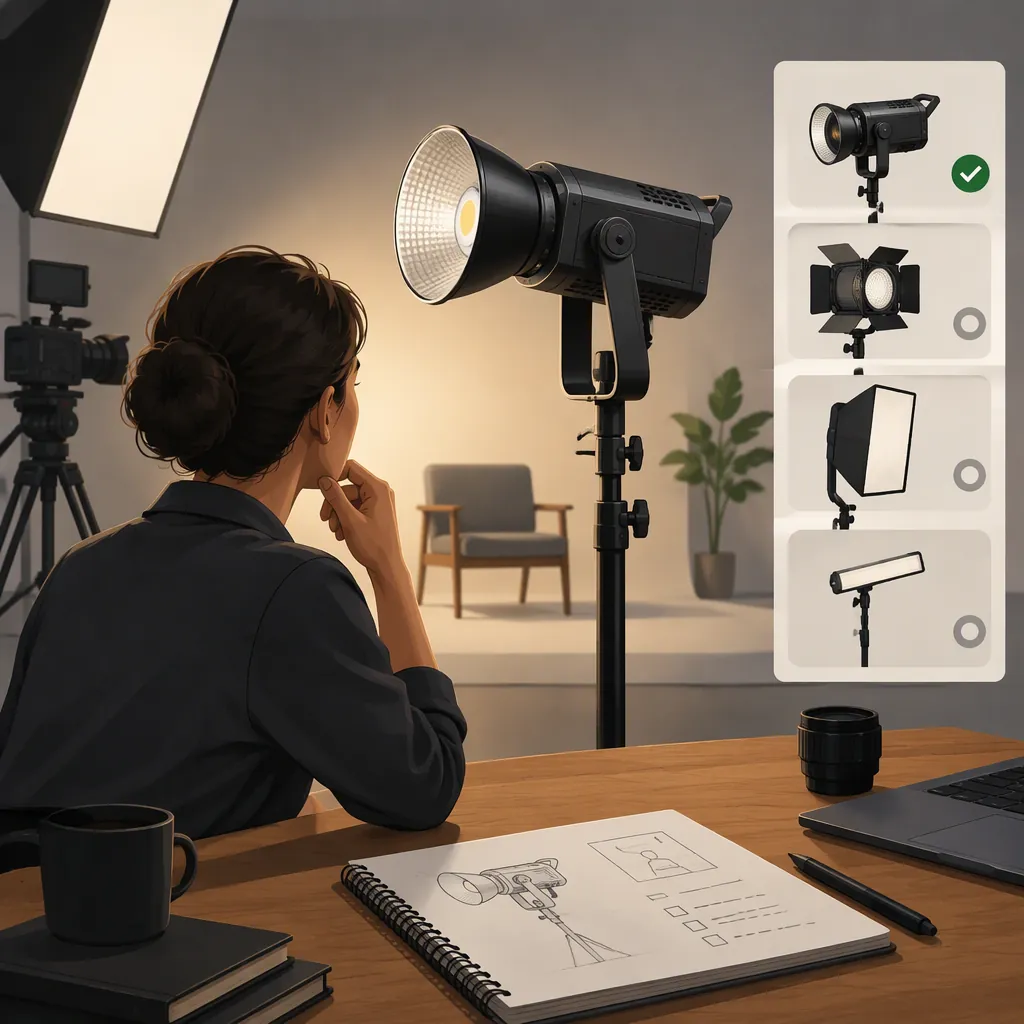
Godox 150 Ii: Choosing a Light for Filming
Confirm the full model name before assessing “godox 150 ii” for filming. The two sources cited here identify an SL150 II Bi-Color LED Video Light and an ML 150II Flash—not interchangeable equipment. The video-light listing is more directly relevant to filming, but neither source establishes a tested performance winner. [c1] [c2]
Once the model is confirmed, verify that it supports the continuous lighting your shot requires. Then assess the complete setup for exposure, recorded sound, color, image artifacts, modifier compatibility, support, and power. If documentation or testing is unavailable, keep suitability unresolved rather than assuming a pass.
Identify the Exact Model
The shared “150 II” wording is not enough to identify the equipment. Keep every prefix, suffix, and version number when checking the label and documentation.
| Model named by the source | Source context | What it establishes for this decision |
|---|---|---|
| Godox SL150 II Bi-Color LED Video Light | Mac Star retailer listing | The listing explicitly identifies a video light; it is not a controlled filming test. [c1] |
| Godox ML 150II Flash | Terry Livesey review discussing photographs taken with the flash | The review provides a flash-photography context, not evidence of sustained lighting performance for moving-image recording. [c2] |
If the equipment label and listing disagree, leave the identity unresolved. Do not transfer specifications or accessory assumptions from a similarly named model.
Model Identification Worksheet
- Exact model on equipment label: ______
- Exact model in documentation: ______
- Do the complete names match? ______
- Intended use: moving-image lighting / still photography / both
- Continuous lighting for the intended recording documented? yes / no / unresolved
- Unresolved identity or operating questions: ______
Follow a Clear Selection Path
Use this sequence to connect model identification to a filming decision:
- Confirm the complete designation. If it remains uncertain, resolve that before comparing capabilities.
- Check the required lighting mode. For a shot requiring continuous illumination, verify that the exact model supports that use and check its documented operating requirements. The SL150 II source identifies a video light; the ML 150II review alone does not resolve continuous-light suitability. [c1] [c2]
- Verify the planned configuration. Check the modifier interface, support requirements, power supply, and any operating restrictions in documentation for that model.
- Test the intended shot if equipment is available. Use the camera settings, subject distance, ambient lighting, and microphone placement you expect to use during recording.
- Keep unverified requirements open. If you cannot test the equipment, distinguish documented compatibility from untested exposure, sound, color, and artifact performance.
If you have not obtained access to the equipment, use the following questions to guide a documentation check or an inquiry to the equipment provider:
- What is the complete model designation?
- Does it support continuous illumination for the intended recording conditions?
- What operating, cooling, clearance, and power requirements apply?
- Is the planned modifier compatible, and what support does the assembled setup require?
- Is test footage or a recording available with the camera settings and microphone arrangement you intend to use?
A missing answer is an unresolved requirement, not evidence that the setup will work.
Evaluate the Complete Filming Setup
The following is a proposed evaluation procedure, not a claim about either model’s capabilities. Set shot-specific acceptance criteria before testing; there is no universal numerical threshold established by the two sources.
| Check | Test procedure | Decision rule for the intended shot |
|---|---|---|
| Exposure | Fix the required framing, subject distance, modifier, shutter, aperture, and ISO. Check against your chosen exposure target. | If the target cannot be reached without changing a required setting, mark the current configuration as failed. Adjust the lighting arrangement if feasible, then retest. |
| Sound | Record room tone and dialogue with the microphone in its intended position, with the light operating and switched off. | If the operating recording contains unacceptable noise attributable to the light, adjust placement within documented operating requirements and retest. If the problem remains, mark that arrangement as failed for the recording. |
| Color | Use fixed white balance and a neutral reference. Review the subject with the practical lights or daylight you intend to retain. | If the result does not meet the shot’s chosen color or matching requirement, adjust the setup and retest. Do not treat an advertised color specification as proof that the combination will pass. |
| Image artifacts | Record at every planned frame-rate and shutter combination. Inspect footage for visible banding or brightness variation. | A combination showing unacceptable artifacts fails. If you change settings to address them, verify that the new settings still meet the shot requirements and repeat the test. |
| Modifiers and support | Verify the exact accessory interface, modifier compatibility, and support requirements in the relevant documentation. Assess the assembled setup. | If compatibility or support requirements cannot be verified, mark the setup unresolved rather than passing it. |
| Power and placement | Check documented power, clearance, and operating requirements. Plan cable routing and placement. | If the location cannot meet those requirements, mark the current arrangement as failed. If documentation is missing, mark it unresolved. |
A successful test applies to the conditions recorded. Repeat the relevant checks when camera settings, modifiers, distances, microphone placement, or ambient lighting change.
Filming Test Record
- Exact model: ______
- Shot and subject distance: ______
- Modifier and support: ______
- Camera, frame rate, shutter, aperture, and ISO: ______
- White balance and ambient lighting: ______
- Microphone position: ______
- Chosen exposure, audio, color, and artifact acceptance criteria: ______
- Exposure: pass / fail / unresolved — observation: ______
- Audio: pass / fail / unresolved — observation: ______
- Color: pass / fail / unresolved — observation: ______
- Image artifacts: pass / fail / unresolved — observation: ______
- Modifier and support requirements: verified / not met / unresolved
- Power and placement requirements: verified / not met / unresolved
- Adjustments made and retest results: ______
- Decision for this setup: suitable / unsuitable / further verification needed
Treat the setup as suitable for the recorded shot only when all required checks pass and documented operating requirements are met. A failed requirement makes the current configuration unsuitable; an unresolved requirement calls for further verification.
Understand the Evidence Limits
The evidence cited here consists of a retailer’s video-light listing and a photographer’s flash review. The review discloses receipt of kit for review and the use of some affiliate links. These disclosures describe that source’s context; they do not establish this article’s relationship with either publisher. [c1] [c2]
Neither cited text provides a controlled filming comparison between the two named products. They do not establish comparative usable output, recorded noise, or image-artifact performance under a shared test setup. [c1] [c2] This guide therefore does not rank the models, present advertised specifications as verified test results, or claim firsthand use.
The selection outcome should be specific: suitable for the tested shot, unsuitable in the current configuration, or awaiting verification—not a general declaration that a model is best.
FAQ
Does “Godox 150 Ii” Identify One Specific Light?
Not reliably in the two sources cited here. They name an SL150 II Bi-Color LED Video Light and an ML 150II Flash. Check the complete equipment designation before applying information from either source. [c1] [c2]
Does the Ml 150Ii Review Prove It Is Suitable for Filming?
No. The cited review discusses a flash and photographs taken with it. That evidence does not establish sustained illumination for moving-image recording. Verify the exact model’s relevant capabilities separately rather than inferring them from the name. [c2]
What Should I Do If a Filming Test Fails?
Identify the failed requirement, make a feasible adjustment within documented operating requirements, and repeat the affected checks. If exposure still requires changing essential camera settings, noise remains unacceptable, or required frame-rate and shutter combinations show unacceptable artifacts, reject the current configuration for that shot. The cited sources do not provide a tested alternative or comparative winner. [c1] [c2]
What If I Cannot Test the Light Before Deciding?
Record what the exact-model documentation confirms and what remains untested. Verify continuous-light operation, modifier and support compatibility, power, and operating restrictions. Leave exposure, recorded sound, color matching, and artifact performance unresolved where relevant evidence is unavailable; the listing and flash review do not provide a controlled filming comparison. [c1] [c2]
Is the Sl150 Ii the Better Filming Choice?
Its cited listing is more directly relevant because it explicitly identifies a video light. That is a source-relevance judgment, not proof that it meets your shot requirements or outperforms another model. Use the verification and test process above to reach a setup-specific decision. [c1] [c2]