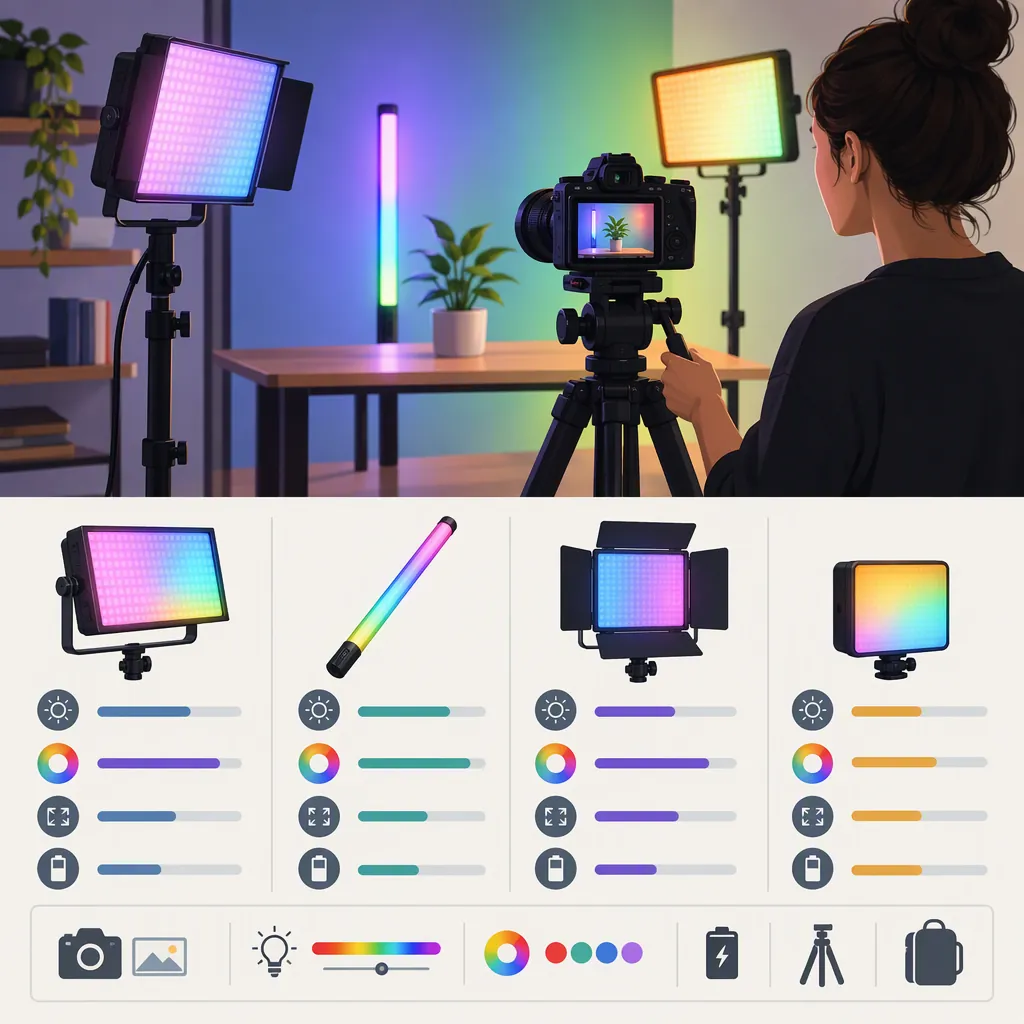
How to Evaluate a Digipower RGB Light for Filming
Start by identifying the exact Digipower RGB light, then check whether its documented output, color controls, power options, and mounting arrangement meet your filming needs. The provided sources identify a 135 Led Rgb Video Light and list a Spectrum RGB 96 LED Video Light, but they do not supply enough technical detail to recommend one over the other. Treat them as candidates to evaluate, not as verified matches for a particular setup. [c1] [c2]
Identify the Exact Model
A search for “digipower rgb light” does not identify just one listing. The provided Compact LED Video Lights collection includes both 135 Led Rgb Video Light and Spectrum RGB 96 LED Video Light. The separate 135-light product page identifies its SKU as DP-VL-RGB135. [c1] [c2]
Use the full model name and, where available, the SKU when comparing documentation. Do not treat specifications found for one model as specifications for another.
This guide uses only the supplied public page text. It does not include hands-on testing, a technical manual, or an independent comparison.
Define the Light’s Role Before Comparing
Write down what the light must do before judging a listing. A useful brief separates subject lighting from a colored background or accent and records the intended light-to-subject distance.
For a talking-head setup, prioritize questions about usable white-light settings, adjustment controls, and how the light will be positioned. For a colored accent, prioritize questions about hue selection, saturation adjustment, and the appearance you want in the recorded frame. For a portable setup, add power, dimensions, and mounting requirements.
These are evaluation priorities, not confirmed capabilities of either listed Digipower model. The supplied excerpts do not establish those capabilities. [c1] [c2]
Filming Requirements Worksheet
- Intended role: subject light, background accent, or another defined use.
- Recording setup: camera or phone, lens, frame rate, and shutter setting.
- Placement: planned distance, available space, and mounting location.
- Desired look: white-light illumination, colored accent, or both.
- Session needs: recording duration and available power source.
- Decision rule: identify which requirements are essential and mark missing evidence as unverified.
Separate Listing Information from Missing Evidence
The supplied pages establish listing identities, not a technical performance comparison. Neither excerpt provides measured light output at a stated distance, color-accuracy measurements, battery runtime, a mounting specification, or flicker test results. [c1] [c2]
Use the following checks to organize any additional documentation you obtain:
| Evaluation Area | Evidence to Look For | Current Evidence Status |
|---|---|---|
| Output | Measurement with distance, mode, and brightness setting stated | Not supplied |
| White-light control | Supported settings and adjustment range | Not supplied |
| RGB control | Available hue, saturation, and brightness adjustments | Not supplied |
| Recording behavior | Test conditions matching your recording settings | Not supplied |
| Power | Power source, runtime conditions, and operation while connected | Not supplied |
| Mounting | Interface, dimensions, weight, and required accessories | Not supplied |
Do not use the numbers in the product names as a substitute for measured output. For this comparison, leave performance rankings unresolved until comparable evidence is available.
Use a Controlled Recording Check
If a sample light is available, evaluate it in the intended filming arrangement rather than relying only on its appearance in person. Keep the camera position, exposure, white balance, light distance, and ambient lighting consistent when comparing candidates.
Record the settings alongside each clip. Review whether the subject has the intended exposure and appearance, whether colored accents stay where you want them, and whether the footage shows unwanted brightness variation. Repeat the check at the frame rate and shutter setting planned for production.
This is a proposed evaluation procedure, not a report of testing either Digipower light. Without comparable documentation or recordings, the evidence supports an evaluation checklist rather than a model winner.
Recording Comparison Log
Model and SKU:
Intended lighting role:
Light mode and brightness setting:
Light-to-subject distance:
Camera, frame rate, and shutter setting:
Exposure and white balance:
Ambient lighting conditions:
Power arrangement:
Clip identifier:
Observed result:
Unverified requirements:
Decision: suitable for the tested setup, unsuitable, or unresolved.
FAQ
Which Digipower RGB Lights Appear in the Provided Sources?
The collection excerpt lists 135 Led Rgb Video Light and Spectrum RGB 96 LED Video Light. A separate product excerpt identifies the 135 model with SKU DP-VL-RGB135. [c1] [c2]
Is the 135 Model Brighter than the Spectrum RGB 96 Model?
That comparison is unresolved. The supplied excerpts do not provide comparable measured output, so this guide does not rank their brightness based on the numbers in their names. [c1] [c2]
Can a Listed Digipower RGB Light Serve as My Main Filming Light?
The supplied evidence is insufficient to confirm that use. Define the required distance, framing, exposure, and recording duration, then seek matching specifications or evaluate a sample under those conditions. The excerpts do not establish usable output or runtime for your setup. [c1] [c2]