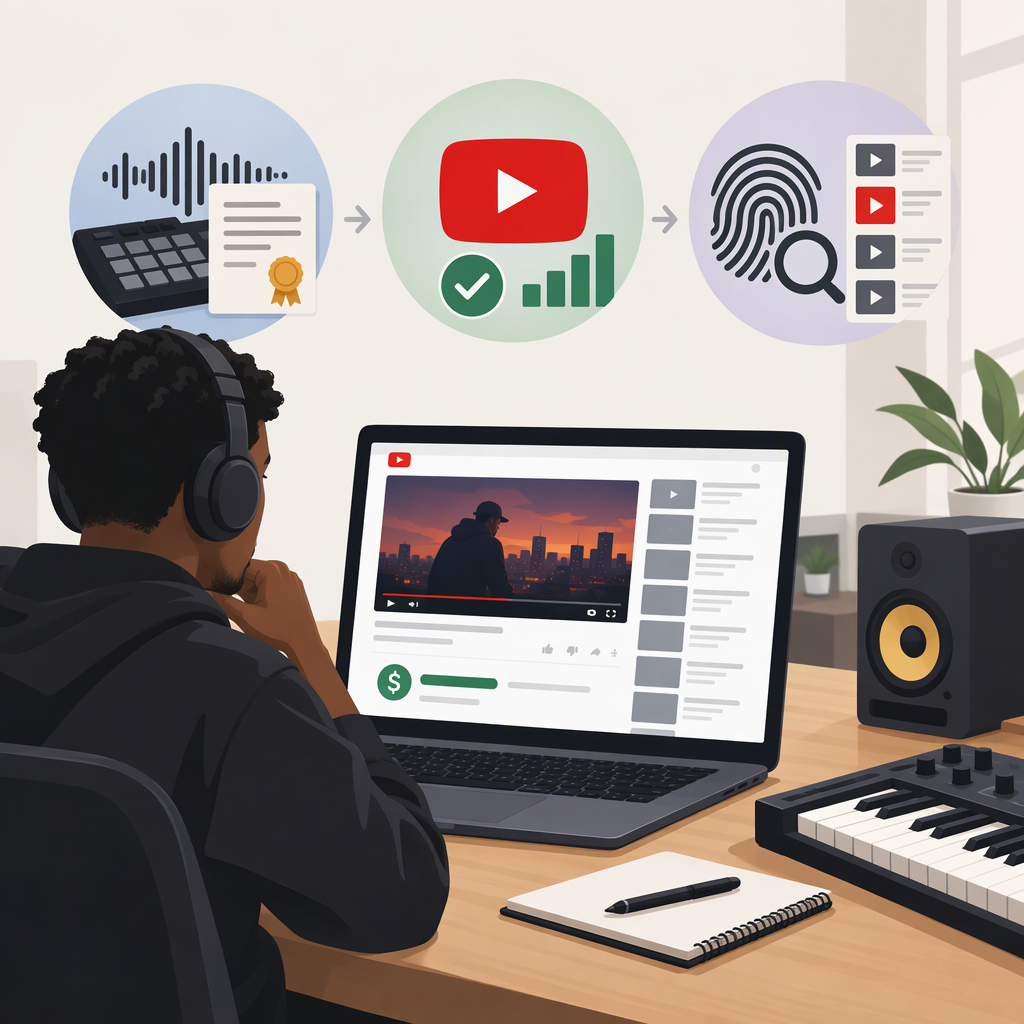
Airbit YouTube Monetization: What Creators and Beat Sellers Need to Know
“Airbit YouTube monetization” can mean two different things: a video creator wants to earn from a YouTube video that uses a beat found or licensed through Airbit, or a producer wants to earn by selling or licensing beats to YouTube creators. A third, related route is a producer using Content ID to manage and potentially monetize uses of their music. These are separate revenue paths; none guarantees income or an approved, claim-free video.
If you’re uploading a video, check the license for that exact beat and YouTube’s separate monetization requirements. If you’re selling beats, check the rights and conditions in the license buyers will receive. Airbit describes its service as a place where sellers offer beat licenses and buyers obtain them, so a listing or purchase alone is not enough to establish what a particular license permits. (airbit.com)
If Your YouTube Video Uses an Airbit-Associated Beat
Before uploading—or before relying on expected video income—check these three things:
- The specific beat license: Does the agreement for this beat allow your intended use in a YouTube video and the kind of monetization you plan? Check any stated limits, such as attribution, distribution, usage caps, or restrictions on Content ID. Save the license and proof of purchase or permission. Airbit’s help materials refer to non-exclusive and exclusive licenses and include guidance about custom licenses; the actual agreement attached to your transaction is the place to confirm your rights. (help.airbit.com)
- Your channel’s YouTube eligibility: Permission to use music does not make a channel eligible for YouTube ad revenue. YouTube’s listed threshold for ad-revenue access through the YouTube Partner Program is 1,000 subscribers plus either 4,000 qualified public watch hours in the past 12 months or 10 million qualified Shorts views in the past 90 days. Other requirements and a channel review apply; meeting the threshold does not guarantee acceptance. (support.google.com)
- The video’s own monetization and rights status: YouTube says Content ID claims can lead to a video being blocked, tracked, or monetized by the claimant; effects can vary by region. A claim is different from a copyright removal request or strike, and usually affects the video rather than the channel. So, a license and a claim are not the same thing: a claim does not by itself establish whether your use is authorized, and a license does not guarantee that an automated claim will never appear. (support.google.com)
YouTube’s channel monetization policies are another separate check: YouTube reviews whether content is original and authentic, among other requirements. Having permission to use a beat does not, by itself, settle whether a channel or video meets those policies. (support.google.com)
Illustrative example: You license a beat and plan to release an original song over it. Before publishing, confirm that the written license covers that use and monetization; keep the agreement; then check your channel’s YPP status and YouTube Studio for any claim or restriction. This example describes a verification process, not a guarantee that the video will earn revenue or avoid a claim.
If a Content Id Claim Appears
Open the video’s copyright details in YouTube Studio and compare the claim with your agreement. YouTube lists having the necessary rights as one valid reason to dispute a Content ID claim. Dispute only if, after checking the facts and license, you believe you have a valid basis; the platform’s process decides the outcome. (support.google.com)
Revenue can be held while a dispute is reviewed. YouTube says that if you dispute within five days of the claim, revenue is held starting from the claim date; if you dispute later, it is held starting from the dispute date. This is a revenue-handling rule during the process, not a promise about who will ultimately receive the money. (support.google.com)
If You Sell Beats for YouTube Creators
Airbit’s terms describe sellers as users who sell or grant licenses to beats and buyers as users who purchase or obtain those licenses. A beat seller’s income from a license sale is therefore distinct from YouTube ad revenue paid to a video creator. (airbit.com)
Before listing a beat—or describing it as suitable for monetized YouTube use—verify the buyer-facing agreement. Make sure its permissions and conditions match what you intend to offer, and check whether it addresses YouTube Content ID or claim handling. Don’t assume every beat or license has identical terms.
Airbit also publishes separate guidance about submitting beats to YouTube Content ID and about videos that may be monetized. That is a rights-management route for music owners, not a substitute for a buyer’s license or a creator’s YPP eligibility. Airbit’s own guide identifies original, artist-created songs using a beat as an example of content that may be monetized; YouTube’s policies still govern channel and video eligibility. (help.airbit.com)
Quick Check Before Uploading or Listing
For a video creator:
- Find the agreement for the exact beat and confirm it covers your intended video and monetization use.
- Note any conditions, including attribution or Content ID-related instructions, if the agreement states them.
- Keep the license and purchase or permission records.
- Check YPP eligibility and the video’s copyright details separately in YouTube Studio.
- If a claim appears, review it against your documents before deciding how to respond.
For a beat seller:
- Review the actual buyer-facing license and any custom terms before describing permitted uses.
- Check how the agreement treats monetized videos and Content ID-related claims.
- Keep license-sale income distinct from YouTube revenue or any separate Content ID earnings.
Bottom line: Airbit can be part of a beat licensing or Content ID workflow, but the route depends on whether you are the video creator or the beat seller. For creators, the specific license, YouTube eligibility, and any claim are separate checks. For sellers, the rights in the buyer-facing agreement matter. Verify each against the actual documents and current platform guidance rather than assuming that a beat purchase guarantees monetization.