How to Contact Brands with a Clear Collaboration Pitch
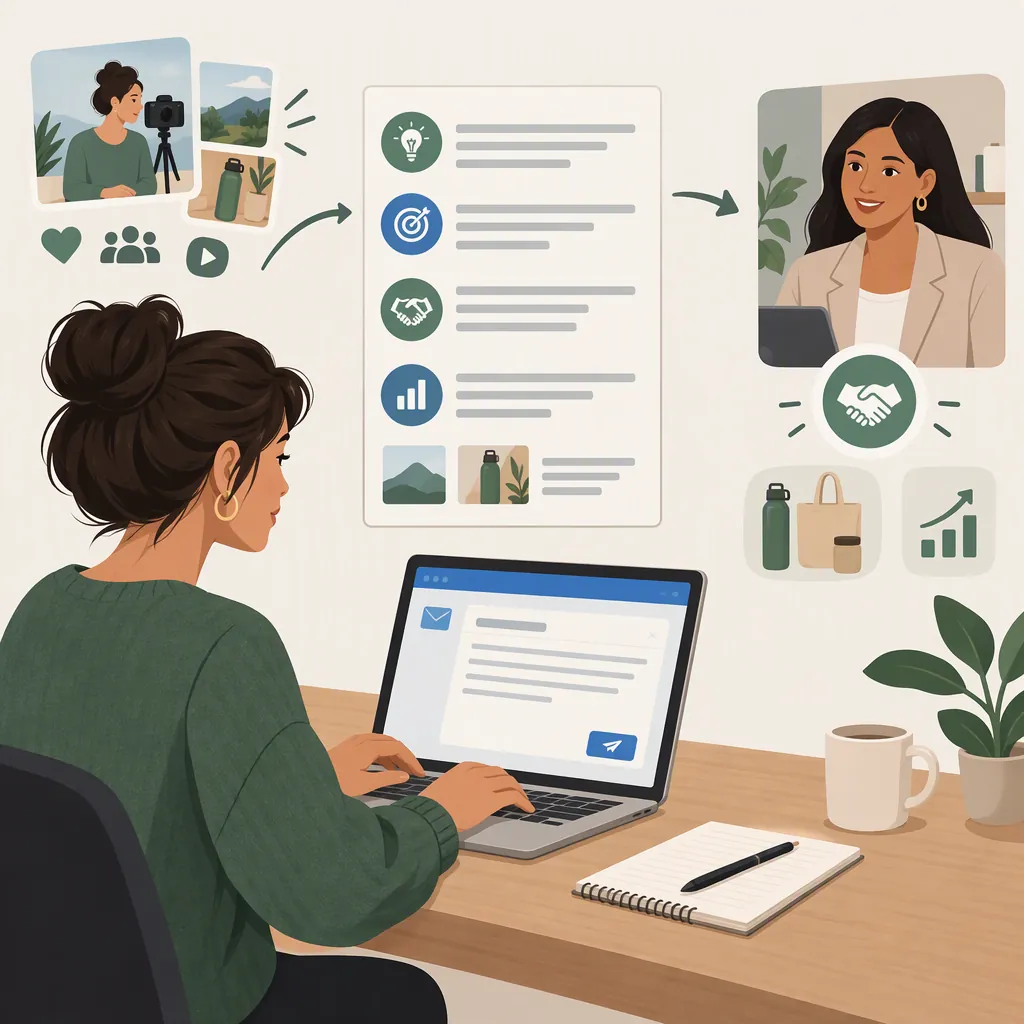
To contact brands, look for a publicly listed partnership contact or an official inquiry channel. Write a short proposal explaining who you are, why the brand fits your content, what you propose to create, and where the recipient can review relevant work. Clarify whether you are proposing paid work, and leave uncertain scope details open for discussion. Creator advice on Instagram supports including content ideas and portfolio links; the templates below are suggested drafting tools, not proven formulas for securing a deal. [ref_1]
Start with a Specific Reason for Brand Fit
Before drafting an email, write one sentence explaining why this particular brand belongs in your proposed content. Use a publicly observable detail, such as its product category or a theme on its official website. Do not imply that you use or recommend a product unless that is true.
Then distinguish between two possible proposals:
- Content for your own channels: Explain the connection between your content, your audience, and the proposed topic.
- Content for the brand’s channels: Explain the creative format and production work you are offering, without presenting your follower count as the main deliverable.
The supplied Instagram page includes creator advice about choosing aligned brands and making a pitch’s value and content ideas explicit. These are individual recommendations, not verified evidence of likely results. [ref_1]
Brand Fit Planning Note
Brand: [brand name]
Public detail reviewed: [specific detail and source location]
Relevant content theme: [your topic]
Proposed collaboration type: [content on your channels or content for brand use]
Creative idea: [one concrete concept]
Evidence you can share: [relevant work sample or verified audience information]
Unknowns to discuss: [budget, timing, deliverables, or usage]
Choose a Public Contact Channel
As a practical routing approach, check the brand’s official website and social profile for a partnership address, creator application, or business inquiry form. Follow any published submission instructions. If the only listed address is for customer support, ask where partnership proposals should go rather than assuming that team handles collaborations.
If no suitable route is listed, a brief message to the official social account can ask for the appropriate channel. Avoid guessing private email addresses or contacting several employees with the same pitch.
HypeAuditor recommends using a listed business contact and keeping outreach concise, but its article addresses brands contacting influencers—not creators contacting brands. The channel-selection advice here adapts that communication principle; it does not establish which channel any particular brand prefers. [ref_2]
Contact Routing Message
Hello [brand team], I’m [name], a creator focused on [topic]. I have a collaboration proposal involving [brief concept]. Is there a public partnership email or application form where I should submit it? Thank you, [name].
Write a Proposal the Recipient Can Evaluate
Use the first message to present a clear concept, not every possible service you could offer. A useful drafting structure is:
- Introduction: Your name and content focus.
- Relevance: One accurate reason for contacting this brand.
- Concept: The format, topic, and proposed placement.
- Evidence: A relevant work sample or portfolio link.
- Commercial basis: Whether you are proposing paid work or another arrangement.
- Open questions: The scope details needed before you can finalize the proposal.
Creator advice in the supplied Instagram reference specifically recommends including an introduction, a value proposition, content ideas, and links to a media kit or portfolio. [ref_1]
Use only credentials and metrics you can substantiate. Label sample concepts as samples, and do not suggest that an unpaid practice project was a commissioned brand partnership. Avoid promises of sales, reach, or engagement that you cannot guarantee.
Editable Brand Pitch Email
Subject: [Content format] collaboration idea for [brand]

Hello [name or brand team],

I’m [name], and I create [type of content] about [topic]. I’m contacting you because [specific, accurate reason the brand fits the concept].

I’d like to propose a paid collaboration: [content concept], created as [format] for [proposed channel or placement]. The concept would focus on [creative angle], with [proposed deliverables].

Relevant examples of my work: [portfolio or sample links].

This is an initial proposal rather than a final quote. Before pricing the work, I would like to clarify your timeline, budget range, revision expectations, and intended content usage.

If this falls within your team’s remit, would you be open to reviewing the concept?

Thank you,
[name]
[public professional contact details]
Separate the Initial Idea from Final Terms
Treat an interested reply as an opportunity to clarify the project, not as a complete agreement. Before providing a final quote, consider documenting:
- Deliverable quantity, format, length, and placement.
- Draft, review, and publication dates.
- Revision expectations.
- Whether the brand wants organic reposting, advertising use, or other usage.
- Any requested exclusivity and its duration.
- Compensation, expenses, and payment timing.
The supplied Instagram page includes advice to ask about deliverables, timeline, budget, usage rights, and exclusivity before stating a price. [ref_1] The checklist above is a planning aid, not legal advice or a complete contract.
If you include a price in your initial email, identify the scope it covers and any unresolved terms. Do not imply that every possible use of the content is included.
Scope Clarification Worksheet
Deliverables: [quantity and formats]
Placement: [creator channels, brand channels, or both]
Schedule: [draft and publication dates]
Review process: [reviewers and revision expectations]
Usage requested: [where, how, and for how long]
Exclusivity requested: [category and duration, or none]
Budget: [confirmed amount, proposed range, or unknown]
Payment timing: [proposed terms or unknown]
Unresolved questions: [items requiring written confirmation]
Follow up Respectfully and Keep Expectations Realistic
If the brand publishes a response window, use that to guide your follow-up. Otherwise, choose a reasonable interval and keep the reminder brief. A conservative approach is one follow-up, then closing the inquiry unless the recipient invites further discussion. This is a suggested boundary, not a source-established optimal schedule.
Keep a simple record of the brand, public contact route, date sent, concept, reply, and outcome. HypeAuditor recommends tracking channels, responses, and offers for brand-to-influencer outreach and warns against excessive follow-ups. Those principles can inform a creator’s own recordkeeping without implying a guaranteed response. [ref_2]
Evidence limits: The Instagram reference aggregates creator posts, including personal success stories. Those stories do not establish typical outcomes. The HypeAuditor reference covers outreach in the opposite direction. Neither source verifies current brand contacts, universal follower requirements, or a reliable formula for winning collaborations. [ref_1] [ref_2]
Brief Follow-Up Email
Subject: Re: [original subject]

Hello [name or brand team],

I’m following up on my proposal sent on [date] about [one-line concept]. For convenience, the relevant work examples are here: [links].

If the concept is not a fit or the timing is unsuitable, I understand. Thank you for considering it.

[name]
FAQ
Should I Contact Brands by Email or DM?
Use the brand’s published partnership channel when one is available. If you cannot find one, a short DM to its official account can ask where to submit a proposal. This is a practical recommendation, not a universal channel preference established by the references. HypeAuditor’s listed-contact guidance concerns brands contacting influencers. [ref_2]
What Should a Brand Collaboration Pitch Include?
Include an introduction, a specific reason for brand fit, a concrete content idea, relevant work samples, and the proposed commercial basis. Identify scope questions rather than presenting uncertain terms as settled. The Instagram reference includes advice to share content ideas and media kit or portfolio links. [ref_1]
Should I Include My Rates in the First Email?
You can include a scoped price or leave pricing open pending project details. State clearly whether you are proposing paid work. Creator advice in the supplied Instagram page recommends asking about scope, budget, usage rights, and exclusivity before stating a price; it is guidance rather than a rule for every proposal. [ref_1]
Do I Need a Minimum Follower Count to Contact Brands?
The supplied references do not establish a universal minimum. The Instagram page contains personal accounts of small-creator collaborations, but these do not prove eligibility for a particular brand or predict results. Check any published application requirements and describe your actual work and audience accurately. [ref_1]