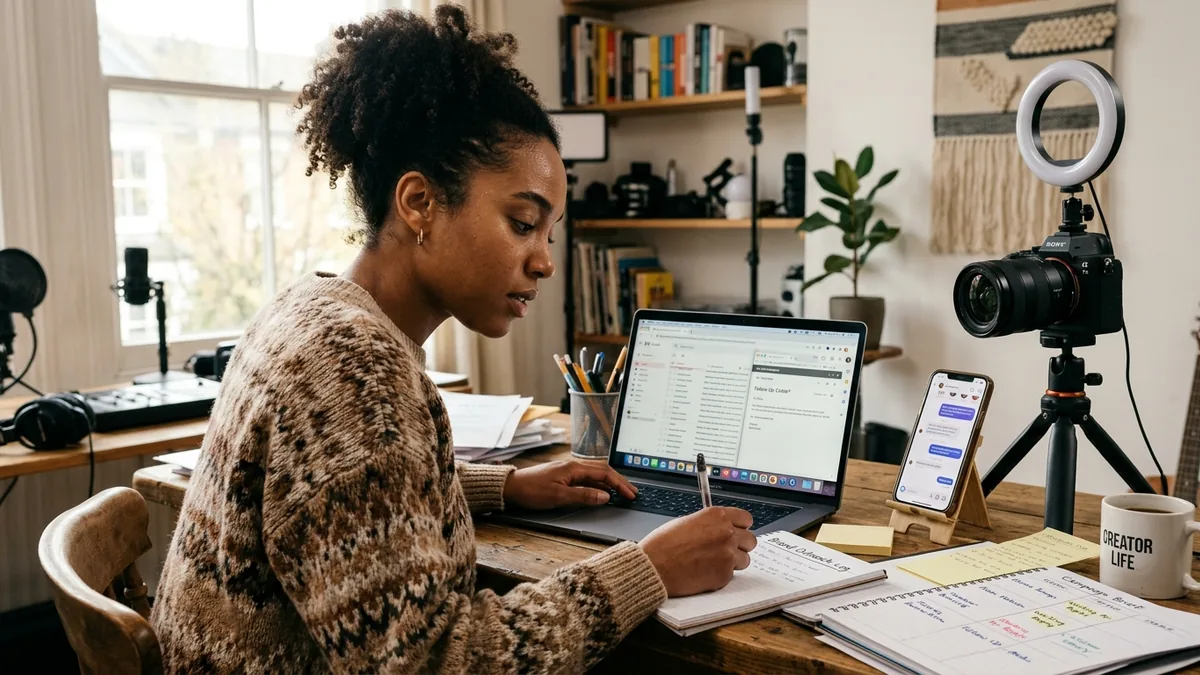
AI Creator Agent vs Manual Outreach
Use manual outreach when your workflow is still simple and you want to manage each brand conversation yourself. Add AI help when the repetitive parts of sponsorship work start spreading across research, drafting, replies, follow-ups, and organization. Use both when you want help preparing and organizing the work, but want important approvals and commercial decisions to stay in the creator’s hands. This gives you a practical way to choose manual, assisted, or hybrid outreach based on how much work your process creates.
Example: You have a follow-up to send but do not want to restart from a blank page. In a creator-reviewed workflow, AI help can prepare a draft follow-up and organize the next step for review, while you decide whether the brand is still worth pursuing and approve the final message before sending. That gives you movement from blank page to a creator-reviewed draft without giving up control of the conversation.
Where Manual Outreach Still Works Best for Creators
Manual outreach can work when you have the time, context, and confidence to manage every brand conversation yourself. It is a stronger fit when your sponsorship workflow is still simple: you contact only a small number of brands at a time, you already know which brands are relevant to your niche, you prefer writing every pitch from scratch, and you can reliably track replies and follow-ups yourself.
It can also help you build judgment, because writing pitches and replies yourself teaches what feels on-brand and what sponsors respond to. This is usually the best fit when you do not need extra help with draft preparation, organization, or review.
Where Manual Outreach Starts to Break Down
Manual outreach usually starts to break down when conversations get scattered, follow-ups depend on memory, deliverables become unclear, and manual admin starts replacing creative work. A creator may have one brand in email, another in DMs, another in notes, and another in a spreadsheet, which makes it harder to see what is active, stalled, or still needs review.
When that happens, support with assessment, draft preparation, issue spotting, and clearer coordination becomes more relevant than staying fully manual.
What AI-Assisted Outreach Can Take Off Your Plate Without Removing Creator Control
AI-assisted outreach is most useful when you need support with parts of the workflow such as opportunity context, draft preparation, or next-step review, while important outbound messages remain creator-controlled and require approval before sending. In practice, that means help with preparing outreach drafts, organizing sponsorship communication for review, and clarifying what still needs revision or approval.
The value is not autonomous outreach. It is help with discovery, drafting, and workflow organization without removing creator review needs.
A Workflow-By-Workflow Comparison: Research, Drafting, Follow-Up, Replies, Tracking, and Approvals
The practical difference shows up step by step. In manual outreach, you handle research, qualification, pitch writing, inbox review, reply drafting, follow-up planning, counter-offer thinking, deliverable tracking, and relationship management yourself.
With an AI Creator Agent, the workflow becomes more structured: support can include organizing brand opportunities and outreach tasks, preparing creator-approved pitch drafts, helping draft replies to sponsor messages, supporting follow-up preparation and review, structuring possible counter-offer responses, keeping conversations and next steps easier to track, and using a chat-style review loop for creator decisions.
In simple terms:
-
Research: manual vs supported organization
-
Drafting: manual vs creator-approved draft preparation
-
Follow-ups: your own reminders vs supported preparation and review
-
Replies: written solo vs structured draft options
-
Tracking: your own system vs easier conversation and next-step tracking
-
Approvals: stay with the creator in both models
The tradeoff is straightforward: manual is higher-control and lower-structure, while assisted is still creator-reviewed but adds structure around research workflow, drafting, follow-up organization, replies, tracking, and approvals.
The Creator-Control Boundary: What Should Stay Human-Reviewed
Creator approval should stay in the loop before important messages or commitments. You should review final wording before sending, especially when the message involves rates, deliverables, usage rights, exclusivity, payment terms, timelines, or contract-related commitments.
Important approvals and commercial decisions remain in the creator’s hands. That boundary is the clearest way to judge whether AI help fits your workflow: if you want help preparing and reviewing, it can help; if you want to hand off judgment or commitments, that is outside this model.
A Practical Hybrid Model for Solo Creators and Small Teams
A practical hybrid model uses manual judgment for fit, approvals, and commercial decisions, while using AI help for preparation, organization, drafting, and next-step support. This fits solo creators and small teams that want a more structured workflow without handing off final control.
A useful threshold is not whether you like manual work in general. It is whether process complexity has grown enough that research, replies, follow-ups, and draft preparation are slowing decisions or creating avoidable gaps.
Manual Workflow Strengths
A manual workflow is strongest when you want to think through each outreach step yourself and keep the message closely tied to your own judgment. That can include clarifying your positioning, deciding which brands are a fit, shaping the pitch from scratch, and reviewing practical commitment details before moving forward.
It is also useful when the next move is not speed but careful filtering: organizing what you offer, deciding what the brand should ask next, and keeping deliverables, usage rights, timelines, revisions, exclusivity, and payment terms clear before agreeing. In simpler outreach situations, this can be enough without added workflow support.
Manual Workflow Bottlenecks
Manual workflow bottlenecks usually appear in repetitive drafting, scattered follow-ups, missed context, inconsistent tracking, and approval-heavy commercial conversations. You may need to restart a follow-up from a blank page, reconstruct deal context from inbox threads, or clarify scope, usage, budget, or timing before you can reply with confidence.
These issues become more visible when brand ideas live across notes, spreadsheets, bookmarks, or DMs and when outreach depends on remembering what to send next. If those bottlenecks are frequent, the workflow likely needs more structure than a manual system is giving you.
Assisted Workflow Capabilities
Assisted workflow capabilities are best understood as support for practical criteria, workflow steps, tradeoffs, and creator-reviewed next actions across creator brand-deal work. That can include help with opportunity evaluation, outreach preparation, message drafting, follow-up support, and review-oriented coordination.
AI Creator Agent supports conversational preparation and review-oriented next steps. The real decision point is whether you need help organizing and preparing work, not whether you want a marketplace or a hands-off system.
Hybrid Operating Model
A hybrid operating model combines creator judgment with human-in-the-loop support. In practice, that means using support for organizing lead information, prioritizing which opportunities deserve attention first, and preparing draft outreach or pitch copy for creator review, while keeping important commercial actions under creator approval.
This approach is most relevant for solo creators, nano influencers, micro influencers, UGC creators, and small creator teams that need structure around deal flow without handing off final judgment. That makes CreaSeed a workflow assistant rather than a marketplace: the fit depends on process complexity, creator review needs, and how much help is needed around discovery, drafting, and organization.
Explore how CreaSeed can help organize a creator-reviewed brand-deal workflow.
Continue with the Creator Ai Assistant overview and the Trust And Boundaries collection. Then compare the related creator guide and the next practical resource for the next step in this workflow.