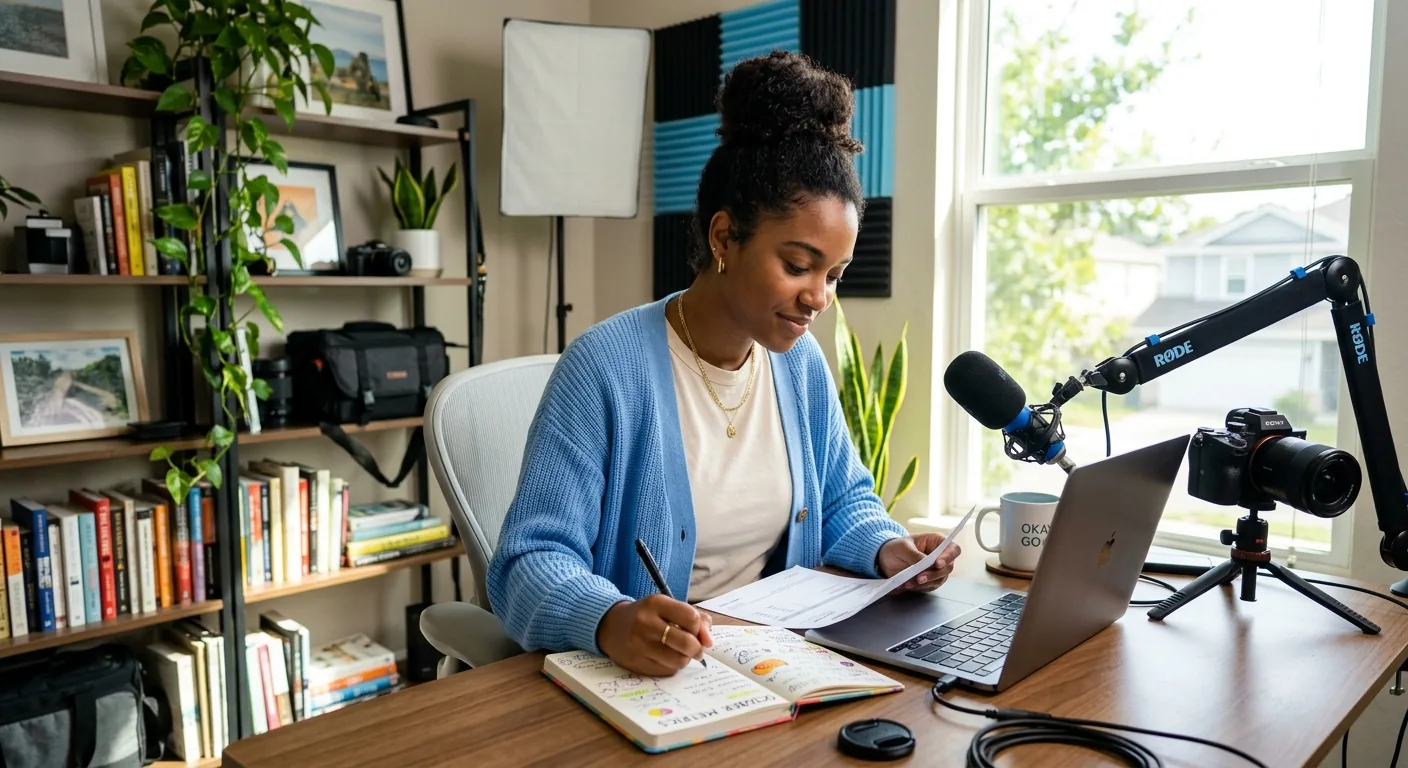
Creator Valuation After First Deal for Awareness
Your first awareness deal can increase your confidence and give you real proof points, but it does not automatically lock in your long-term creator value. What changes after that first campaign is that you now have better context: what a brand actually bought, what kind of content you delivered, what scope affected the deal, and whether the opportunity fits the kinds of partnerships you want to keep pursuing.
For most creators, the smartest next step is not to jump to a fixed rate claim. It is to build a creator-owned decision record before you respond to the next brand.
Quick Answer: What Changes After Your First Awareness Deal
After your first awareness partnership, you are no longer estimating your value from scratch. You now have a real example of a brand saying yes to your audience, content style, and campaign fit.
That matters because even one completed campaign can help you answer practical questions like:
-
What type of brand saw you as relevant?
-
What deliverables were included?
-
Did the brand care most about content quality, niche alignment, or audience access?
-
Were usage rights, timing, exclusivity, or revision requests part of the value?
-
Do you want more deals like this, or was this a one-off that does not reflect your ideal direction?
At the same time, one awareness deal is still only one data point. It may show category fit, but not broad market demand. It may show that you can create useful sponsored content, but not that your value is identical across other niches, platforms, or campaign goals.
That is why creator valuation after first deal for awareness should be treated as a review process, not a victory lap and not a formula. You are trying to understand what this first deal proved, what it did not prove, and how to decide whether similar brand collaboration opportunities are actually worth chasing.
Why One Awareness Campaign Does Not Set Your Long-Term Creator Value
Awareness campaigns are narrower than many creators expect. A brand may hire you for visibility, creative feel, audience overlap, or a specific content angle without treating the campaign as proof of long-term performance across every future project.
In plain language, your first awareness deal may prove:
-
a brand found your content relevant
-
your profile and style were marketable in at least one context
-
you can complete a sponsored deliverable set
-
your niche may have collaboration potential
But it usually does not prove:
-
that every similar brand will pay the same way
-
that your content will translate equally well to conversion-focused campaigns
-
that you should use the same positioning for every outreach message
-
that you now have permanent pricing power for long-term partnerships
Awareness work should also be judged differently from conversion-driven campaigns or deeper brand relationships. In an awareness deal, the brand may care more about content fit, brand safety preferences, visual style, audience relevance, and campaign concept than about direct tracked sales. That means your valuation after the first deal should stay tied to context.
For example, a beauty creator’s first awareness campaign with an indie skincare brand may say something meaningful about category alignment and visual storytelling. It does not automatically mean that a fitness app, snack company, or home goods brand should value that creator the same way.
This is why many creators get stuck right after their first deal. They either undervalue themselves because they think the first deal was luck, or they overread it and assume it sets a universal market rate. The better move is to translate the first deal into usable decision criteria.
How to Decide About Creator Valuation After First Deal for Awareness
The most practical approach is a creator-owned after-first-deal decision record. This is not a rigid pricing formula. It is a working note that helps you review the deal clearly before you accept, pitch, or reply to similar opportunities.
Create a simple record with these fields:
Campaign Goal
What was the brand actually buying?
Examples:
-
awareness in a niche audience
-
fresh UGC-style content
-
social proof for a product launch
-
content volume more than deep conversion tracking
Deliverables
List exactly what you delivered.
Examples:
-
one TikTok video
-
one Instagram Reel plus story frames
-
raw UGC clips for brand use
-
limited revisions or alternate hooks
Audience Fit
Ask whether the campaign made sense for your audience.
Questions to review:
-
Did the product feel relevant to your followers?
-
Did you need to stretch your positioning to make the content fit?
-
Would a similar brand feel natural on your page again?
Content Quality and Ease of Production
Look at the work from your side.
Questions:
-
Did the deliverables match your normal production style?
-
Was the content easy to make well?
-
Did brand feedback improve the content or create friction?
Category Relevance
This helps you avoid misreading a lucky match as a repeatable niche pattern.
Ask:
-
Was this deal in a category you want to keep building in?
-
Does it help you position yourself for adjacent brands?
-
Or was it outside your preferred direction?
Rights and Scope Notes
Value often changes because of usage, exclusivity, timing, revision cycles, or extended content use.
Keep this review informational and practical. You are not making legal conclusions. You are simply noting which terms affected the workload and business value.
Repeatability
This is one of the most important fields.
Ask:
-
Could you realistically do similar work again without overextending yourself?
-
Was the content process repeatable?
-
Did the campaign fit your actual niche, or did it depend on unusual circumstances?
Next-Step Decision
End with a simple creator-owned conclusion:
-
pursue more similar awareness deals
-
pursue similar deals only with tighter scope
-
keep the niche but change your positioning
-
treat this as useful proof, not as your new default template
This kind of record keeps your valuation grounded in reality. It also helps you avoid vague thinking like “a brand worked with me once, so I should say yes to any similar offer.”
The Decision Criteria Creators Should Review Before Chasing Similar Brand Opportunities
Before you actively pursue lookalike opportunities, review whether the first deal actually supports that move.
Here are the core decision criteria that matter most:
1. Was the Brand Fit Strong or Merely Convenient?
Sometimes a first deal happens because timing was good, not because your positioning is fully dialed in. If the campaign only half-fit your niche, do not build your whole next-step strategy around it.
2. Did the Content Style Match Your Strengths?
If you had to force a style that is hard to repeat, the deal may not reflect sustainable creator value. If the content felt natural and strong, that is a more useful signal.
3. What Made the Project Valuable?
Was the value in your audience match, creative concept, speed, raw UGC usefulness, or platform-specific execution? Try to name the real driver instead of lumping everything into a single “rate.”
4. How Much Scope Was Hidden in the Project?
Many first deals look simple until you count revisions, approvals, turnaround pressure, usage requests, or content variations. If the scope was heavier than expected, similar future opportunities may need a different response.
5. Is This the Category You Want to Be Known For?
One awareness campaign can open doors, but not every open door leads where you want to go. If the category supports your long-term content identity, it may be worth leaning in. If not, keep the proof point without letting it define you.
6. Can You Explain Your Value More Clearly Now?
This is often the biggest practical shift after the first deal. You may not need a dramatic new pitch. You may simply need a clearer way to describe what kind of collaboration you fit, what deliverables you handle well, and what brand scenarios suit your style.
A Practical US Creator Example After a First Awareness Partnership
Imagine a US-based micro creator in Austin who makes short-form lifestyle and apartment-friendly wellness content. She lands her first paid awareness deal with a small beverage brand that wants one Instagram Reel and three story frames around a new product drop.
After the campaign wraps, she is tempted to assume two things: first, that beverage brands are now her main lane; second, that any similar brand should be approached the same way.
Instead, she uses an after-first-deal decision record.
Campaign goal: The brand mainly wanted awareness and creator-style content, not tracked conversions.
Deliverables: One Reel, three story frames, and one light revision round.
Audience fit: The product matched her audience reasonably well because her followers already engage with morning routine and wellness content.
Content quality and ease: The content felt natural to produce. She did not need to invent a new persona or awkwardly force the product into her feed.
Category relevance: Beverage is relevant, but the stronger pattern may actually be “routine-based wellness products” rather than beverage broadly.
Rights and scope notes: The content was straightforward, but the revision requests took more time than she expected. She notes that future deals with extra usage or additional edit requests may need different terms.
Repeatability: Yes, but only for brands that fit her routine-driven content style.
Next-step decision: She decides not to market herself as a generic beverage creator. Instead, she updates her positioning around wellness routine content and short-form awareness collaborations. She keeps the campaign as proof that a brand has paid for that fit, but she does not treat it as proof that every consumer brand is now a match.
That is the real value of creator valuation after first deal for awareness. The first deal becomes a filter, not just a confidence boost.
How to Organize Your Next-Step Workflow Without Overcommitting to Brands
Once you have your decision record, the next challenge is workflow. Creators often lose clarity because opportunity notes, draft replies, and brand details are scattered across inboxes, DMs, and personal docs.
A simple creator-controlled workflow can look like this:
-
Save the first deal summary in one place.
-
List what made the opportunity a fit.
-
List what created extra work or reduced fit.
-
Compare new brand opportunities against that record.
-
Prepare a draft response only after you decide the opportunity deserves attention.
CreaSeed may support opportunity organization, conversational preparation, and creator-reviewed drafts so you can sort opportunities and prepare next steps with less guesswork.
Important outbound messages and commercial commitments remain creator-reviewed and approved. Creators independently verify contacts and approve every outbound message, commercial term, and commitment. When commercial actions are discussed, the workflow should stay human-in-the-loop.
If your team needs broader CRM coverage, tracking, reporting, integrations, or full-lifecycle management, teams should confirm the current product setup before treating that as part of fit.
If you want to explore adjacent guidance, you can read more about creator valuation and pricing considerations during solution exploration, compare creator valuation versus agency-style support for discovery workflows, or see how the AI Creator Agent supports creator-reviewed next-step preparation.
Continue with the Creator Value overview and the Creator Valuation collection. Then compare the related creator guide and the next practical resource for the next step in this workflow.
FAQ
Should I Raise My Rates Right After My First Awareness Deal?
Maybe, but not automatically. A first awareness deal can support stronger positioning and clearer scope boundaries, but it does not by itself establish a permanent market rate. Review what the brand actually bought, what made the campaign a fit, and what workload factors shaped the value before changing how you price future work.
Does One Awareness Deal Prove That Brands in My Niche Will Keep Hiring Me?
No. It proves that at least one brand saw a fit. That is useful, but it is still a narrow signal. Treat it as evidence of possible category relevance, not as proof of broad or repeat demand.
Is Awareness Valuation Different from Conversion-Focused Valuation?
Yes. Awareness deals are often judged more by relevance, content quality, creative fit, and campaign scope. Conversion-focused work may involve different expectations, proof points, and negotiation logic. Do not assume the same valuation logic applies equally to both.
What Should I Write Down After My First Deal?
Write down the campaign goal, deliverables, audience fit, content process, category relevance, scope notes, repeatability, and your next-step decision. That gives you a usable record for judging future opportunities instead of relying on memory.
How Can CreaSeed Help with This Stage?
CreaSeed may help you organize opportunity details, prepare creator-reviewed drafts, and structure next-step workflow around real campaign notes. It works best as creator-approved workflow support for preparation and review. Creators independently verify contacts and approve every outbound message, commercial term, and commitment.
Do I Need a Full System for This, or Can I Start Simple?
You can absolutely start simple. A clean note, spreadsheet, or template can work if you are consistent. If your opportunities are growing and you want more structured preparation, review, and organization, a workflow tool may become more useful over time. If broader tracking, CRM, reporting, or lifecycle support matters to you, teams should confirm the current setup before deciding fit.