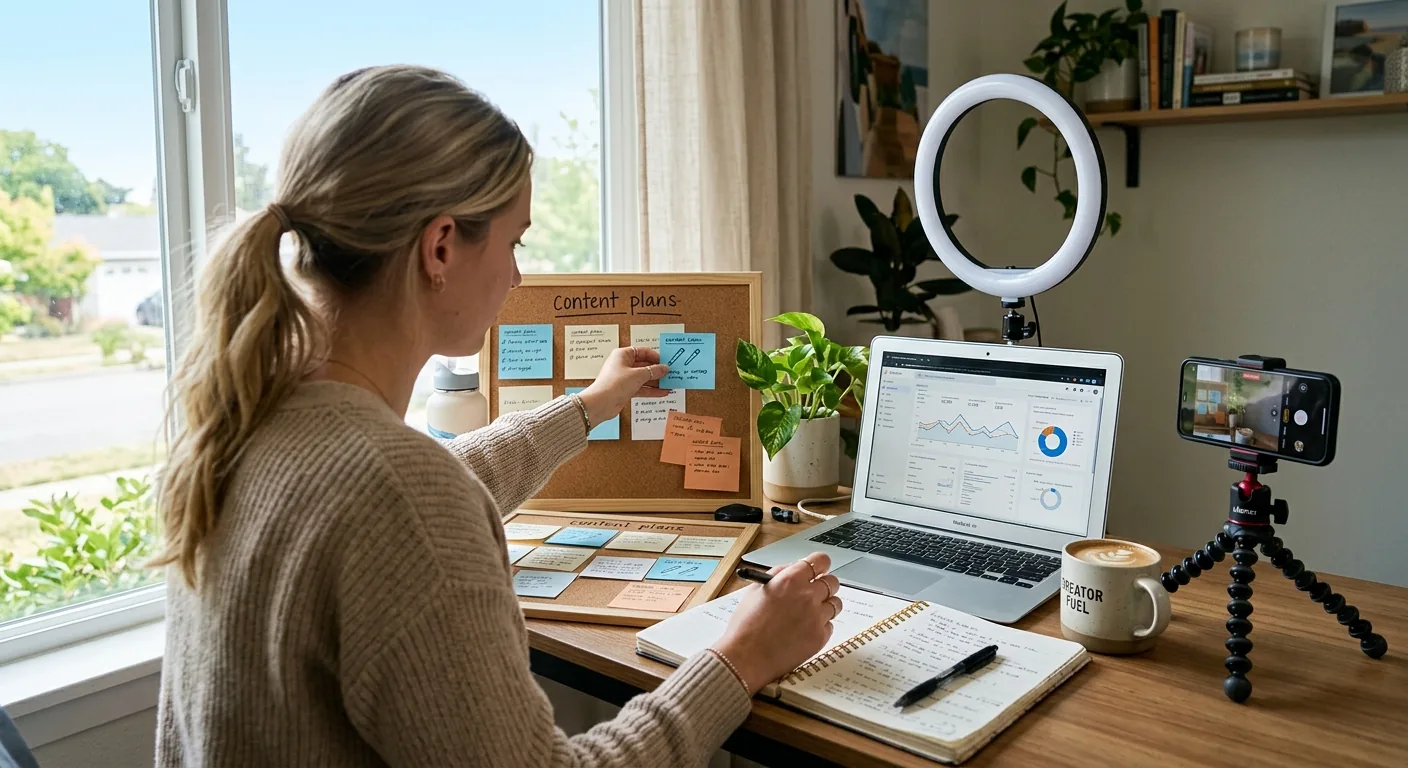
Content Trends Implementation
Content trends implementation is worth doing when you use trends as a decision filter for brand-fit opportunities, not as a random posting habit. For creators, the practical goal is simple: spot a trend, test whether it matches your audience and niche, connect it to realistic sponsor categories, and only then prepare outreach or packaging ideas. If a trend helps you explain why your content is timely and relevant to a brand category, it can support discovery. If it only boosts views but does not connect to a clear sponsor angle, it may be better for audience growth than for collaboration outreach.
The Short Answer: Implement Trends as a Filtering Workflow, Not a Blind Posting Strategy
A lot of creators hear “follow trends” and assume the next step is to copy a format, sound, or hook as fast as possible. That is not the most useful version of content trends implementation when your goal is discovering relevant brand collaboration opportunities.
A better approach is to treat trends as a filtering workflow:
-
Notice the trend early enough to matter.
-
Check audience fit so you are not chasing something off-brand.
-
Map it to sponsor categories that naturally belong in the conversation.
-
Document a usable angle for a pitch, package, or case for relevance.
-
Review before acting on any outreach or commercial next step.
This matters because not every popular trend has brand value for your creator business. Some trends are mostly entertainment. Some are highly relevant but too broad. Others are useful because they reveal a category shift, a shopping behavior, or a content style that brands may want creators to translate for real audiences.
For example, a trend around “underconsumption core” might be highly relevant for budget lifestyle, refillable beauty, meal planning, or value-focused home brands. A dance trend with no category tie-in may still help reach, but it may not help you identify a useful collaboration angle.
What Content Trends Implementation Actually Means for a Creator Looking for Brand Fits
For creators, content trends implementation means building a repeatable way to turn trend signals into brand discovery decisions.
That workflow usually includes a few practical questions:
-
Is this trend showing up across your audience’s actual platforms?
-
Does it fit your tone, content pillars, and posting style?
-
Can you name 2-3 sponsor categories that make sense around it?
-
Do you have recent content proof that shows you can talk about this naturally?
-
Is the trend strong enough to support a pitch theme, content package, or outreach opener?
In other words, implementation is not just research. It is the bridge between seeing a trend and deciding whether it belongs in your creator business workflow.
A simple creator-owned process can look like this:
-
Save trend examples from your niche.
-
Write one sentence about why the trend matters to your audience.
-
Write one sentence about why a brand category would care.
-
Pull 1-2 examples from your recent content that support the fit.
-
Decide whether to ignore it, test it in content, or use it to prepare brand outreach.
This is also where workflow support can help. CreaSeed supports a creator-reviewed workflow style centered on conversational preparation, opportunity organization, draft preparation, and creator review. That can be useful when you want to organize trend-based opportunities, think through positioning, or prepare creator-reviewed draft messaging without handing over commercial decisions.
CreaSeed also supports cautious use of conversational surfaces, content ideation support, brand opportunity search, and outreach-writing assistance. Used well, that means a creator can stay organized while still keeping judgment in their own hands.
Content Trends Implementation: Decision Record
The most useful way to implement content trends is to keep a short decision record. This gives you a creator-owned system instead of relying on memory, mood, or whatever trend feels loudest that day.
You can use the following decision record every time you think a trend might help with brand collaboration discovery.
A Simple Creator-Owned Decision Record
Trend name: What is the trend, and how would you describe it in plain English?
Why your audience cares: What viewer behavior, frustration, aspiration, or conversation does this trend connect to?
Your content fit: Does it match your niche, tone, format, and publishing style?
Brand-category fit: Which sponsor categories could naturally participate? Examples: skincare, kitchen tools, supplements, activewear, budgeting apps, travel gear.
Proof from your recent content: What 1-3 recent posts show that your audience already responds to adjacent topics, formats, or conversations?
Risk or mismatch: Could the trend feel forced, too generic, too controversial, too short-lived, or off-brand for your audience?
Commercial use case: Would you use this trend to:
-
shape a pitch angle,
-
update your media positioning,
-
build a seasonal package,
-
identify likely brand categories,
-
or simply test content first?
Next action: Choose one:
-
Ignore
-
Monitor
-
Test in content
-
Prepare outreach notes
-
Draft creator-reviewed outreach
Review status: Have you personally reviewed the logic, the brand relevance, and the message before any commercial action?
This is the core takeaway: a creator-owned content-trends-implementation decision record keeps trend research useful, focused, and accountable.
You do not need a complex scoring model. Even a light record helps you avoid three common problems:
-
chasing trends that do not fit your audience,
-
pitching brands with weak relevance,
-
and confusing content momentum with sponsor readiness.
Decision Criteria and Creator Review
Before you turn a trend into outreach, sponsorship discussion, pricing context, or a brand-facing message, apply clear decision criteria.
1. Audience Fit Comes Before Trend Speed
If a trend is growing fast but feels unnatural in your niche, it may create noise instead of leverage. A trend should make your content feel more timely, not less recognizable.
2. Commercial Relevance Should Be Specific
“Brands could like this” is too vague. You want a more useful statement such as:
-
“This trend aligns with budget-friendly meal prep, so grocery, storage, and kitchen brands are relevant.”
-
“This trend centers on reset routines, so wellness, home, and beauty categories are more plausible.”
The more specific your category fit, the easier it is to decide whether to prepare outreach.
3. Recent Proof Matters More than Abstract Potential
If you cannot point to recent posts, audience comments, or adjacent topics that support the trend, you may be too early or too disconnected from it. Content trends implementation works better when you already have some proof of resonance.
4. The Trend Should Support a Story, Not Just a Mention
Brands respond better to a clear angle than a generic “I’m posting about this trend too.” A stronger angle sounds like:
-
“My audience is actively engaging with affordable reset routines.”
-
“I’ve seen repeat interest in simple meal prep swaps tied to this trend.”
-
“This trend gives me a timely way to frame a product category my audience already trusts me to cover.”
5. Every Commercial Step Stays Creator-Reviewed
This is a critical part of implementation. Important outbound messages and commercial commitments remain creator-reviewed and approved. Creators independently verify contacts and approve every outbound message, commercial term, and commitment.
That applies to:
-
outreach drafts,
-
sponsor discussion points,
-
deliverable ideas,
-
pricing references,
-
usage-rights conversations,
-
and any collaboration commitment.
When commercial actions are discussed, the workflow should stay human-in-the-loop. Trend insight may help you prepare, but your judgment still matters most.
If you work with a small team, this can be as simple as one person organizing the opportunity and another person approving the final message. If you are solo, it can mean drafting one day and reviewing with fresh eyes the next day before sending anything.
One Practical Creator Scenario
Here is one realistic example of a US creator applying the decision record.
A micro lifestyle creator in Texas makes short-form content about realistic home routines, grocery budgeting, and simple meal prep. She notices a growing trend around “weekday reset” content: fridge cleanup, affordable restocks, and low-stress organization.
At first, she could treat it as just another posting theme. Instead, she uses the decision record.
Trend name: Weekday reset Why audience cares: It combines budget consciousness, time saving, and realistic routines. Content fit: Strong. Her audience already responds to meal prep, grocery hauls, and practical home habits. Brand-category fit: Food storage, grocery-adjacent products, kitchen tools, cleaning supplies, and value-focused home brands. Proof from recent content: Her last three meal-prep and pantry-restock videos had stronger saves than her general vlogs. Risk or mismatch: The trend could become repetitive if she copies the exact same visual sequence as everyone else. Commercial use case: Useful for a seasonal pitch angle and a “reset routine” content package. Next action: Test two pieces of content, then prepare outreach notes for relevant categories.
After posting, she sees that comments are not just about aesthetics. Viewers ask where she shops, how she saves money, what containers she trusts, and which products make the routine easier. That tells her the trend has real category relevance.
At that stage, she may use CreaSeed to help organize the opportunity, structure her notes, and prepare creator-reviewed draft outreach around the angle. For example, she could use conversational support to refine how she describes the audience fit, keep potential opportunities organized, and prepare draft language for brand outreach. But she still reviews every message herself, independently verifies contacts, and approves every commercial term before anything goes out.
That is a solid implementation outcome: not “the trend worked,” but “the creator now has a clearer, better-supported reason to pursue a specific set of brand categories.”
Where Creator Workflow Support Can Help Without Taking over Commercial Decisions
Once you already have a decision record, workflow support becomes more useful.
CreaSeed may support this stage in practical ways such as:
-
organizing trend-linked opportunity notes,
-
helping you compare a few possible sponsor categories,
-
preparing creator-reviewed draft messaging,
-
and coordinating next-step preparation.
For creators who prefer talking through ideas, the AI Creator Agent can fit naturally into early-stage thinking and draft preparation. If your challenge is less about generating ideas and more about keeping opportunities from getting messy, CreaSeed’s creator-reviewed workflow support can help you move from scattered trend notes to a cleaner action list.
This can be especially useful when you are juggling:
-
trend screenshots,
-
recent post performance observations,
-
possible sponsor angles,
-
rough pitch notes,
-
and follow-up tasks.
The goal is not to replace your judgment. The goal is to reduce friction in preparation.
Keep the boundary clear: creators independently verify contacts and approve every outbound message, commercial term, and commitment. If your team needs broader CRM, tracker, reporting, or full lifecycle coverage, teams should confirm the current setup rather than assume it.
If you want adjacent guidance before you implement, you can also read what creators should evaluate when using content trends for brand collaboration discovery or what to check next after spotting a content trend for brand collaboration outreach.
For creators comparing different workflow models, how content trends workflows compare with agency-style support for growth decisions offers a separate perspective.
If you want to see the product side more directly, explore how the AI Creator Agent supports creator-reviewed preparation and next steps.
Keep this decision connected to Content Trends & Brand Fit and the focused Finding Content Trends collection. For a concrete next step in the same decision cluster, continue with Content Trends before making a creator-approved commitment.
FAQ
How Often Should Creators Review Content Trends for Brand Collaboration Discovery?
Weekly is a practical rhythm for most solo, nano, micro, and UGC creators. That is frequent enough to catch new patterns without turning your workflow into constant reactive posting. If your niche moves fast, you may save trends daily but review them in one batch each week using the same decision record.
How Do I Know Whether a Trend Is Commercially Relevant or Just Popular?
A trend is more commercially relevant when you can clearly connect it to a sponsor category, a buyer behavior, or a repeated audience need. Popularity alone is not enough. Ask whether the trend gives you a believable reason to talk to brands in a specific category and whether your recent content already supports that angle.
What Should I Document Before Outreach Based on a Trend?
Document the trend itself, why it matters to your audience, which brand categories fit, what recent content proves your relevance, and what risk could make the angle feel weak or forced. Then decide whether the right next step is testing content first or preparing creator-reviewed outreach.
Can a Small Creator Team Split up Trend Implementation Tasks?
Yes. One person can collect trends and organize notes, while another reviews the commercial relevance and approves final outreach. That is often a healthy setup because it keeps the process efficient while preserving creator approval and a human-in-the-loop step where commercial actions are discussed.
Can CreaSeed Replace My Full Outreach or Deal Management Process?
CreaSeed is best understood here as creator-reviewed workflow support for preparation, opportunity organization, draft preparation, and next-step coordination. If your team needs broader CRM, reporting, integration, or full lifecycle management, teams should confirm the current setup based on your workflow needs.