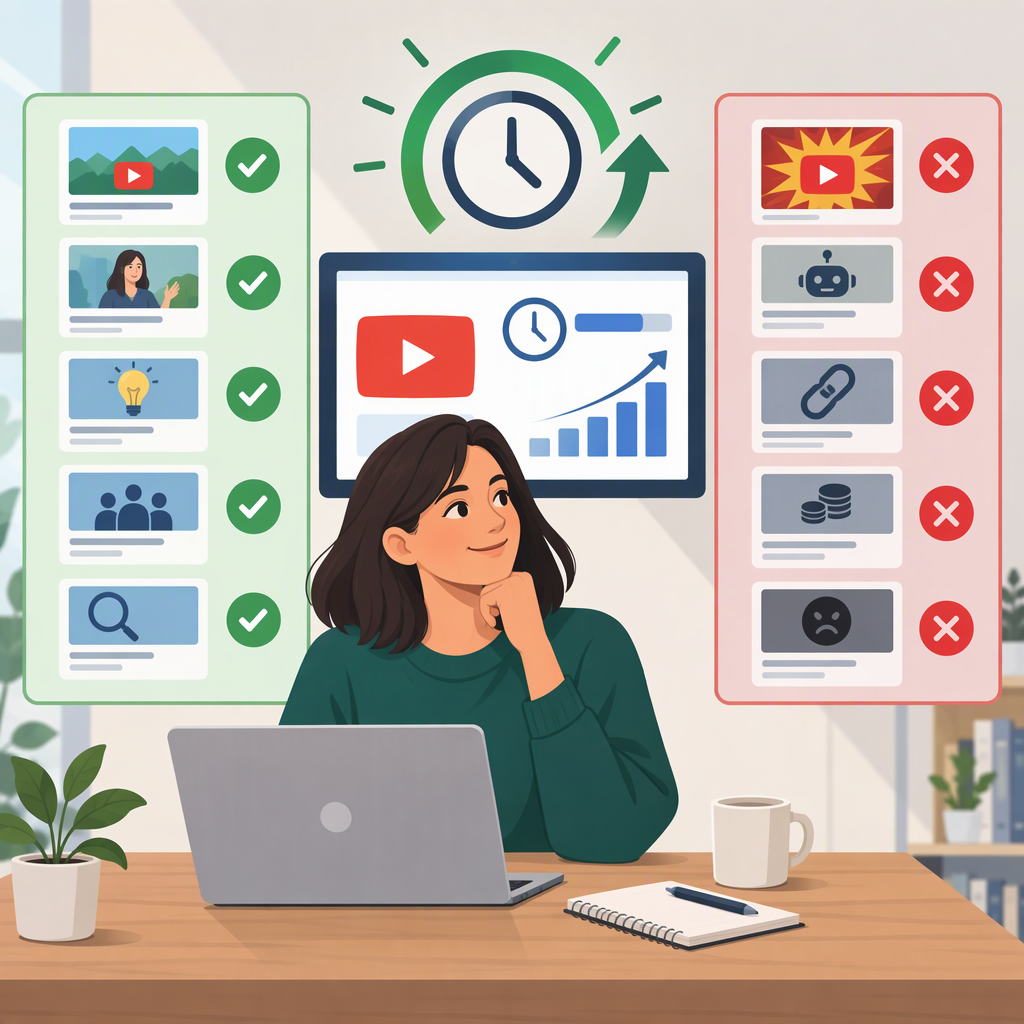
4,000 Hours of Watch Time Free: Legitimate Ways to Grow and What to Avoid
If you mean YouTube, there is no shortcut that makes purchased or exchanged viewing automatically count as eligible watch time. The legitimate no-cost approach is to attract real viewers and check your channel’s Earn tab for YouTube’s eligibility total. Be wary of any offer that promises guaranteed hours: YouTube says artificial engagement may not count and can lead to account strikes or removal. (support.google.com)
What the 4,000-Hour Target Means
For YouTube’s standard ad-revenue eligibility route, a channel needs 1,000 subscribers and 4,000 qualified public watch hours in the past 12 months. An alternative route uses 10 million qualified Shorts views in the past 90 days. Meeting a threshold lets a channel apply; it does not guarantee acceptance, because YouTube reviews the channel against its policies. (support.google.com)
The 4,000-hour figure is 240,000 minutes. It is a rolling 12-month target, not a lifetime total. YouTube also offers an earlier-access YPP route in eligible countries: generally, 500 subscribers, three valid public uploads in the last 90 days, and 3,000 qualified watch hours in the past 12 months (or the applicable Shorts alternative). That route provides earlier access to certain features; the 4,000-hour threshold remains relevant to ad and YouTube Premium revenue sharing. Availability and feature requirements vary, so check YouTube Studio → Earn for your channel. (support.google.com)
If you mean a platform other than YouTube, don’t assume its “4,000 hours” target—or what counts toward it—is the same.
Which Watch Time May Count?
For the 4,000-hour route, YouTube’s threshold is for qualified public watch hours. Shorts views in the Shorts Feed don’t add to that watch-hour total; YouTube has a separate Shorts-views route. Private, unlisted, and deleted videos, as well as watch time from ad campaigns, are among the exclusions listed in YouTube’s eligibility guidance. Some livestream watch time may also be excluded—for example, if the stream is unlisted, deleted, or not converted to video on demand. (support.google.com)
A paid promotion campaign is not the same thing as buying fake views. Still, YouTube says watch time and views generated from paid ad campaigns don’t count toward YPP thresholds; organic follow-on views—when someone watches another video after seeing promoted content—may count. (support.google.com)
Planning example: If eligible public long-form videos average 6 minutes watched per view, then 40,000 such views would produce about 4,000 watch hours: 40,000 × 6 ÷ 60 = 4,000. This is arithmetic, not a forecast. It assumes all 6 minutes per view qualify, and the platform’s eligibility counter—not a view-based estimate—determines progress.
Free, Legitimate Ways to Work Toward the Target
These are practical suggestions, not guaranteed methods or claims about results:
- Make videos that solve a clear viewer need. A focused topic and an accurate title and thumbnail help viewers decide whether a video is relevant to them.
- Build useful connections between videos. Group related public long-form videos into a coherent series or playlist, and point viewers to a genuinely relevant next video.
- Review what viewers actually watch. In YouTube Studio, open a video’s Analytics → Engagement to review watch time and average view duration. Use audience-retention information to identify where viewers tend to leave, then consider whether the video could be clearer or better structured. (support.google.com)
- Choose formats with the eligibility rule in mind. Shorts can help with discovery, but Shorts Feed viewing does not count toward the 4,000 public watch-hour threshold. Public long-form viewing is the relevant route for that target. (support.google.com)
How to Assess a “Free Watch Time” Offer or Tool
Don’t judge a service by the word free or by its label. Ask what it actually does:
- Does it help you create, edit, schedule, or analyze your own content, or does it supply, coordinate, automate, or reward views and other engagement?
- Are viewers choosing to watch because they want the content, or are they being deceived, coerced, or engaged only for financial gain?
- Does the service promise a set number of views or hours, or require watch-for-watch participation?
- Can you confirm that the method complies with the platform’s current rules? If you cannot establish that, don’t use it to generate engagement.
YouTube prohibits artificial increases in views and other metrics, including through automated systems or videos served to unsuspecting viewers. Its policy also identifies view-gaming services and “sub4sub” as prohibited examples, and says a creator can be affected by the actions of someone hired to promote a channel. YouTube says artificial traffic may not count and can lead to strikes; policy violations may also result in content removal or channel takedown. These rules concern the behavior involved, so they don’t establish that every third-party editing, scheduling, or analytics tool is safe or unsafe. Assess what the specific tool does. (support.google.com)
Where to Check Your Progress
In YouTube Studio, open Earn to see the channel’s monetization eligibility and progress. Use that account-level figure rather than total watch time in general Analytics, raw views, or a provider’s promise when judging the 4,000-hour threshold. For video-level performance, Studio’s Analytics → Engagement reports watch time and average view duration. YouTube reviews applications for policy compliance even after a channel reaches the numerical threshold. (support.google.com)