Minitool Video Editor: A Moviemaker Manual Navigation Guide
For a “minitool video editor” search, the relevant editing resource here is the MiniTool MovieMaker User Manual. Its index includes project creation, media import, timeline editing, text, audio, and export. This guide helps you choose which manual topics to consult for a new edit or a revision. It provides a reading order—not verified interface steps or a hands-on review. [minitool-manual]
Identify the Right Minitool Resource
The MovieMaker manual is labeled MiniTool MovieMaker User Manual. The page also lists separate MiniTool resources for Video Converter and Screen Recorder, so check that you are using the MovieMaker documentation when looking for editing guidance. [minitool-manual]
Start with the task you need to complete: creating a project, shortening footage, adjusting sound, adding text, or producing an output file. The routes below map those needs to the manual’s listed topics.
Manual Route for Your First Edit
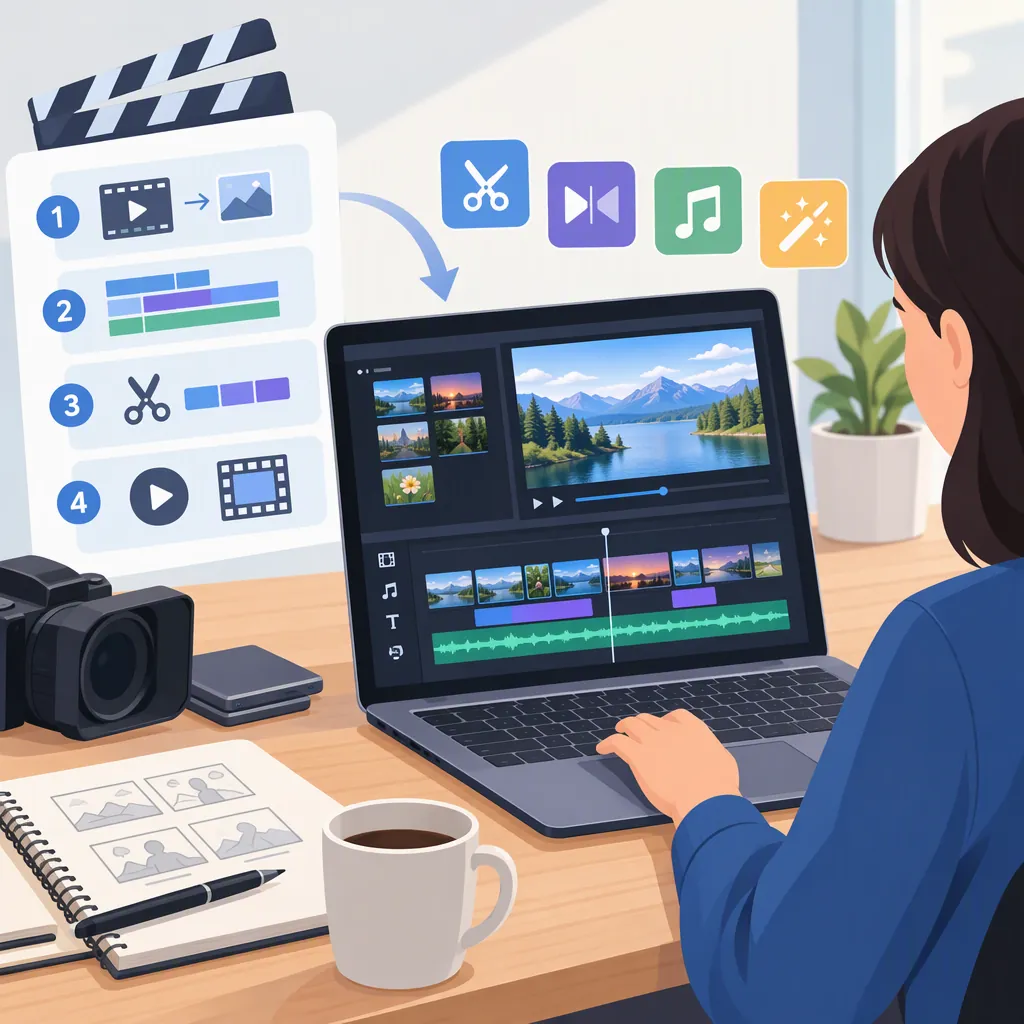
For a new editing project, consult these topics in the following suggested order. The topic names come from the manual index; the order is a reading plan rather than a documented application procedure. [minitool-manual]
| Stage | Manual topic to consult | What to decide before consulting it |
|---|---|---|
| Start the project | Create/Save/Open Project | What is the video’s purpose, and where will you keep the project? |
| Bring in source material | Import Media Files & Add to Timeline | Which clips, images, and audio files do you need? |
| Shorten the sequence | Split/Trim Video | Which pauses, repetitions, or unwanted sections should go? |
| Check sound | Edit Audio | Which speech or other sounds must remain understandable? |
| Add essential wording | Text and Titles | What information needs to appear on screen? |
| Produce a review file | Export Video to PC/Device | Where will the finished video be viewed? |
First-Edit Preparation Checklist
Use this general checklist alongside the relevant MovieMaker manual topics:
- Write a one-sentence purpose for the video.
- Keep an unchanged copy of the original media.
- Select the material needed to communicate the message.
- Plan a rough sequence before adding decorative treatments.
- Identify footage to shorten or remove.
- Draft any necessary titles or explanatory text.
- Leave time to watch and listen to an exported review copy.
This preparation is general editing guidance, not a claim about MovieMaker’s controls or current release behavior.
Manual Route for Revising an Existing Project
If you are returning to an edit, begin with Create/Save/Open Project, then consult the topic that matches the change you need. The index lists that project topic separately from the individual editing topics below. [minitool-manual]
| Change you need | Manual topic to look for |
|---|---|
| Add more source material | Import Media Files & Add to Timeline |
| Remove part of a clip | Split/Trim Video |
| Adjust composition | Crop Video; Aspect Ratio |
| Change orientation | Rotate/Flip |
| Revise on-screen wording | Text and Titles |
| Work on sound | Edit Audio |
| Change playback pacing or direction | Change Video Speed; Reverse Video |
| Work with tracks | Add/Delete Tracks |
| Locate keyframe guidance | Add Keyframes |
| Produce a revised output file | Export Video to PC/Device |
These entries are listed in the manual’s index or page navigation. Their presence identifies where to look for guidance; it does not establish the available settings or exact behavior in a particular version. [minitool-manual]
For a focused revision, write down the problem before choosing a topic. “The opening is too long” points toward trimming; “the subject is poorly framed” points toward crop or aspect-ratio guidance. This keeps the revision tied to a clear purpose.
Find Guidance for Text, Sound, and Visual Treatments
The manual index lists Text and Titles, Edit Audio, transitions, effects, filters, motion, and animated elements. It also includes keyframe and track-related topics. [minitool-manual]
Choose which instructions to read according to the result you want, rather than applying every available treatment:
- Text: Decide what viewers need to read and how long they need to read it.
- Sound: Check whether speech and other essential audio are understandable.
- Framing: Decide the intended viewing shape before adjusting composition.
- Pacing: Identify unnecessary material before considering speed changes.
- Transitions: Use a clear reason, such as marking a change in scene or time.
- Effects and motion: Decide what they should communicate before exploring their controls.
These are general editing considerations. For application-specific controls, consult the corresponding manual topic rather than assuming how an adjustment works.
Review the Exported Video
The manual lists Export Video to PC/Device as its output-related topic, separate from Create/Save/Open Project. Consult the export topic when you need output guidance, and the project topic when you need project-management guidance. [minitool-manual]
As a general quality check, review the exported file separately from the editing preview.
Export Review Checklist
- Open the exported file and confirm that it plays.
- Check the beginning and ending for unwanted material.
- Look for unintended gaps or abrupt cuts.
- Inspect framing and title readability.
- Listen for missing audio or distracting volume changes.
- Check the output against your intended destination’s requirements.
- Retain the source media and editing project for later revisions.
If you find a problem, use the revision table above to identify the relevant manual topic before changing the edit.
What This Documentation Establishes—And What It Does Not
The available reference contains the manual index and site navigation, not the full instructions for each listed task. It supports the topic routes in this guide, but not a verified sequence of clicks, control values, or version-specific behavior. [minitool-manual]
It also does not establish current:
- Operating-system or hardware requirements
- Supported codecs, output formats, or export resolutions
- Pricing or licensing terms
- Watermark conditions
- Commercial-use permissions
The page includes navigation labels such as Pricing, No Watermark, and End-User License Agreement, but those labels alone do not verify the underlying terms or conditions. Check the relevant current documentation before relying on any of these details. [minitool-manual]
FAQ
Which Minitool Editor Does This Guide Cover?
This guide covers the MiniTool MovieMaker user manual. The reference lists MovieMaker separately from other MiniTool tools, including Video Converter and Screen Recorder. [minitool-manual]
Which Manual Topics Should I Consult for a Simple First Edit?
Start with Create/Save/Open Project, then consult Import Media Files & Add to Timeline, Split/Trim Video, Edit Audio, Text and Titles, and Export Video to PC/Device as needed. All are listed in the manual index; this is a suggested reading order, not a verified click-by-click workflow. [minitool-manual]
Where Should I Look If I Only Need to Shorten a Video?
Look for Split/Trim Video. If you are revising an existing project, also consult Create/Save/Open Project for project-related guidance. Both topics appear in the manual index. [minitool-manual]
Does the Manual Index Confirm That Moviemaker Is Free or Has No Watermark?
No. The available page includes Pricing and No Watermark navigation labels, but it does not provide the terms or version-specific details needed to verify either condition. [minitool-manual]
Sources
- [minitool-manual] MiniTool MovieMaker Tutorial - How to Create/Edit a Video