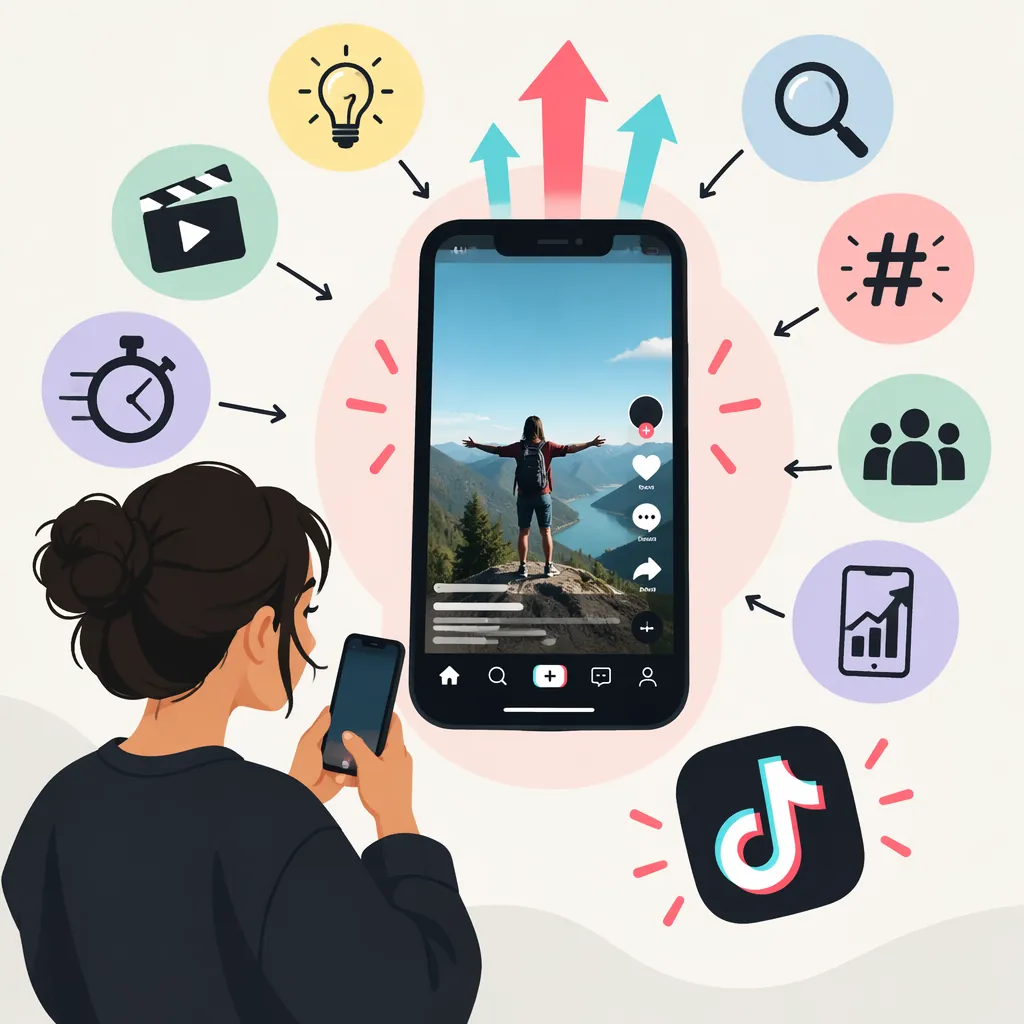
How to Make Your Video More Likely to Appear on TikTok’s Fyp
To work toward FYP exposure, make an original video with a clear opening, remove unnecessary footage, use relevant captions and hashtags, and test changes against your available analytics. The supplied guides recommend these approaches, but they do not establish a guaranteed way to get recommended. Adding #fyp alone is not a reliable strategy. [c1] [c2]
Understand What Fyp Exposure Means
FYP stands for For You Page: TikTok’s personalized recommendation feed, which can include videos from accounts a viewer does not follow. The Correct Digital guide describes viewing behavior and interactions as inputs to personalization. [c1]
That means “getting on the FYP” is better understood as reaching relevant viewers through recommendations—not winning a single featured slot that everyone sees.
Evidence limitation: Both supplied references are third-party guides, not TikTok’s current technical documentation. The HeyGen article includes an algorithm discussion labeled 2022 despite its newer update date. Its specific traffic-pool sizes, scoring formula, and ranking weights should not be treated as verified current rules. This article uses the guides for practical editing suggestions, not as proof of how TikTok distributes every video. [c2]
Make the Opening Clear and Deliver the Payoff
Both guides recommend capturing attention early and trimming unnecessary footage. Treat that as an editing principle, not a verified three-second ranking threshold. [c1] [c2]
Start with the result, problem, or question your video will address. Then deliver what the opening promises. For example, a cooking demonstration could show the finished dish before explaining the technique; a tutorial could show the mistake before the correction.
For a first edit:
- Choose one main idea and one intended audience.
- Remove greetings or setup that do not help explain the idea.
- Keep demonstrations long enough to be understandable.
- Check that speech is audible and on-screen text is readable.
- End when the useful information is complete.
Correct Digital suggests short videos, while HeyGen also recommends cutting redundant clips. Neither supplied guide establishes one ideal duration for every topic. Use the shortest version that delivers the promised value without becoming confusing. [c1] [c2]
Opening and Payoff Worksheet
Audience: Who is this video for?
Problem: What specific question does it answer?
Opening visual: What can I show immediately?
Opening line: What will the viewer learn or see?
Payoff: Where does the video fulfill that promise?
Cut list: Which lines or shots can I remove without losing meaning?
Use Relevant Captions, Hashtags, and Trends
Correct Digital recommends niche-specific hashtags alongside relevant trends, and both guides caution against relying on #fyp alone. [c1] [c2]
Use a caption that accurately describes the video or asks a specific question about it. Choose hashtags that fit the subject rather than attaching unrelated popular tags. A precise description is a more useful starting point for testing than a generic promise to “go viral.”
The Correct Digital guide also recommends trending sounds and effects. Treat these as creative options, not distribution guarantees. If a sound obscures narration or a trend does not fit the topic, leave it out. [c1]
Avoid misleading hooks such as promising a reveal that never arrives. Keep the caption, opening, and actual content aligned.
Caption Relevance Check
Topic: [The specific subject of the video]
Caption: [A plain-language description or genuine topic-related question]
Hashtags: [Relevant subject or community labels]
Trend fit: [How the sound or format supports the idea, or why it is unnecessary]
Promise check: [Does the video deliver what the caption and opening suggest?]
Test One Change and Review the Results
Correct Digital recommends using audience activity information in analytics and testing posting times. HeyGen discusses viewing time and interactions as measures to watch, although its exact ranking claims are not verified here. [c1] [c2]
Use a small, repeatable comparison rather than changing everything at once:
- Choose a repeatable topic or format.
- Change one element, such as the opening shot, pacing, or posting window.
- Record results after the same elapsed time for each post.
- Review the metrics your account actually provides, such as average watch time, completion, shares, or comments.
- Repeat the comparison before deciding the change is useful.
If your analytics provide traffic-source information, inspect it when assessing recommendation exposure. Total views alone do not tell you where viewers found the video. If that information is unavailable, keep the uncertainty explicit.
Treat these comparisons as directional feedback. Different topics, audiences, and video lengths make clean comparisons difficult; a stronger result on one post does not prove that one edit caused it.
Simple Video Test Log
| Post | Topic | Length | One Change Tested | Posting Window | Time Since Posting | Available Viewing Metrics | Shares and Comments | Traffic Source, If Available |
|---|---|---|---|---|---|---|---|---|
| A | Fill in | Fill in | Baseline | Fill in | Fill in | Fill in | Fill in | Fill in or unavailable |
| B | Fill in | Fill in | Fill in | Fill in | Same review interval | Fill in | Fill in | Fill in or unavailable |

Interpretation: What changed, what remained uncertain, and what should be tested again?
Respond to Low Reach Without Guessing
When a video receives little attention, begin with questions you can inspect: Is the subject obvious? Does the opening match the payoff? Is the audio understandable? Does the edit include unnecessary waiting?
Do not assume that low views prove an account penalty, an exact algorithm threshold, or a need to buy new tools. The supplied references do not establish a diagnostic rule connecting a particular view count to a specific cause.
For the next video, choose one concrete improvement rather than reposting the same idea with more generic hashtags. Keep a sustainable testing pace. The goal is to learn which topics and presentations serve your intended viewers—not to chase an unsupported formula.
FAQ
Does #Fyp Make My Video Appear on the for You Page?
Neither supplied guide treats #fyp as sufficient to secure recommendation exposure. Use relevant labels, but focus your testing on the video’s subject, opening, and editing rather than a generic hashtag. [c1] [c2]
How Long Should My Video Be?
The guides favor concise videos, but they do not establish a universal best length. Start with the shortest edit that fully answers the question or delivers the demonstration, then compare results across similar videos. [c1] [c2]
What Is the Best Time to Post for Fyp Exposure?
The supplied evidence does not establish one best time for every account. Correct Digital recommends checking audience activity in analytics and testing different windows. Compare posts at the same elapsed time, and avoid treating one successful posting time as a guarantee. [c1]
Can I Guarantee That My Next Video Will Reach the Fyp?
No guaranteed method is established by the supplied references. Their suggestions are better treated as ideas for improving and testing videos, not confirmed distribution rules or promises of reach. [c1] [c2]